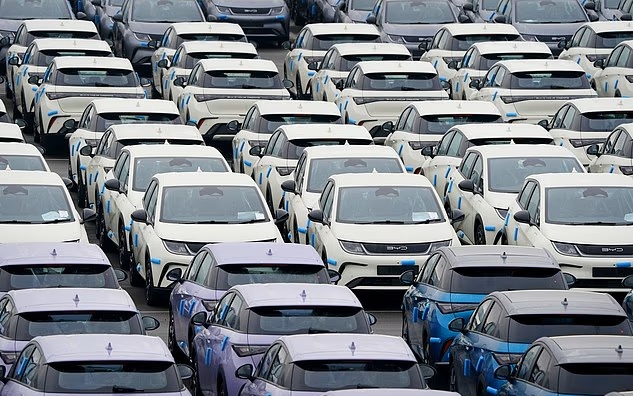
Road safety experts were calling for an investigation on Saturday night as it was revealed motorists are three times more likely to die in hybrids than in petrol cars.
A total of 122 people died in hybrid car crashes last year, compared with 777 in accidents involving petrol cars, according to Department for Transport figures analysed by The Mail on Sunday.
But as hybrids are outnumbered by almost 20 to 1 on Britain’s roads by petrol models, that means hybrids are three times more likely to be involved in a fatal crash.
Experts believe the increased death rates could be explained by the combination of petrol engines, batteries, and electric motors in hybrids, which can be more difficult to control and more prone to fires.
The RAC Foundation, a transport research organisation, called for a ‘dedicated investigation branch’ to look into the trend. ‘It’s high time we had a specialist resource to address road safety risk’, director Steve Gooding said.
The cars’ batteries may also be to blame. They can be damaged by the heat of the engine, which burns at excessively hot temperatures, making them more susceptible to catching fire.
Passengers in collisions are also at greater risk because of the high electric current flowing through the vehicle. Due to the unique characteristics of hybrid fires and the possibility of poisonous gas leakage, first responders require specialised training and equipment.
Due to their fuel efficiency, many taxi drivers use hybrid vehicles, which some experts attribute to their high mileage. However, as the cars age, their performance declines and the batteries deteriorate, increasing the risks they pose.
The figures indicate that diesel cars are slightly safer, with electric vehicles (EVs) seen to be safest, yielding only 23 fatalities last year despite making up about 2 million of the cars on British roads.
Nicholas Lyes, of road safety charity IAM RoadSmart, said: ‘Plug-in hybrids are often heavier and more complex vehicles owing to the fact they run on both a traditional combustion engine and a battery.’
They have two power sources, two cooling systems and more complex electronics and wiring. They can create ‘complex fire scenarios’ which are more difficult for firefighters to put out.
Hybrids were found by a leading insurer of company cars, Tusker, to be more likely to explode into flames at higher rates than other vehicles. Among their fleet of 30,000 cars, hybrid vehicles had an almost three times’ higher risk with 3,475 fires per 100,000.
There are fewer than a million hybrid cars in the UK, and their popularity has stagnated recently. Less than a third of voters back the proposed ban on new petrol and diesel cars as Britons’ enthusiasm for Net Zero cools.
Industry figures have privately raised concerns that demand for EVs and hybrids is not strong enough for the target to be met. With Labour’s ban due to take effect in five years, the new figures will be a concern for ministers as they grapple with a declining interest in hybrid vehicles.
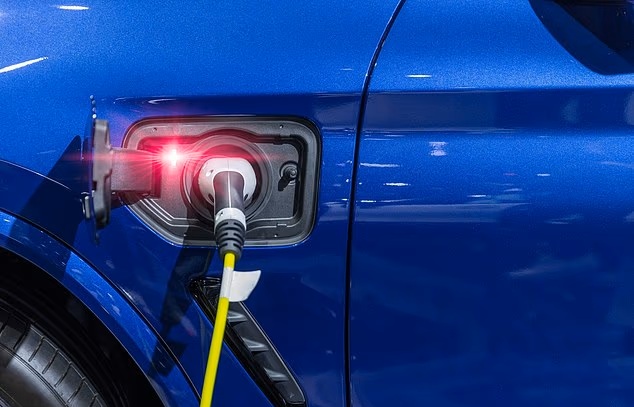
If they catch fire, electric vehicles are like mobile furnaces.
Petrol doesn’t short-circuit, thereby igniting itself. Once ignited, petrol is fairly easy to extinguish – lithium isn’t. To make matters worse, lithium reacts violently to water, unlike petrol, and a lithium fire takes hold far more quickly than petrol. This means you have much less warning and less time to escape.
But does anyone recall the days when you could easily fill up your car with fuel or diesel, drive off, and no one gave a damn? Oh, how things used to be so easy in our lives, but now everything is so complicated.
With the majority of the new pilgrims on our roads, have you noticed the decline in safe driving these days? Have you seen them drive in their own country or origin? They’re like suicidal madmen, and today’s average driver doesn’t have the cognitive ability to drive safely. Most of them are all nitwits with no common sense or physical and mental capacity to cope with risk and survival on our roads.
 THE MONTHLY MOSQUITO