One In Four School Starters Is Still In Nappies Due To Parents Who Think Toilet Training Is Not Their Job

One in four children starting reception are not toilet trained, and the same proportion cannot eat independently, a new survey suggests.

An annual poll of 1,000 primary school teachers saw a rise in children failing to learn the fundamental skills they need for school.

On average, teachers spend an hour and a half every day either changing nappies or helping children use the toilet – the equivalent of an entire school day per week.

Respondents reported that an average of 26 per cent of the children in their reception class this year experienced frequent toilet accidents, up from 24 per cent in the previous two years.

The worst-affected area was the North East, where 36 per cent of school-starters were not toilet-trained.

Teachers said the frequent toileting interruptions led to a ‘stop-start’ day, with 70 per cent saying it had an impact on class progress.

One deputy headteacher told researchers: ‘It’s definitely getting worse. If you go back ten years, you wouldn’t have had children coming into reception who needed toilet training, and now it’s almost the expectation that schools will do it.’

A reception teacher added: ‘Parents don’t think it’s their job. They’re very happy to give that to someone else. You know, someone else will potty train my child.’

Another said some parents ‘decide’ their child has special needs because it ‘absolves them of any responsibility to do anything about it’.

And a teaching assistant told researchers that the whole of the first term was ‘written off’ at her school due to staff having to toilet train and teach other basic skills.

The researchers also questioned 1,000 parents, with 22 per cent saying they did not think a child needs to be toilet-trained by the time they start reception.

The report, by Kindred Squared, an early years charity, comes after the Government launched a push to get more children to be ‘school-ready’.

This means they have hit specific developmental milestones such as basic language skills, being able to eat, go to the toilet, and dress themselves unaided, and being able to sit, play and listen.

However, the teacher poll discovered 37 per cent of children are starting reception not school-ready, up from 33 per cent in 2024.

Staff also report that about 28 per cent of children started school unable to eat and drink unaided.

And the same proportion were not able to use books correctly – for instance, they were trying to swipe or tap them like a phone or tablet.

Over half of the staff said children’s and parents’ excessive screentime was a key factor in children not being ready for school.

Kindred Squared chief executive Felicity Gillespie said: ‘The state of school readiness has reached a critical moment.

‘This is no longer just a classroom issue; it is a systemic crisis fuelled by stretched school resources, low expectations, the rising cost of living, and by parents who lack the right information and understanding.’

A Department for Education spokesman said: ‘This Government has a clear mission to make sure tens of thousands more children start school ready to learn, and we are already taking action to make that a reality.

‘We are seeing early signs of improvement, with more children reaching a good level of development by age five, but we know there is further to go.

‘We inherited a system where disadvantage was allowed to deepen, and these findings underline the scale of the school readiness challenge we are determined to tackle, so every child gets the best possible start in life.’

Parenting and raising your child to be a nice person used to be a source of pride. Similar to how wild animals educate their young on how to live and thrive, life has expectations that begin at birth.

Now, it’s pull up nappies with an iPad in one hand and chicken nuggets in the other. Baby bottles full of sugary drink – good to go, with mum and dad watching TV, phones to scroll, vapes to puff and a beer to drink with their mates.

All of this is really terrifying. What kind of parents do these kids have, really? And things are going to get a whole lot worse with all this soft parenting. Children’s behaviour is already off the charts.

Parents have a responsibility, and if they don’t believe that they are responsible, then they shouldn’t be having children – it’s as straightforward as that.

Not toilet-trained, don’t worry, the school will do that. Can’t use a knife and fork, don’t worry, the school will do that. Can’t be bothered to feed your child, don’t worry, there’s Breakfast clubs for that because parents can now abdicate so much of their child’s upbringing, so why bother having children at all?

Absolutely Furious

The housing crisis in Britain is very personal to Roger Lucas, who owns a vintage scooter business in Margate.

The businessman’s sister has been stuck on a council housing waiting list for more than two years.

So when he heard of a plan to use taxpayer funds to convert local properties into temporary accommodation for asylum seekers, he was understandably infuriated. 

‘My sister is homeless, and she can’t find a place to live,’ the 59-year-old told the Mail. ‘The houses should be for local people – this is wrong.’ 

The Home Office has earmarked £100 million of funding for the initiative, which would see councils purchase existing properties, or renovate derelict ones, to house asylum seekers previously living in hotels. 

Thanet District Council, which includes Margate, has now joined four others – Peterborough, Brighton and Hove, Hackney, and Powys – in expressing interest in taking part.  

Defenders of the pilot project present it as a necessary solution to phase out the use of asylum hotels, and point out that the properties would revert to council use after 10 years.

But for local people who are bearing the brunt of Britain’s cash-strapped public services, it all looks somewhat different. 

They include a life-long NHS worker, who told how her husband, who has ‘paid taxes all his life’, has been forced to go private for a knee operation due to a lack of surgery slots. 

Their question: how come ministers are able to find £100 million of funding to house asylum seekers, but not local people?

Last year, 1.3 million people were on social housing waiting lists across England – a three per cent increase on 2023 and the highest number since 2014.

In Margate, locals told how the homelessness crisis in their area has reached breaking point – with veterans sleeping in tents or under bus shelters.

As of May last year, Thanet District Council had a waiting list of 1,904 households needing to be rehomed due to factors including homelessness and overcrowding.

Jane Burges, who owns an antique shop in Margate, said she feels ‘strongly’ that struggling locals should take priority over migrants, some of whom would have arrived illegally.

The 63-year-old said residents of the town with nowhere to go are often forced to camp outside her store.

‘I feel quite strongly that local people should get priority housing, because any housing in Margate, either to buy or to rent, is very expensive,’ she said.

‘I don’t think it’s right. There are homeless people sleeping in bus shelters and tents in the woods – on the seafront, there are duvets folded up under the bus shelter.’ 

Caroline, 62, said she knows someone who had to go all the way to Chatham – around 43 miles away – to receive emergency accommodation after they couldn’t get social housing in Margate.

‘This wasn’t appropriate because the jobs were here, and schooling was here in Thanet, so obviously going to Chatham just wasn’t practical,’ she said.

‘Again, they’re not helping the people who live here.’

Charles, 68, who owns a second-hand furniture store in Margate, was also against the scheme.

‘I think it’s wrong, because people who have lived here for years have been on the list for a long time and they should be put first,’ he said.

‘Private accommodation is too expensive for a lot of people.’

However, not all Margate residents believe locals should take priority, with some highlighting the importance of trying to help everyone.

Tony, a 52-year-old firefighter, said: ‘It’s just very difficult, isn’t it. You’ve got a lot of everybody with no housing, but everyone should be looked after.’

He also talked about the difficulty workers have staying afloat, adding: ‘It’s now more beneficial to sit at home with three kids and not work.

‘We get no help, whereas single parents with three or four kids take what I take and probably half again.’

Peterborough City Council confirmed last week that it has ‘expressed an interest’ in taking part in the pilot scheme. 

Around 150 male arrivals are now staying in the city’s Dragonfly Hotel, an upmarket B&B formerly used for business conferences and housed rowers taking part in international competitions on a nearby 1000m lake.


The hotel has been a focus of protests, and councillors hope the scheme could see it returned to commercial use.

Some 2,780 people were on Peterborough City Council’s housing waiting list as of September 2024, with the average waiting time for a two or three-bedroom home, which is an eye-watering two-and-a-half years for the highest priority applicants.

Peterborough resident Terrence Paling, 74, is staunchly against the housing proposal.

He said: ‘My granddaughter has got a child, who is three now, and she has been waiting for her house for three years. She isn’t going to get one, is she?

‘It will get worse. It’s lucky that I own my own home. If they are in a council house, they are here to stay. In a hotel, they could stay in the hotel and then go.’

Mr Paling, who has lived in the city for 42 years, said he has not witnessed a direct increase in crime, but the surge in asylum seekers in Peterborough might change his long-held routine of walking to and from the pub to watch the football.

He said: ‘I’ve not had any trouble before, but I probably wouldn’t walk home now.’

The decision to house migrants at the Dragonfly Hotel provided a temporary solution to a situation that has threatened to get out of hand in Peterborough.

Situated opposite an outstanding lake, where numerous aspiring rowers practise each day, the hotel has long been one of the city’s nicer spots, but protesters believe the area is rapidly declining.

During the Mail’s visit, asylum seekers could be seen wandering around the Dragonfly’s pristine lawns, with some riding off on delivery bikes with Just Eat branding.

It emerged last summer that migrants living in asylum seeker hotels across the country can find work as delivery drivers for leading courier companies, although the companies in question claim they are cracking down on the problem. 

Sue Betty has lived in Peterborough since she was 10, but said the area was changing amid an inflow of asylum seekers.

She said her mother lives next door to a five-bedroom property where migrants are now housed, and they were leaving the place in a worse condition than the five young men who lived there before.

‘There’s bags of rubbish, there are rats, the back of the house is all full of rubbish,’ Ms Betty said. ‘I have taken pictures, and the council said it is all clear. It isn’t. I can see it.

‘Then they started putting rubbish in my elderly mother’s bin and all the other neighbours. There is rubbish all down the driveway. It is embarrassing. My mum is embarrassed to live where she lives; it was never like that.

‘They chuck all the rubbish out of the windows, out of the bedrooms, it is sat in the driveway. A whole bedstead chucked down the driveway.

‘It used to be a lovely house, but they are not looking after it, remotely. And this has been going on for over two years. It is frustrating. We are paying for this.’

She said the decision to house asylum seekers in council housing penalised those who had spent a long time on waiting lists.

‘We have got a lot here,’ she added. ‘I think it’s all very unfair, end of story.’

Debbie Linnane, 68, believes there are now ‘too many asylum seekers in Peterborough’.

She said: ‘They get lumbered here. It is a difficult call. If you put them in housing, then there are other people on the list. They can be on there much longer than three years.

‘At least with the hotels, we know where everybody is. Some people integrate okay; everyone is different.

‘I live next door to a lovely Bulgarian with children, who work very hard and we like each other.

‘But they work, and that is the difference. It is the people who are not contributing and adding to the welfare costs.’

Ms Linnane worked in the NHS for 24 years before retiring this year.

She revealed her frustration that her husband, who needs knee surgery, has worked all his life but was told that he faced a three-year waiting list for NHS treatment. Instead, he has decided to go private. 

‘He can hardly walk anymore,’ she said. ‘We have had to fund this privately, which is unfair when someone has worked all his life and paid all his taxes.

‘We cannot get a doctor’s appointment because the influx is too great. It causes divisions in what has been an integrated community.’

Paul Bristow, Conservative Mayor of Cambridgeshire and Peterborough, said people in the area would be ‘incandescent’ after hearing of Labour’s new policy.

‘I get hundreds of emails from people who need access to council housing,’ he said.

‘We have more asylum seekers than any other place in the East of England. We are a generous city.

‘Local people often live in sub-standard, cramped accommodation. To do this (implement the policy) would be morally unacceptable.’

He, too, said that Peterborough had a tradition of welcoming people from different parts of the world, but that this policy was a step too far.

Statistics from June revealed that 321 households were in temporary accommodation across Peterborough.

Meanwhile, there are 334 migrants in dispersal accommodation in the city and another 216 in hotels.

Christine Cunningham has run the Focus community centre in nearby Dogsthorpe for eight years, organising sports events, disability services, and providing space for people to rent or meet.

She said: ‘We have been overwhelmed for a long time. We are a city of immigrants; we were built on it. We are a massive melting pot – but this is a step too far.

‘This appears to be housing being provided for the wrong people at the wrong time. A lot of people are very put out and upset.

‘Houses are being built specifically for people who aren’t from here, but you can’t even go on the housing list if you haven’t got a connection. So the chance of getting a house or flat here is remote in the extreme anyway.’

Labour Cllr Zameer Ali, Cabinet Member for Communities, Poverty and Public Health, said that the city already ‘does more than its capacity’.

‘Our priority remains ensuring the Dragonfly Hotel is stood down as soon as possible and ensuring other places pull their weight in supporting asylum seekers,’ he said.

‘We have expressed an interest in hearing more about pilot projects being considered by the Government in relation to how the country manages asylum seekers, but as yet there is no commitment for us to take part.

‘No pilot is underway in Peterborough. The Government is committed to cleaning up the asylum mess, but that does not mean treating existing residents unfairly.’

Thanet District Council said: ‘Thanet District Council has submitted an Expression of Interest for Round 4 of the Local Authority Housing Fund (LAHF). Once we know the terms of the pilot, which is separate from the LAHF, we will decide whether to take part.’

A government spokesperson said: ‘New council housing will not be used by asylum seekers under any circumstances. Asylum seekers are not eligible for social housing.

‘This government will close every asylum hotel. Work is well underway, with military sites being brought forward to ease pressure on communities and cut asylum costs.’

Just Eat said: ‘All couriers must have the right to work in the UK. We have substantially strengthened our systems against abuse, with daily facial recognition checks and checks that are triggered when a new device is used to log in. 

‘We continue to work closely with the Home Office and industry partners to ensure our systems are robust and to collaborate on data sharing and enforcement.’

Every “asylum seeker” that takes up residence in your town, clogs the NHS and swallows up public funds means there is less for native born citizens, but of course, Labour needs their votes to remain in power, so they are now going to house them, give them a NI number and a whole array of benefits so that they can claim to be British citizens.

Our government is hell-bent on destroying this country at the people’s expense, yet no one tells us why this is allowed to happen, and every time somebody comes along and wants to fight for the people, all the maladjusted minions are told to hate them, and then they duly do so.

It was evident that they would eventually be given homes, as they can’t live in hotels permanently, and there’s no chance of them being deported, and I’m sick to the back teeth, and extremely furious over this. If you thought them living in hotels was wrong, you haven’t seen nothing yet!

Labour wants to change the definition of being British, and if a bloke doesn’t feel safe walking home from his local pub, can you imagine what our women must feel like every day? Our towns now have stalkers, they are called asylum seekers, and soon there won’t be a pub to walk to, it will have been turned into a mosque.

Cannabis Is Being Used To Treat Depression And Anxiety

Thousands of Britons are being prescribed super-strength cannabis for anxiety and depression.

Despite experts warning of the dangers, private clinics are giving it out after only one video consultation and boast the powerful drug can be ‘delivered directly to the patient’s door via a next-day service’.

Amid an epidemic of cannabis use on our streets, a Daily Mail audit has discovered specialist pharmacies are prescribing nearly 10,000 different products – including ultra-strong strains imported from Amsterdam with names such as Ghost Train Haze, Dante’s Inferno and White Widow.

Benefits claimants who signed off work with mental health problems are offered complimentary consultations and up to 20 per cent off the cost of the drug.

NHS prescriptions are tightly regulated, but dozens of private clinics are handing out 99 per cent of the medical cannabis in Britain.

Marijuana – which the NHS warns significantly increases the chance of extreme mental health problems – is routinely being prescribed privately for mental health conditions, including anxiety, depression, OCD, mood disorders and ADHD.

Illegal smokers of the drug are even encouraged to contact clinics ‘to see if their usage could be legitimised’ with a prescription.

The entire process is, shockingly, perfectly legal, thanks to loopholes in the law.

There are concerns that the massive expansion in the distribution of high-strength medicinal cannabis in recent years may be a factor in the surge in drug-induced psychosis and mental health issues that are straining the already overburdened National Health Service (NHS) and placing further pressure on law enforcement.

The de facto legalisation of the drug – with police told not to arrest people for cannabis possession if there are ‘justifiable grounds’ for believing it could be for medical use – has raised concerns that companies exploiting lax regulations have created a pseudo-recreational market.

Data obtained under the Freedom of Information Act reveals there were 88,214 unlicensed cannabis products prescribed privately in the first two months of 2025, the most recent data obtainable.

In 2024, there were 659,293 unlicensed cannabis products prescribed – equal to nearly ten tons of weed – up from 282,920 in 2023, data from the NHS Business Services Authority shows.

Sir Robin Murray, professor of psychiatric research at King’s College London, described it as ‘outrageous’. He said the rising strength of the products posed ‘an increased risk of dependence and psychiatric side-effects’, adding: ‘There are no randomised controlled trials showing that cannabis benefits psychiatric disorders and a lot of evidence that it causes them. It’s a bit like taking alcohol for depression – some people find it helps in the short term, but in the long term it makes things worse.’

Data from one of the largest private clinics, Mamedica, reveals that 50.5 per cent of its more than 12,000 patients in the UK are prescribed cannabis for mental health disorders. If this is consistent across the industry, tens of thousands are being prescribed medical cannabis for a mental health condition.

Benefits applicants can receive free consultations and discounted “weed” from certain private clinics.

Tory health spokesman Stuart Andrew last called on the Government to act on the Mail’s ‘extremely concerning’ findings. He said: ‘Ministers must act to tackle this abuse of the system.’

Medical cannabis was legalised in 2018 after a campaign to make it available to children with severe epilepsy. Licensed products – which do not contain the entire plant – can be prescribed on the NHS for severe epilepsy, nausea from chemotherapy, or for muscle spasms caused by multiple sclerosis.

However, private clinics can legally prescribe unlicensed products that have not undergone strictly controlled medical trials.

Dozens of specialist pharmacies offer products with a THC (the psychoactive ingredient) content of more than 30 per cent. Freedom of Information data reveals that the volume prescribed rose from 2.7 million grams in 2022 to 9.8 million grams in 2024.

It also reveals there has been an upsurge in the number of people being prescribed higher-potency cannabis. The most popular potency in 2022 was between 18 and 22 per cent THC, but in the first two months of 2025, products above 22 per cent made up almost half of prescriptions.

Mamedica said it is prescribed based on a ‘strictly regulated clinical and legal framework’, with all prescriptions issued by a registered doctor in accordance with Home Office, MHRA and CQC requirements. A spokesman said: ‘Prescribing takes place on a named-patient basis by specialist clinicians and operates under established medicines law and regulatory oversight.

‘Mental health is one of the most common reasons patients seek specialist care after conventional treatments have failed. Patients presenting with conditions such as anxiety, PTSD and depression are assessed individually and managed under strict safeguarding and shared-care protocols.’

A Government spokesman said: ‘We expect regulators to crack down on those private providers who prescribe to patients without the proper clinical care they need.

‘More widely, we’re also looking at private prescribing to ensure patients have access to high-quality medicines through all legal routes.’

Cannabis is extremely good for pain in small amounts. It permits the body to relax, but as for giving it to mentally ill patients, it’s a no from me. I know several people with mental health problems who have smoked cannabis, and they have said it makes them feel violent.

However, I have known numerous people who have mental health problems who are on prescription drugs. They make them put on weight excessively, causing several other conditions to go with it. It’s a rock and hard place, I’m afraid.

If cannabis were regulated, it would be much better for those who really need it. They smoke it all the time in Amsterdam, but there doesn’t seem to be a mental health crisis there, and the US don’t seem to have a crisis either, where it is legal, unless you’re a lefty, then that is your mental health crisis.

First Boat Strike Has Been Reported

Pentagon ‘used top-secret disguised plane’ to attack drug boat… but its appearance means America may have committed a ‘war crime’, retired major general claims

The first deadly US strike on an alleged narcoterrorist boat in the Caribbean was reportedly launched by a military plane disguised as a civilian aircraft in what one expert labelled a ‘war crime.’

The September 2 strike that killed 11 was ordered by Defence Secretary Pete Hegseth, who claimed that every person on the supposed drug trafficking ship was on a military target list. 

In addition to the plane being disguised, the Pentagon also hid the munitions by not visibly carrying them under the craft’s wings. Ever since, the military has started using MQ-9 Reaper drones and more traditional military aircraft. 

Retired Maj. Gen. Steven J. Lepper told The New York Times that these acts of subterfuge may have led the US to commit an offence known as ‘perfidy,’ which is a war crime. 

‘Shielding your identity is an element of perfidy. If the aircraft flying above is not identifiable as a combatant aircraft, it should not be engaged in combatant activity,’ said Lepper, who served as a deputy judge advocate general for the United States Air Force. 

By claiming that the US is engaged in an armed struggle with narcoterrorists, the Trump administration has justified the strikes’ legitimacy.

‘The U.S. military utilises a wide array of standard and nonstandard aircraft depending on mission requirements,’ Pentagon spokesperson Kingsley Wilson said in a statement.

‘Prior to the fielding and employment of each aircraft, they go through a rigorous procurement process to ensure compliance with domestic law, department policies and regulations, and applicable international standards, including the law of armed conflict.’ 

The Daily Mail’s request for a response was turned down by a US Southern Command spokeswoman. A request for comment from the White House was not answered.

The Department of War’s communications account shared a post by Lee Zeldin, the current EPA Administrator.

 Zeldin, who taught the law of armed conflict in the US Army, called the claims idiotic.

‘What the military can’t do is add certain symbols to pretend the plane is the Red Cross, UN, or something otherwise protected,’ Zeldin explained.

‘Likewise, if you paint a Delta or American Airlines logo on the side, for example, that feigns a civilian aircraft.’

He then determined: ‘A military plane not having any of these symbols at all doesn’t just make it a de facto civilian aircraft, no matter how much TDS has overwhelmed your system.’ 

Multiple sources told The New York Times that the aircraft’s transponder was sending along a military tail number. 

But retired Navy Captain Todd Huntley said that would not solve the perfidy issue and still remain legally tenuous, and added this sort of aircraft was not meant to be used for offensive attacks.

‘The critical question is whether there is a credible alternative reason for using an unmarked aircraft to conduct the attack other than exploiting apparent civilian status to gain some tactical advantage,’ added Geoffrey Cron, a retired lieutenant colonel JAG officer.

It’s not known what type of plane was used in the strike, but users of r/Aviation have suggested they could be modified 737s. 

The September 2 strike started a series of at least 35 boat attacks that have killed 123 people.

Legal experts say the attack in question could be a crime if the survivors were targeted. Lawmakers on both sides of the aisle have demanded accountability. 

Admiral Frank ‘Mitch’ Bradley told lawmakers in early December that all of those onboard were known to officials as narco-terrorists and as such could be lethally targeted, according to NBC News.

The admiral reportedly testified that the list includes individuals who are eligible for being targeted with lethal action if the opportunity should arise, two officials and one other source told the network.

All 11 on board the boat that was hit on September 2 had been identified, Bradley reportedly told lawmakers.

The admiral was called to Capitol Hill to answer questions from concerned lawmakers over the legality of the strike.

The sources also told NBC News that Bradley made it clear in these meetings that he acted legally throughout the bombing. 

Bradley said that he carried out orders from Hegseth as instructed, killing everyone on the list, destroying the drugs onboard and sinking the boat, the sources added.

It emerged that some onboard survived the initial strike. Bradley confirmed this to lawmakers, adding that a third and fourth strike followed to sink the boat. 

Earlier that month, Hegseth spoke at the Reagan Defence Forum and brought up the operation.

He also outlined the country’s defence priorities and attacked the post-Cold War foreign policy of the nation. 

The secretary also said the age of American ‘utopian idealism’ was over, while demanding allies now defend themselves and suggested a shift in policy regarding China’s defence. 

‘Out with idealistic utopianism. In with hard-nosed realism’, he told those who gathered at the defence forum, Politico reported.

Hegseth also refused to back down over the strikes, saying: ‘If you bring drugs to this country in a boat, we will find you and we will sink you.’ 

He also confirmed that it was himself who gave the order, and confirmed he left the room five minutes after the first strike.

According to Hegseth, he was told that Bradley had ordered a second strike due to there being several survivors. Hegseth said he was told those who survived could ‘still be in the fight’, according to the Wall Street Journal.

Hegseth also said that he agreed with how Bradley carried out the attack, adding: I said, ‘Roger, sounds good.’

‘From what I understood then and what I understand now, I fully support that strike. I would have made the same call myself.’

Although the defence secretary is under increasing criticism, Donald Trump has supported Hegseth in his defence of how he handled the incident.

Hegseth has said the aftermath of an initial strike on the boat was clouded in the ‘fog of war.’

He has also said he ‘didn’t stick around’ for the second strike, but that Bradley ‘made the right call’ and ‘had complete authority’ to do it.

Democrats are asking that written records of Hegseth’s instructions and directives, as well as the whole attack video, be made public by the Trump administration.

While Republicans, who handle the national security committees, have not publicly called for those documents, they have pledged a thorough review.

Attacking a drug boat cannot be a war crime, but smuggling lethal drugs is a crime, and how did they know it was a drug boat – what did they have great big banners saying ‘Hey, we’re carrying drugs.’

But I suppose that if you blow up enough random boats, one of them will eventually be a drug boat, and really, how can it be a war crime if there isn’t a war? Furthermore, a boat operating in international seas without a flag is considered a pirate ship; this was propaganda and a ridiculous tale.

Some people might say that these mules don’t care about anybody else, so why should we care about them? And that they should just be blown to pieces. So, what should we do with these drug dealers? Should we just blow up their homes and kill them all? Since when did drug dealing become punishable by death, let alone with no arrest or trial?

Drug selling or distributing them is illegal, but it should not be punishable by death!

Suspect In Connection With Synagogue Fire

Surveillance footage has been released of the moments before a man set Mississippi’s largest synagogue ablaze in an antisemitic attack.

Stephen Pittman, 19, was charged with maliciously damaging or destroying a building by means of fire or an explosive.

In footage shot in the middle of the night, Pittman can be seen emptying a can of gasoline all over the hallway to the synagogue, ensuring that any fire would spread with ferocity once ignited.

In the building’s lobby, Pittman is seen pouring liquid over a couch and the floor while wearing a mask and a hood. The fire tore through the Beth Israel Congregation in Jackson shortly after Pittman was done with dousing the interior just after 3 am on Saturday.

No congregants or firefighters were injured in the fire. Firefighters arrived to find flames billowing out of windows and all doors to the synagogue locked, the chief of investigations for the Jackson Fire Department, Charles D. Felton Jr., said.

Local and federal officials, including those from the FBI and the Bureau of Alcohol, Tobacco, Firearms and Explosives, arrested Pittman for investigation of arson at a hospital where he had non-life-threatening burns.

The teen suspect confessed to lighting a fire inside the building, which he referred to as ‘the synagogue of Satan,’ according to an FBI affidavit filed in US District Court in Mississippi on Monday.

Pittman, who participated via video conference call from a hospital bed, was assigned a public lawyer for his first appearance hearing in federal court on Monday. There were obvious bandages on both of his hands.

He told the judge that he was a high school graduate with three semesters of college completed.

Prosecutors said he could face five to 20 years in prison if convicted. When the judge read him his rights, Pittman said, ‘Jesus Christ is Lord.’

Pittman is scheduled to appear in court for a preliminary and detention hearing on January 20.

Images showed the charred remains of an administrative office and synagogue library, where several Torahs were destroyed or damaged.

Attorney General Pam Bondi said she has instructed prosecutors to seek ‘severe penalties,’ according to a statement provided by the U.S. Attorney’s Office for the Southern District of Mississippi.

The suspect’s father contacted the FBI and said his son had confessed to setting the building on fire. Pittman had texted his father a photo of the rear of the synagogue before the fire, with the message, ‘There’s a furnace in the back.’ 

His father had pleaded with his son to return home, but ‘Pittman replied back by saying he was due for a homerun and ‘I did my research,’ the affidavit said.

During an interview with investigators, Pittman said he had stopped at a gas station on his way to the synagogue to purchase the gas used in the fire. He also took the license plate off his vehicle at the gas station. 

He used an axe to break out a window of the synagogue, poured gas inside and used a torch lighter to start the fire, the FBI affidavit said.

Later, the FBI seized a hand torch that a congregant had discovered and retrieved a charred mobile that was thought to be Pittman’s.

Yellow police tape on Monday blocked off the entrances to the synagogue building, which was surrounded by broken glass and soot. Bouquets were laid on the ground at the building’s entrance – including one with a note that said, ‘I’m so very sorry.’

Local and national officials, religious figures and activists condemned the fire at the 160-year-old synagogue, the largest in Mississippi and the only one in Jackson.

It was the site of a Ku Klux Klan bombing in 1967 – a response to the congregation’s role in civil rights activities, according to the Institute of Southern Jewish Life, which also houses its office in the building.

The home of the synagogue’s rabbi, an outspoken critic of racial segregation, was also bombed two months later by the same group.

‘That history reminds us that attacks on houses of worship, whatever their cause, strike at the heart of our shared moral life,’ CJ Rhodes, a prominent black Baptist pastor in Jackson, said in a Facebook post.

The arson underscores the importance of interfaith solidarity in standing up to hate and bigotry, said Jim Berk, CEO of the Simon Wiesenthal Centre, a Los Angeles-based organisation focused on combating antisemitism.

‘It was an assault on the heart of Jewish life in the South, and on a legacy shaped in partnership with the Black community through the long, unfinished struggle for civil rights,’ Berk said in a statement. 

‘This attack is not only an act of antisemitism, it is an assault on that legacy, testing whether the lessons of that era still hold.’

‘That it has been attacked again, amid a surge of antisemitic incidents across the US, is a stark reminder: antisemitic violence is escalating, and it demands total condemnation and swift action from everyone,’ Jonathan Greenblatt, CEO of The Anti-Defamation League, said in a statement.

‘This news puts a face and name to this tragedy, but does not change our resolve to proudly – even defiantly – continue Jewish life in Jackson in the face of hatred,’ the Beth Israel Congregation wrote in a statement. 

The congregation is assessing damage but will continue its regular worship programs and services for Shabbat, the weekly Jewish Sabbath, likely at one of the local churches that reached out, said Michele Schipper, CEO of the Institute of Southern Jewish Life and a past president of the congregation.

‘We are a resilient people,’ said Beth Israel Congregation President Zach Shemper. ‘With support from our community, we will rebuild.’

One Torah that survived the Holocaust was behind glass and was not damaged in the fire, Schipper said.

Five Torahs – the sacred scrolls with the text of the first five books of the Hebrew Bible – inside the sanctuary are being assessed for smoke damage. Two Torahs inside the library, where the most severe damage was done, were destroyed, according to a synagogue representative.

The floors, walls and ceiling of the sanctuary were covered in soot, and the synagogue will have to replace upholstery and carpeting.

With just several hundred people in the community, it has never been especially easy being Jewish in Mississippi’s capital city. Still, members of Beth Israel have taken particular pride in keeping their traditions alive in the heart of the Deep South.

Virtually every facet of Jewish life in Jackson could be found under Beth Israel’s roof.

The midcentury modern building not only accommodated the congregation but also the Jewish Federation, a nonprofit provider of social services and philanthropy that is the epicentre of Jewish society in most US cities. 

The building is home to the Institute of Southern Jewish Life, which provides resources to Jewish communities in 13 southern states. A Holocaust memorial was outdoors behind the synagogue building.

Because Jewish children throughout the South have attended summer camp for decades in Utica, Mississippi, about 30 miles southwest of Jackson, many retain a fond connection to the state and its Jewish community.

‘Jackson is the capital city, and that synagogue is the capital synagogue in Mississippi,’ said Rabbi Gary Zola, a historian of American Jewry who taught at Hebrew Union College in Cincinnati. 

‘I would call it the flagship, though when we talk about places like New York and Los Angeles, it probably seems like Hicksville.’

Beth Israel, as a congregation, was established in 1860 and acquired its first property, where it built Mississippi’s first synagogue, after the Civil War. 

But wait a moment, when was the last time Israel destroyed a mosque, yes, a place of worship!

On 19th October 2023, an Israeli airstrike struck the Church of Saint Porphyrius, where 500 people were sheltering, and then on 8th November 2023, Israel attacked and destroyed the Khalid bin al-Walid Mosque, so it is no surprise that they are avenging.

At least sixty mosques had been obliterated by Israeli bombs. Not only that, but they have also hit hospitals and schools.

I know, I know, I’m going to be called antisemitic, and I am expecting that, but I am in no way antisemitic. I just don’t agree with war, any kind of war, because it takes lives along with it. Call a ceasefire, try to agree on something and get along with each other. You know what they say, ‘an eye for an eye, everyone goes blind.’

A Question Disabled People Dread On Dates

As a disabled person myself, I no longer go on dates because I just know what I will ultimately get asked, and not only do I get asked, men are so blunt about it when they do ask, and this is the most common question asked.

My stomach used to roll because I knew that I would be asked the one question I did not want to answer. ‘Can you still perform sex?’ It’s not actually a question you want to answer or be asked on a first date.

Dating is difficult for disabled people. You always feel that you are prepared for that dreaded question, but ultimately, you never are, and I feel that people have extremely negative feelings about disabled people. I am also Asexual, which makes matters worse.

Some men will ask you the question halfway through the evening, which then makes things extremely uncomfortable for the rest of the evening, and to be honest, men who ask this sort of question, in my view, have crossed the line, but typically, I never see them again.

Quite frankly, it can be extremely frustrating and sometimes upsetting, although over the years I have learnt to have extremely thick skin.

People have implied that the problem is me, but I know that it’s not. There is so much stigma around disabled people, and that should not be the case.

Having a disability should not matter, but it does. I no longer ignore people who make comments or smile through it; I just tell them what I think of them.

When I first became disabled, I realised that there were differences between me and others. I have been told to smile, ‘It will get better.’ Like my disability didn’t matter, but it does matter, it matters to me.

When it comes to dating, you realise that your experiences may be slightly different, but not that different, or how you perceive them to be, and there is not much advice on how to navigate romance, and when dating for the first time, being disabled, you feel alive with possibility, and then it all goes downhill from there.

I have given up dating now, but I do get fed up with people saying, ‘You just haven’t met the right person yet, someone will come along when you least expect it.’

I have learnt to love and respect my disability over the years, but it is disappointing when people make childish remarks. I now realise that it’s not my duty to accept people or enlighten them.

The UK Is Developing 200kg Nightfall Missiles For Ukraine

Britain is set to ‘put leading-edge weapons into the hands of Ukrainians’ with powerful long-range ballistic rockets that can destroy Russian targets more than 300 miles away. 

Nightfall rockets – which are packed with 200kg warheads, can be fired in rapid succession and reach as far as Moscow – could prove a valuable asset in Volodymyr Zelensky’s continued fight against Vladimir Putin’s forces.

Now British firms are being sought by the Ministry of Defence to design, develop and deliver the first three test missiles in a contract worth £9 million.

Hailing the potential of the new weapon, Defence Secretary John Healey told The Sun: ‘You defend your cities by having layers of defence, and you partly defend by being able to attack.’

The Labour minister made the comments while on a visit to Kyiv – and just moments after barely dodging a Russian missile and drone attack in the region on Thursday, which killed four people. 

Explaining how the train he was travelling on was forced to make an emergency stop, he said:  ‘It was a serious moment and a stark reminder of the barrage of drones and missiles hitting Ukrainians in sub-zero conditions.

‘We won’t stand for this and are determined to put leading-edge weapons into the hands of Ukrainians as they fight back.’

The announcement of the Nightall project comes as the Defence Secretary also announced the UK will spend £200 million preparing British troops for deployment to Ukraine in the event of a truce with Russia.

John Healey visited Ukraine to discuss preparations for the Multinational Force with President Zelensky.

The money will be used to upgrade vehicles and communications systems, provide counter-drone protection, and purchase other necessary equipment to ensure troops are ready for deployment.

Healey said: ‘We are surging investment into our preparations following the Prime Minister’s announcement this week, ensuring that Britain’s armed forces are ready to deploy, and lead, the Multinational Force Ukraine, because a secure Ukraine means a secure UK.’

Russia launched a deadly nuclear-capable missile towards Ukraine earlier this week.

After the meeting, Mr Zelensky said he was ‘grateful’ for the UK’s support, adding: ‘It is crucial that the framework for ending the war includes a clear response from the allies should Russian aggression be repeated.’

On Wednesday, Sir Keir Starmer promised to send troops to Ukraine as part of a ‘reassurance force’ organised by the ‘coalition of the willing’.

The government has not yet disclosed the number of British servicemen it anticipates deploying, nor the size of the Western force, which will also include soldiers from France.

Reports have indicated the entire force could amount to just 15,000 men, with the UK providing half the total. 

But in the Commons on Wednesday, Mr Healey refused to give details, saying it would ‘only make Putin wiser’.

On Friday, Mr Healey also announced that production would start this month on new Octopus drones for Ukraine, designed to intercept other drones used by Russia to attack civilian targets.

The UK seeks to produce thousands of drones per month, with each Octopus costing just 10 per cent of the drones they are designed to intercept.

On Thursday night, Russia launched a huge wave of drones and missiles against Ukraine, striking civilian targets and energy infrastructure.

The attack involved more than 200 drones and 20 missiles, according to a British Defence Intelligence assessment, including an experimental hypersonic Oreshnik missile launched against Lviv, in western Ukraine.

The Oreshnik, an intermediate-range ballistic missile (IRBM), is thought to have been fired from 1,000 miles away and well within Russian territory.

It is thought that Europe’s largest underground gas storage facility was the target of the frightening strike near NATO and EU territory.

There is no suggestion that the overnight Oreshnik strike was nuclear – despite its atomic capability.

Putin claims targets are incinerated by conventional Oreshnik missiles unleashing a temperature of 4,000 °C, almost as hot as the surface of the sun.

Production of IRBMs was banned by the 1987 Intermediate Nuclear Forces Treaty between the US and Russia, but the treaty crumpled in 2019 amid reiterated accusations of Russian non-compliance.

Defence Intelligence said Moscow was likely to have only a ‘handful’ of Oreshnik missiles, which cost far more than other missiles it has used to attack Ukraine, adding its use was ‘almost certainly intended as strategic messaging’.

It seems that the UK government wants war, but if there is a war, we will undoubtedly feel the wrath from Russia, and how is it that a war thousands of miles away has become so close to home? We should probably concentrate on rebuilding our own country before attempting to disassemble someone else’s.

It appears that our government despises the British people, and we can’t even safeguard our own borders against small boats.

In essence, our borders are open, but our government is protecting theirs, but it’s seriously none of our business. If they want a war and fight it out, let them get on with it, because if the shoe were on the other foot, I can assure you they wouldn’t help us.

Russia will attack us if the UK gets involved, and they will claim it is self-defence, which is their right, but sadly, we just can’t keep our meddling noses out of other people’s businesses.

We are constantly told that there is not enough money for our own people, and our government claims it cannot afford certain things, yet it finds unlimited funds for this.

According to our government, there is no help for our country. It is bleeding us dry to support immigrants and war, and our Armed Forces are in short supply, all because Keir Starmer wants to be on the world’s stage, but to be on the world’s stage, you would have to be a natural-born leader. Have a laugh, Keir Starmer couldn’t even run his own bath, let alone his own country.

2025: UK Messages Unwelcoming Non-Whites

It appeared that 2024 would be the year of anti-migrant hatred in the UK after the summer riots: unbridled misinformation that the Wales-born Southport killer arrived on a small boat, checkpoints where drivers were assessed on their skin colour, and mobs endeavouring to set fire to hotels housing asylum seekers. 

But while the country evaded a recurrence of anti-migrant street brutality in 2025, the message that non-white people – ranging from recently arrived refugees to third-generation children – are unwelcome in the UK has only become louder.

It is not inherently racist to debate or disagree with immigration. But it is hard not to see a rising surge of explicit hatred emerging online – for which there is extensive data and which supports offline mobilisation.

The Institute for Strategic Dialogue has been monitoring the spread of this discourse by counting the number of individuals who see postings that contain newly developing anti-immigrant terminology.

Consider the increasing prevalence of the remigration debate in the United Kingdom. Regardless of their citizenship status or legal right to remain, the phrase refers to the widespread and usually forced expulsion of anybody of migrant origin—which almost often means non-white people—from Western nations. However, it has expanded from the continent to the core of anti-immigrant discourse in the UK, having previously been most closely linked to Germany’s Alternative für Deutschland.

In 2023, posts on X discussing remigration, which said the UK obtained a little more than one million views, before surging to nearly 55 million views in 2024. In 2025 to date, these posts have received a staggering 420 million views.

Many lauded demonstrations for remigration held in cities including Manchester, Birmingham and Nuneaton. Others sought to place mass deportations of non-white people as the ‘centrist’ option, implying that they should be grateful that they do not receive mass violence or executions instead.

There has been a similar spike in talk of an immigrant “invasion”, transmuting arrivals on small boats into a great infidelic army. Posts mentioning a migrant invasion of the UK obtained 275 million views in 2023, 600 million in 2024 and 1.4 billion in 2025 to date.

Much of this is unsurprisingly targeted at asylum seekers and irregular migration. The summer was marked by protests targeting hotels in Epping, Canary Wharf and other regions of the country – a situation not helped by colossal unforced errors, including the accidental release of an Ethiopian man who sexually assaulted a woman and a girl. 

But anti-migrant actors are increasingly agnostic as to who they target so long as they’re ‘foreign’ – even when they are elected politicians, from groups not so long ago cynically deemed ‘model minorities’.

In 2024, only one out of the top 10 responses to X posts celebrating Diwali by former prime minister Rishi Sunak and shadow foreign secretary Priti Patel was negative. By 2025, eight out of 10 featured either anti-Indian schoolyard scatology or explicit claims that to celebrate a Hindu festival is proof that an individual is unassimilated. 

Anti-migrant discourse that has targeted the UK has skyrocketed, and having a conversation about immigration isn’t automatically racist. Immigration is a political, economic and social issue, and we can agree or disagree with it because it affects our housing, wages, public services and cultural change, and none of that on its own makes someone racist.

A discussion about immigration isn’t automatically racist. Immigration is a political, economic, and social problem, and people can disagree about policy for numerous reasons—concerns about housing, wages, public services, border management, or cultural transformation. None of that, on its own, makes someone racist – you would have to cross the line and how the argument was articulated.

When debate remains in the realm of policy

  • Concentrating on numbers, infrastructure, or economic impact
  • Discussing integration, legal processes, or border systems
  • Critiquing government decisions or political strategies

These are legitimate political arguments that occur in every democracy.

When it turns into racism

  • Targeting people because of their ethnicity, nationality, or religion
  • Using stereotypes or dehumanising language
  • Treating immigrants as a monolithic “problem” rather than people
  • Blaming entire groups for societal problems

The difference is in tone, intent, and the underlying beliefs.

The simple fact is that the UK is not a big country. It is small, and we cannot accommodate everyone. It’s as simple as that. There is no room at the Inn.

Also, if you want to come to another country, any country, you should immerse yourself in the culture of that country. Nobody is saying that they shouldn’t celebrate their culture, but just remember that they are here as guests, and not to take over our country wherever they see fit.

I am all for different cultures, but not when they infringe on my culture to the point where my culture does not exist anymore. Come over, but play by the rules; that is all we ask.

WASPI Update On ‘Last Chance Saloon’ Warning

Two-thirds of young voters think the Government should pay compensation to WASPI women, new polling shows.

The campaign says there is overwhelming support for its demands among 18-34-year-olds, with 66 per cent saying over three million 1950s-born women should get payouts. WASPI chair Angela Madden warned ministers they are in the “last chance saloon” to deliver justice.

Next month, supporters will learn if the Government will change its mind on refusing compensation after new evidence came to light. Mrs Madden said: “These findings prove that younger people understand the importance of justice and fairness across generations.

“They recognise that when the state fails its citizens through maladministration, it must put things right, regardless of age. The overwhelming support from 18-34 year-olds shows they won’t accept a society where governments can simply ignore independent watchdogs and deny compensation to those who’ve been wronged.”

The survey of 2,095 adults, carried out by Yonder, discovered 53 per cent of 18-34 year-olds believe the Government should hold a debate and vote on whether compensation should be paid. And 77 per cent said people affected by maladministration should be able to receive redress without having to take legal action.

The Government is under pressure to reverse its decision not to award compensation of £1,000 to £2,950 to 3.6 million women. WASPI had been set for a court clash at the beginning of December, demanding a judicial review – but legal action is on hold pending the outcome of the latest review.

Mrs Madden, 71, said nothing short of a compensation scheme will suffice. She said, “This really is crunch time. We need every MP making it clear that ministers are in the last chance saloon.

“If they again ignore the Parliamentary Ombudsman’s recommendations, they risk a humiliating tsunami of national outrage and further legal action.”

Campaigners have raised more than £250,000 to finance their legal challenge. Failures at the DWP meant the decision to raise the state pension age for women was not adequately conveyed. The worst-affected were plunged into poverty after being unable to prepare for the future.

These women were impacted by their state pension age increasing from 60 to 65 and then 66.

Labour were firmly in support of WASI and used powerful words about injustice and righting wrongs, but this was to win votes, and as soon as they were elected, they said no – this is just another illustration of Labour backtracking and lying.

However, it’s going to cost our government a ton of money to compensate these women – how will they pay for it, now that they have robbed it? And if they do manage to compensate these women, the taxpayer will suffer because our government will increase everything.

The government tax us, and then taxes us again and again. Double taxes here, triple taxes there – tax is their new toy! And the best of luck to these extraordinary women who are fighting them – they have made a stand that should be recognised, and now they are showing up our government for all their underhandedness, and backtracking moves.

Labour are like the Starzi, who are crooks and ginger growlers who were all over the WASPI women pre-election, garnering as much good publicity as they could, but then after they won, they began to display their true colours. If they have enough money to sustain migrants, they have enough money for WASPI women.

Labour would never win a general election if one were held right now!

People in the UK are being treated dreadfully, and they deserve better.

Lorraine Stanley Regrets Losing Half Her Weight

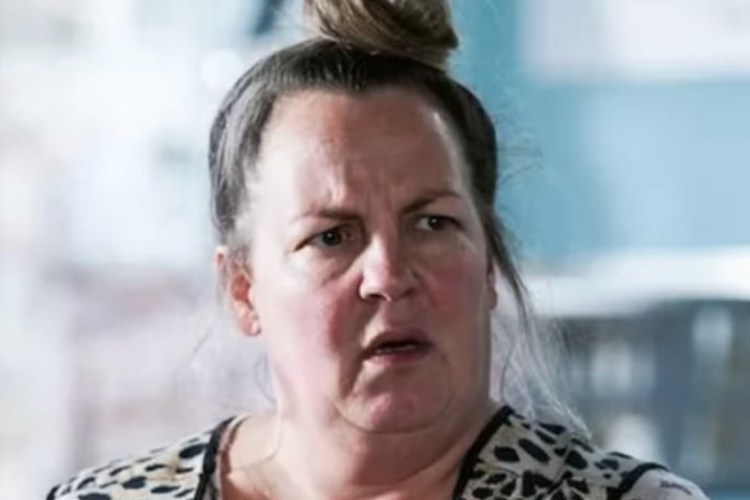
Former Eastenders star Lorraine Stanley has reflected on her weight loss transformation, revealing she lost seven stone after fearing she would have a heart attack.

However, the actor, who played Karen Taylor in the BBC soap, said she regrets having surgery to remove 75-80 per cent of her stomach, stating in hindsight she wishes she had “done it with diet and exercise”.

In a new interview, Stanley said she got “really big” while starring in EastEnders due to her salary.

“I think I had too much money,” she told The Sun, adding: “It’s better not working, because I haven’t got the money to eat out every day.”

The actor recently opened up about her weight loss, revealing she underwent surgery after becoming “immune” to jabs.

“I went to a London clinic, paid an awful lot of money and had it done,” she previously told New, calling it “hands-down the best thing I’ve ever done – both for me and for my family”.

Stanley has received support from a fitness expert and dietitian following the gastric sleeve procedure. She has since stopped drinking and altered her diet.

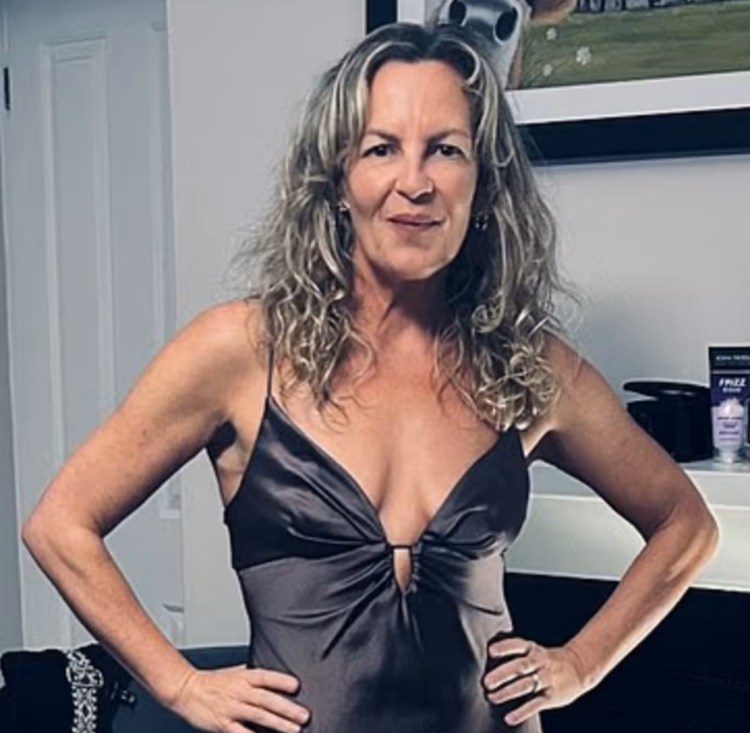
After sharing a photo of her new look on Instagram, EastEnders actor James Bye, who recently left the soap, remarked: “Look at you skinny minny,” while Carly Wicks star Kellie Shirlie added: “Gorgeous inside and out!” Others said she looked “incredible” and “amazing”.

After establishing her acting career in 2000, Stanley had small parts in several BBC shows, including Casualty, Holby City, and Call the Midwife, before landing EastEnders in 2017.

The following year, she won Best Newcomer at the British Soap Awards.

Her other credits include the films London to Brighton (2006) and Made in Dagenham (2010). Shortly before starring in EastEnders, Stanley appeared as a barmaid opposite Tom Hardy in Legend, a film about the Kray twins.

Stanley appeared in eight episodes of EastEnders in 2016, one year before she joined the soap on a permanent basis, playing the small role of Thelma Bragg.

Twelve years before, she played a young version of Laila Morse’s Mo Harris in the spinoff Pat and Mo, which told the backstory to a feud between Mo and Pat Butcher.

But it’s the character of Karen Taylor that Stanley is best known for, having played the part until 2024.

In 2019, the actor, who has a nine-year-old daughter, said it was “nice” to have a permanent role in EastEnders after years of securing bit parts.

“I’ve kind of done everything, but only one episode, so I named myself One-Ep Lou, and it’s nice to have a bit of stability as an actor,” she previously told Channel 4 series Sunday Brunch.

“You appreciate it so much more. Now I appreciate what I’ve got, as opposed to it just being on a plate. I’ve struggled all the way through it – it’s a difficult career.”

Although she has lost a significant amount of weight, she deserves praise for her efforts and seems healthier as a result. It’s far more difficult to do it yourself, and some folks just don’t have the willpower, but she does look amazing – different, but great.

She’s a gorgeous lady, and whether she’s big, small, pink or blue, she should do whatever makes her happy.

Design a site like this with WordPress.com
Get started