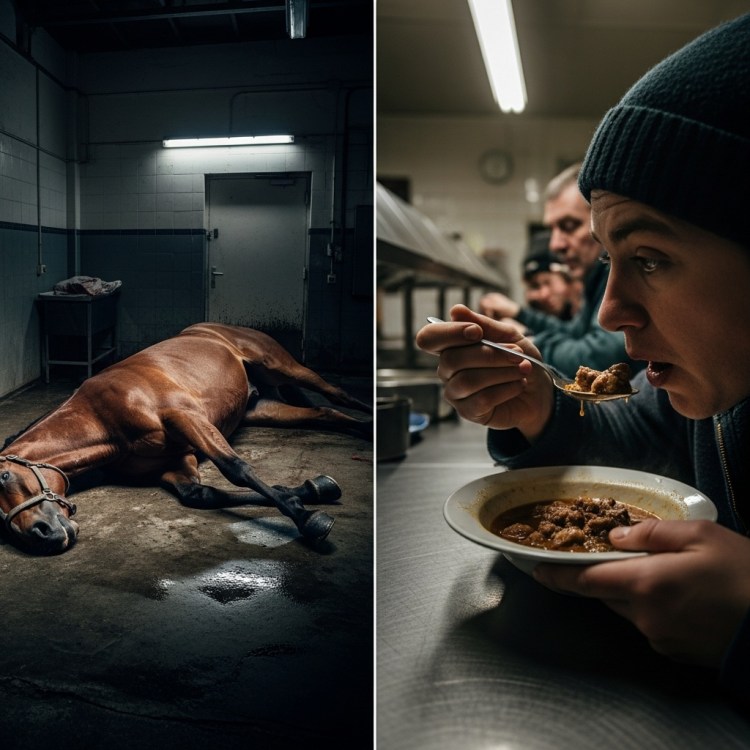
A champion racehorse was destroyed and served to unwitting diners at a council-run soup kitchen, sparking public anger.
The four-year-old racehorse, called Smart Latch, had been retired with an injury but finished up being served at a soup kitchen in southern Turkey, in the Yenshir district in the Mersin province.
A resident discovered a strange object in his portion of kavurma – a traditional Turkish fried meat dish – while eating at the municipal soup kitchen last month, local media said on Thursday.
Agriculture ministry investigators found out that this was Smart Latch’s microchip – a thoroughbred mare which had won first-place finishes at the hippodrome in the nearby city of Adana and two other career wins.
The food the chip had been discovered in was examined on February 4, and investigators realised it was definitely horse meat on that day and the previous day’s batch of kavurma.
They destroyed 213 kilogrammes of kavurma made at the soup kitchen.
In Turkey, it is forbidden to kill horses for meat, particularly registered racehorses, which are usually rehomed or safeguarded.
Details only emerged this week after almost a month had gone by since the chip was discovered in the food.
The ministry said that the Mersin municipality soup kitchen had been ‘added to the list of unsafe products after testing showed it contained meat from a single-hoofed animal’ – a horse, donkey or mule.
‘We are in distress,’ owner of Smart Latch, Suat Topcu, said on Friday, adding that the horse had begun racing in 2024 but was retired after she broke her leg during her last race on October 14.
Throughout her short career, Smart Latch earned a sum of 1,125,000 Turkish Lira (£19,200) in prize money across her three victories.
Mr Topcu said he had arranged to have her donated to a riding club, using a local transporter he knew.
He said he did not know what had happened to Smart Latch until he was contacted by the agriculture ministry.
He was then fined 132,000 Turkish lira (£2,260) for not formally reporting the donation.
The racehorse owner said, ‘The fine is not important; what’s important is finding those who committed this cruelty.’
Investigators believe the horse ended up at the abattoir rather than the riding club.
They believe the horse’s meat was falsely labelled as ‘beef’ and then sold to the company that supplies the municipality’s soup kitchen.
Horsemeat can be sold legally, but pretending it’s beef is most definitely not permitted.
What it boils down to is this. People should know what they’re consuming. If they are okay with eating horse meat, then fantastic, but I believe that most people would not be okay with eating it. I would have no problem eating horse meat as long as it was destroyed humanely.
But this animal was deserving of better. Due to its injuries, the horse was retired and ought to have been transported to a sanctuary rather than a slaughterhouse, and besides, horse racing is cruel and unethical throughout.
Sadly, racehorse trainers care very little about their horses; it’s all about making money, and then they are put down when they are of very little use. Horse racing is cruel and should be prohibited, but it won’t happen because it’s a giant money-making enterprise.
A tranquil retirement is not a possibility for these animals, as they are a financial drain, so they are put down as soon as the publicity goes away, and I’m sure, in time, humans will go the same way.
 THE MONTHLY MOSQUITO