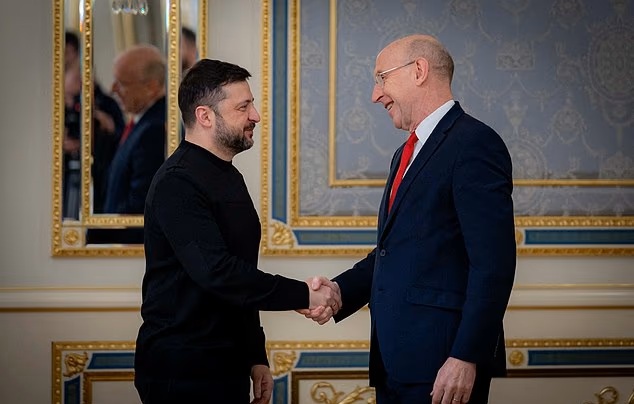
Britain is set to ‘put leading-edge weapons into the hands of Ukrainians’ with powerful long-range ballistic rockets that can destroy Russian targets more than 300 miles away.
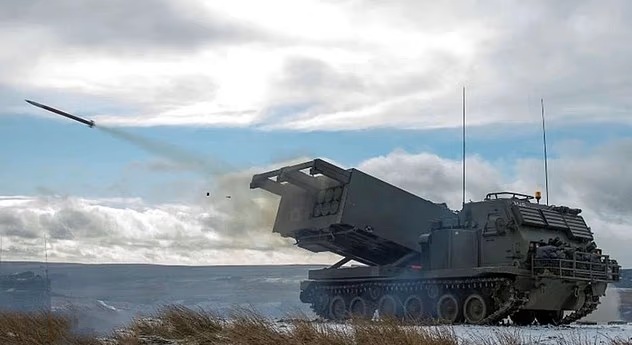
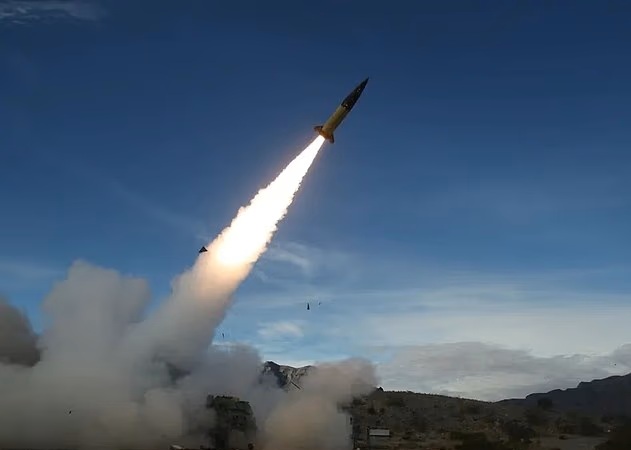
Nightfall rockets – which are packed with 200kg warheads, can be fired in rapid succession and reach as far as Moscow – could prove a valuable asset in Volodymyr Zelensky’s continued fight against Vladimir Putin’s forces.
Now British firms are being sought by the Ministry of Defence to design, develop and deliver the first three test missiles in a contract worth £9 million.
Hailing the potential of the new weapon, Defence Secretary John Healey told The Sun: ‘You defend your cities by having layers of defence, and you partly defend by being able to attack.’
The Labour minister made the comments while on a visit to Kyiv – and just moments after barely dodging a Russian missile and drone attack in the region on Thursday, which killed four people.
Explaining how the train he was travelling on was forced to make an emergency stop, he said: ‘It was a serious moment and a stark reminder of the barrage of drones and missiles hitting Ukrainians in sub-zero conditions.
‘We won’t stand for this and are determined to put leading-edge weapons into the hands of Ukrainians as they fight back.’
The announcement of the Nightall project comes as the Defence Secretary also announced the UK will spend £200 million preparing British troops for deployment to Ukraine in the event of a truce with Russia.
John Healey visited Ukraine to discuss preparations for the Multinational Force with President Zelensky.
The money will be used to upgrade vehicles and communications systems, provide counter-drone protection, and purchase other necessary equipment to ensure troops are ready for deployment.
Healey said: ‘We are surging investment into our preparations following the Prime Minister’s announcement this week, ensuring that Britain’s armed forces are ready to deploy, and lead, the Multinational Force Ukraine, because a secure Ukraine means a secure UK.’
Russia launched a deadly nuclear-capable missile towards Ukraine earlier this week.
After the meeting, Mr Zelensky said he was ‘grateful’ for the UK’s support, adding: ‘It is crucial that the framework for ending the war includes a clear response from the allies should Russian aggression be repeated.’
On Wednesday, Sir Keir Starmer promised to send troops to Ukraine as part of a ‘reassurance force’ organised by the ‘coalition of the willing’.
The government has not yet disclosed the number of British servicemen it anticipates deploying, nor the size of the Western force, which will also include soldiers from France.
Reports have indicated the entire force could amount to just 15,000 men, with the UK providing half the total.
But in the Commons on Wednesday, Mr Healey refused to give details, saying it would ‘only make Putin wiser’.
On Friday, Mr Healey also announced that production would start this month on new Octopus drones for Ukraine, designed to intercept other drones used by Russia to attack civilian targets.
The UK seeks to produce thousands of drones per month, with each Octopus costing just 10 per cent of the drones they are designed to intercept.
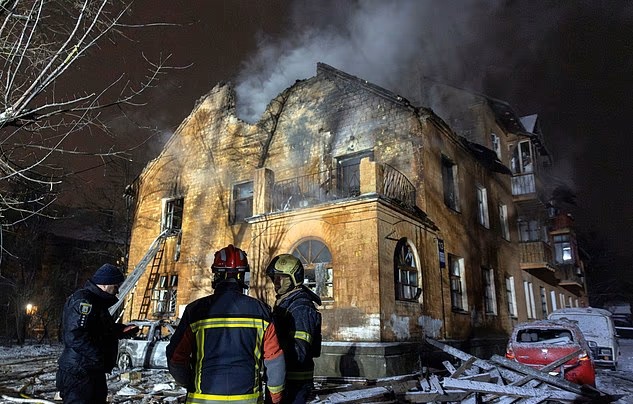
On Thursday night, Russia launched a huge wave of drones and missiles against Ukraine, striking civilian targets and energy infrastructure.
The attack involved more than 200 drones and 20 missiles, according to a British Defence Intelligence assessment, including an experimental hypersonic Oreshnik missile launched against Lviv, in western Ukraine.
The Oreshnik, an intermediate-range ballistic missile (IRBM), is thought to have been fired from 1,000 miles away and well within Russian territory.
It is thought that Europe’s largest underground gas storage facility was the target of the frightening strike near NATO and EU territory.
There is no suggestion that the overnight Oreshnik strike was nuclear – despite its atomic capability.
Putin claims targets are incinerated by conventional Oreshnik missiles unleashing a temperature of 4,000 °C, almost as hot as the surface of the sun.
Production of IRBMs was banned by the 1987 Intermediate Nuclear Forces Treaty between the US and Russia, but the treaty crumpled in 2019 amid reiterated accusations of Russian non-compliance.
Defence Intelligence said Moscow was likely to have only a ‘handful’ of Oreshnik missiles, which cost far more than other missiles it has used to attack Ukraine, adding its use was ‘almost certainly intended as strategic messaging’.
It seems that the UK government wants war, but if there is a war, we will undoubtedly feel the wrath from Russia, and how is it that a war thousands of miles away has become so close to home? We should probably concentrate on rebuilding our own country before attempting to disassemble someone else’s.
It appears that our government despises the British people, and we can’t even safeguard our own borders against small boats.
In essence, our borders are open, but our government is protecting theirs, but it’s seriously none of our business. If they want a war and fight it out, let them get on with it, because if the shoe were on the other foot, I can assure you they wouldn’t help us.
Russia will attack us if the UK gets involved, and they will claim it is self-defence, which is their right, but sadly, we just can’t keep our meddling noses out of other people’s businesses.
We are constantly told that there is not enough money for our own people, and our government claims it cannot afford certain things, yet it finds unlimited funds for this.
According to our government, there is no help for our country. It is bleeding us dry to support immigrants and war, and our Armed Forces are in short supply, all because Keir Starmer wants to be on the world’s stage, but to be on the world’s stage, you would have to be a natural-born leader. Have a laugh, Keir Starmer couldn’t even run his own bath, let alone his own country.
 THE MONTHLY MOSQUITO