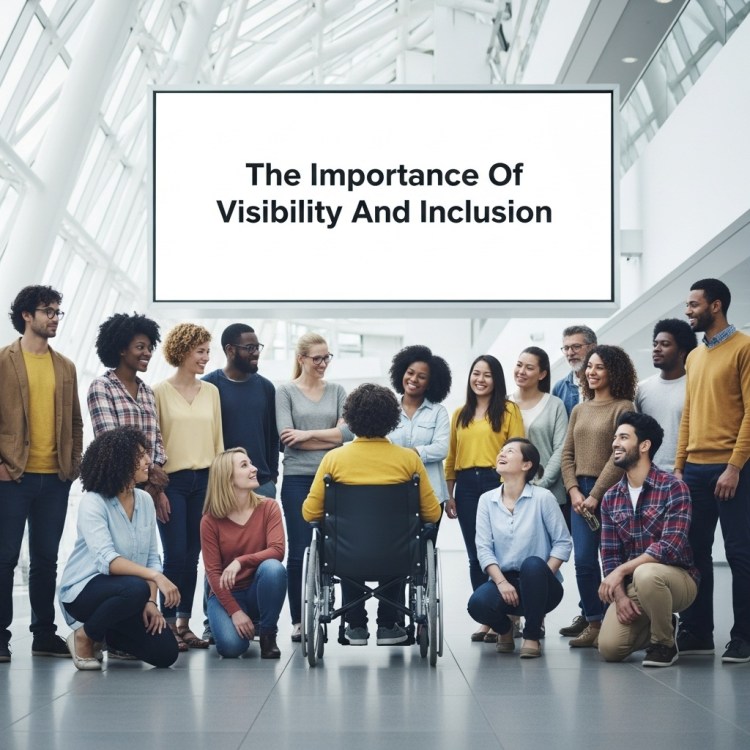
Visibility and inclusion matter because they determine who gets to partake fully in society. It reduces erasure, strengthens belonging, and helps to disassemble systemic inequalities. However, visibility is more than just simply being seen. It’s about being recognised, understood, and accepted as part of the social geography.
When groups are visible, they are more likely to be represented in decision-making, media, and public life, which in turn leads to more inclusive policies and cultural narratives.
Most people assume that by a certain time in our lives we should feel sorted, or that life should be predictable or even stable, but for disabled people, the reality is so far from that. It’s the uncertainty, and that they are not sorted, it’s not predictable, and it’s certainly not stable, and that is not a failure or flaw on their part; it’s a failure on other people’s part, and their reflection of how life should be.
What people have to remember is that life changes, careers change, health shifts, relationships evolve, and responsibilities grow. Stability isn’t fixed; it’s something that moves, but many people quietly carry uncertainty about finances, health, family, or identity; they just don’t say it out loud, and the life you envisioned, say at the age of 20, doesn’t always match the life you end up living, and that void can feel unsettling.
My being disabled makes me feel self-aware, reflective, and I am willing to articulate something that most people bury – that’s strength, not instability.
Life is not straightforwardly ‘better’ for Disabled people now in the UK – some rights and attitudes have improved over the decades, but recent welfare reforms, rising living costs, and the tightening of the benefit rules mean numerous Disabled people are experiencing declining conditions rather than progress.
Access is unpredictable, there is weak support and mindsets that lag far behind public narratives. This is the reality for numerous disabled people, neurodivergent people, LGBTQ+ people, and anyone whose needs rely on systems that weren’t built with them in mind.
Some workplaces, councils, or communities adapt quickly; others hardly move, and this is why so many people feel like they’re continually having to justify themselves, re-explain their needs, or fight for things that are apparently already guaranteed.
Progress has happened, but it hasn’t yet reached the ground in a reliable, lived way, and that’s the part that gets obliterated when people say, ‘But things are better now.’
I am pointing out something real, not imagined, not exaggerated, and not in my head, and disabled people are being pushed back while the world pretends that there has been progress.
The accessibility gaps in housing, transport, and public buildings remain enormous, despite decades of lawmaking, while medical professionals still receive minimal training on disability, chronic illness, or congenital conditions.
Older disabled people encounter a double invisibility: ageism + ableism, and policy decisions are still made about them, but not with them, and our younger generations often don’t know the history of disability rights, the activism, the protests, the sit-ins, the fights that forced change, and why? Because they have been deliberately ‘dumbed down.’
Schools, the media, or the government are allegedly teaching our children less than they should, on purpose. They have lower attention spans because they are growing up with mobile phones, fast content and endless distractions, making learning harder.
As for disability and accessibility, it’s not that some places can’t be accessible; it’s the ones that claim they are accessible, and then you find out that they’re not, and that’s not a minor inconvenience; it’s a breach of trust, which also means they are in breach of the Equality Act.
The core issue is misrepresentation. When a venue promotes itself as accessible, disabled people plan around that promise – transport, carers, equipment, energy levels, time. When that reality doesn’t match, the consequences are real.
Wasted journeys — time, money, and physical effort lost
Safety risks — steps, narrow doors, broken lifts, inaccessible toilets
Exclusion — being turned away from a space you were told you could use
Emotional impact — embarrassment, frustration, or feeling like an afterthought
Sadly, accessibility is treated like a tick-box, not a lived reality.
Unfortunately, when one is disabled, whether it be visible or a hidden disability, as well as managing your condition, you are also managing how the world perceives you. That double load ends up building a kind of quiet, chronic uncertainty about their future, but believe me when I say, fear isn’t a sign of weakness; it’s a rational response to living in a system that often only recognises what it can see, and you are not alone in that experience.

