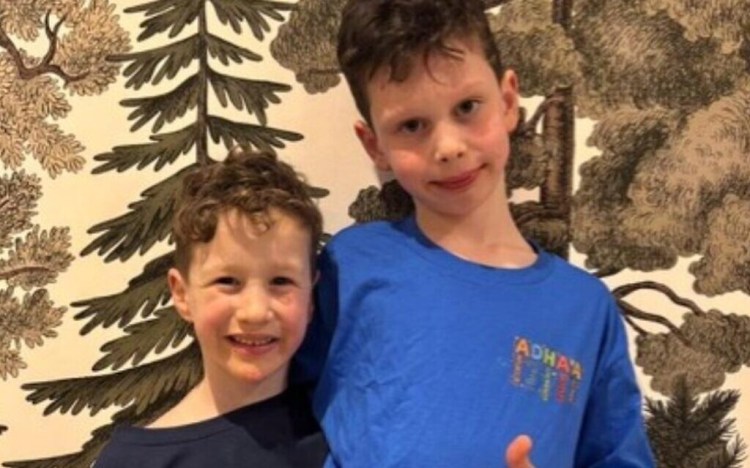
Eight‑year‑old Nate Zilberkweit Lewy, a Jewish schoolboy from north London, has launched a clothing brand called ADHAA – Attention Deficit Hyperactivity Awesome Ability — a project designed to flip the narrative around ADHD and celebrate neurodiversity.
What he has done is create a positive rebrand of ADHD by replacing ‘disorder’ with ‘Awesome Ability,’ to highlight strengths like creativity, energy and original thinking, and he has designed clothing such as T-shirts, hoodies, caps and vests, each featuring ADHAA branding and has produced them to order.
He raised the money for charity, donating £5 from every item to ADHD UK. The project has already raised £230.
He told Ham & High, ‘I started ADHAA because I wanted to do something really cool: make some awesome clothes that also help people… Sometimes it can be tough to focus… but it’s definitely not a disorder.’
This isn’t just a cute kid project; it’s a powerful example of neurodivergent children reclaiming their identity, community-driven awareness, especially within the Jewish community, and grassroots activism that actually raises funds and shifts perceptions.
This fits well with my main interest in housing inequality, ADHD advocacy, and how society handles individuals with unmet needs: a youngster rejecting stigma and forging his own story, something that adults in positions of authority frequently fail to accomplish for children.
Children influence neurodiversity movements in three main ways: by reshaping the narrative, exposing systemic failures, and driving cultural change through their lived experience. Their influence is not symbolic — it is structural, political, and transformative, and young people’s lived experiences are the raw material that shapes how society understands neurodivergence.
Schools are frequently built around neurotypical norms, and children reveal where those methods fail. Numerous neurodivergent children feel unsupported in school settings designed without them in mind, and they frequently resort to masking, suppressing stimming, rehearsing conversations, and copying peers to avoid punishment or bullying.
Their difficulties highlight the need for neurodiversity-affirmative education, in which schools modify their surroundings rather than making kids change, and children’s experiences have historically sparked entire movements. The neurodiversity movement itself grew when autistic people, many echoing on their childhood experiences, connected online in the 1990s and began organising.
Today, young people use social media, school councils, youth groups, and creative projects (like clothing brands, art, TikTok advocacy) to challenge stigma.
Their voices push researchers and clinicians to reconsider intervention models, shifting from ‘normalising’ children to supporting autonomy, coping strategies, and well‑being.
What stands out about Nate is that his brilliance isn’t just academic; it’s emotional, intuitive, and socially aware. That combination is rare in adults, never mind a child.
He understands how ADHD feels from the inside and can articulate it in a way that helps others, and he’s not just thinking about himself; he’s thinking about every kid who’s ever been shamed for sensory needs or attention differences. He’s turned his lived experience into a clothing brand, which is a level of imagination most adults never reach.
He recognises stigma and is actively attempting to change it, and what’s more, he has the courage to speak openly about neurodivergence, and at that age, it takes guts, especially in a world that still misunderstands it.

