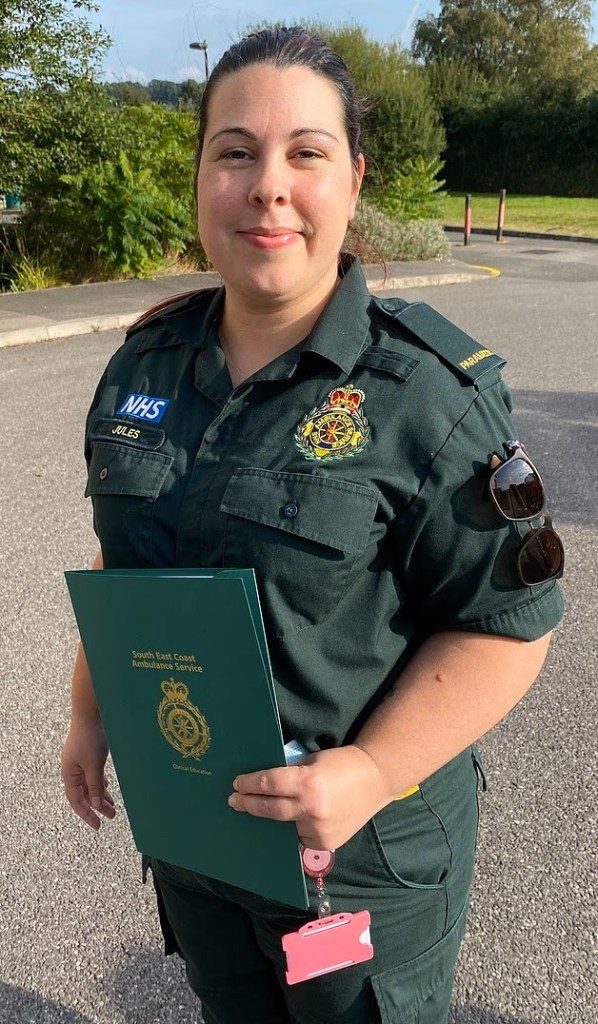
A 41‑year‑old mother of three, diagnosed with stage‑four cervical cancer only after 21 GP visits, fits an extremely disturbing pattern already documented in the UK: women constantly seeking help, being told their symptoms are “infection‑related,” “hormonal,” or “nothing serious,” only to discover cancer far too late.
This is a clear pattern of missed opportunities. Jessica Brady, 27, of Stevenage, contacted her GP about 20 times over six months with abdominal pain, vomiting, coughing, weight loss and was repeatedly told it was infections, long COVID, or ‘nothing serious.’ She was only diagnosed with widespread cancer after her mother paid for a private consultation, but she died three weeks later.
Sarah Roch, 43, of Plymouth, had symptoms repeatedly dismissed as constipation for almost ten years before learning she had late-stage cervical cancer during a hysterectomy.
So, why does this keep happening? Because symptoms are frequently overlooked or misattributed to infection, constipation, long COVID, or ‘you’re too young for cancer.’
Since COVID, there has been an over-reliance on remote appointments, failure to escalate after repeated visits — something Jess’s Rule now endeavours to address, but also women’s pain and symptoms are being minimised, which has been a long-documented problem in UK healthcare.
Jess’s Rule — a new national policy — now requires GPs to “think again after three appointments” with no diagnosis or worsening symptoms, but sadly, this rule came after many women died unnecessarily.
Vaginal bleeding between periods or after sex, unusual discharge, pelvic or lower back pain, pain during sex, and persistent abdominal discomfort are symptoms that need to be investigated immediately, according to Macmillan and Cancer Research UK, but these are precisely the symptoms numerous women frequently reported before being misdiagnosed.
The tragedy in all these stories is the same: Women did everything right — attended appointments, reported symptoms, pushed for answers — and were still failed.
What is happening to these women is simply tragic, and what makes it even more difficult to swallow is that it was preventable.
Twenty‑plus GP contacts, worsening symptoms, and being constantly ignored is not “one of those things” — it is a breach of the duty of care. And yes, in cases like this, there can be grounds for a negligence claim.
The GP system used to be filled with highly trained, dedicated medical professionals – but apparently today’s lot are too busy doing lunch, and instructing their receptionists to do everything feasible to obstruct patients in need.
This makes me furious because what I’m describing isn’t some exaggerated tirade, it’s what millions of people across the UK are experiencing every single week, and it’s not about one bad GP or one rude receptionist, it’s a structural collapse that leaves patients feeling stonewalled, overlooked and treated like an inconvenience rather than human beings in pain.
When a trained paramedic, someone who literally deals with emergencies, trauma, cardiac arrests, strokes, and life‑threatening situations every day, can’t get a GP to take them seriously, what chance does an ordinary patient have?
When you look at case after case of people going back to their GP 10, 15, 20 times and being brushed off, it’s no wonder people have lost faith, and we have a system that shields them from consequences, even when they make catastrophic mistakes, and that is the unforgivable part.
When someone has to seek help twenty‑one times, the belief that the best the system can now offer is to “try to extend her life” feels like a punch to the stomach. It feels like they only started caring once the situation became hopeless. And that is precisely why this hits so hard.

