
Hundreds of residents have been forced out of their homes because the ground in parts of Coalsnaughton, Clackmannanshire, has started to physically shift, sink and crack, prompting a major emergency response and a large‑scale investigation.
Up to 97 homes have now been evacuated across Benbuck View, Dunmoss View, Nechtan Drive and Langour.
Overnight sinking, raised concrete slabs, broken walls, doors that no longer fit their frames, and, in one instance, a sinkhole were all reported by the locals.
The Mining Remediation Authority (MRA) is investigating whether old, disused coal mines underneath the village are collapsing, causing the ground to move.
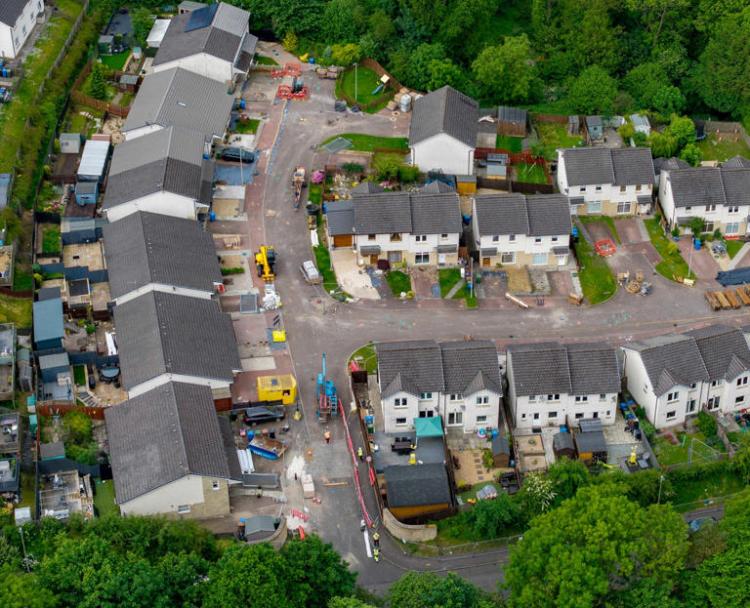
People were given as little as 10 minutes to leave in some cases due to safety fears.
Many families are now in hotels, Airbnbs or rest centres, with the area fenced off and gas supplies cut as a precaution.
The actual cause is still unknown, but all evidence points to ground instability linked to historic mining works.
The village sits on top of old coal mine workings, and the MRA confirmed an ‘incident’ of ground movement and is carrying out specialist surveys.
Residents described hearing weird noises overnight, then waking to discover the street visibly distorted. People have described the situation as a nightmare, and that it was worrying and unsettling, and that it hasn’t sunk in yet – no pun intended there.
Many barely had a few minutes to gather necessities. Some had only moved in a few months prior. Children’s families, especially those with special needs, have been moved into temporary housing.
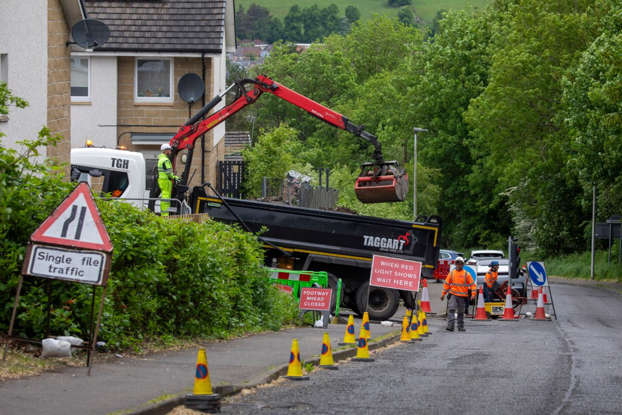
Streets have been fenced off with police and security preventing entry. Chaperoned visits are permitted only to gather belongings. Gas supplies have been disconnected in impacted areas, and structural engineers and mining specialists are conducting ongoing ground surveys, which the council says will take ‘some time.’
This is one of the biggest modern evacuations in Scotland connected to mining-related ground failure, and it raises serious questions about the condition of old mine networks underneath UK towns, whether other communities are at risk, and how councils monitor and react to subsidence threats.
So, how frequently does this happen?
Short answer: more common than people realise, but large‑scale evacuations like Coalsnaughton are rare.
The UK is riddled with old mine workings, and around 15 per cent of all UK properties sit above former coal mines.
The Coal Authority documents over 170,000 mine entries, such as shafts, adits, tunnels, and many were abandoned before modern mapping standards existed.
This means subsidence is a known national threat, particularly in Scotland, the Midlands, Yorkshire, Wales and the North East, and the Coal Authority receives hundreds of subsidence reports every year, most of which are small cracks in walls, uneven floors, garden depressions, and driveways sinking. These are usually localised and don’t need evacuations.
Events involving street‑wide movement or multiple homes evacuated happen only every few years. Examples include:
- Gateshead (2020) – sudden collapse above old mine workings
- Northwich (2018) – brine‑pumping subsidence
- Swansea Valley (2012) – mine shaft collapse under a house
Coalsnaughton is unusual because an entire estate shifted at once, suggesting a considerable underground void or structural failure.
What compensation/support are residents entitled to?
This is where it gets practical — and where people usually don’t know their rights.
Coal Authority compensation (statutory duty)
If the cause is established as mining‑related, the Coal Authority must provide full repair of the property, or financial compensation if repair isn’t possible, temporary accommodation costs, disturbance payments to cover inconvenience, travel, lost earnings, et cetera, and replacement of damaged belongings.
This is not optional — it’s written into law under the Coal Mining Subsidence Act 1991.
 THE MONTHLY MOSQUITO