
A young woman who was misdiagnosed as being severely mentally unwell for one year has said it took GPs, medical professionals and opticians months to find out what was actually wrong with her.
Sarah-Jane Doherty, 24, from Doncaster in Yorkshire, first noticed she was sick in July 2025 when she found herself being extremely fatigued, to the point where she could not stand up for long periods of time.
Other manifestations included depressive episodes, psychosis, hallucinations, manic episodes, and problems with her mood being up and down, which led professionals to believe she was showing symptoms of bipolar disorder. The 24-year-old was put under the care of secondary mental health services and placed on antipsychotic medication.
Sarah-Jane said: “They said that they would put me on an antipsychotic, and my symptoms still weren’t resolving. In fact, some of them are getting worse.
“They said that they thought that my hallucinations were mood congruent, so they were associated with my mood, which was why they weren’t responding to typical antipsychotic treatment. I think when that was said to me, I was a bit deflated.”
During this time, Sarah-Jane also had problems with her vision, including seeing floaters and noticing she was squinting at her computer screen – despite having her glasses on. After seeing her optician, Sarah-Jane said they urged her to get new glasses due to rapid vision decline and the presence of floaters.
But on Tuesday, June 23, 2026, Sarah-Jane was taken to A&E after experiencing an excruciating headache that left her in so much pain after 60 seconds that she was crying on her bed. She was also having the feeling of electric shocks running down her left arm.
She said: “I went from not having a headache at all to crying because I was in that much pain. And I rang my mum, and my mum came down straight away, and I was just absolutely inconsolable.
“I couldn’t put my head up, just lying face down on my bed because nothing was helping. I took co-codamol, which eventually relieved it, and then I carried on getting ready and went out with my friends.”
From then on, Sarah continued to feel ill for several days before going to urgent treatment at Doncaster Royal Infirmary, and being taken through to A&E for a CT scan on her head.
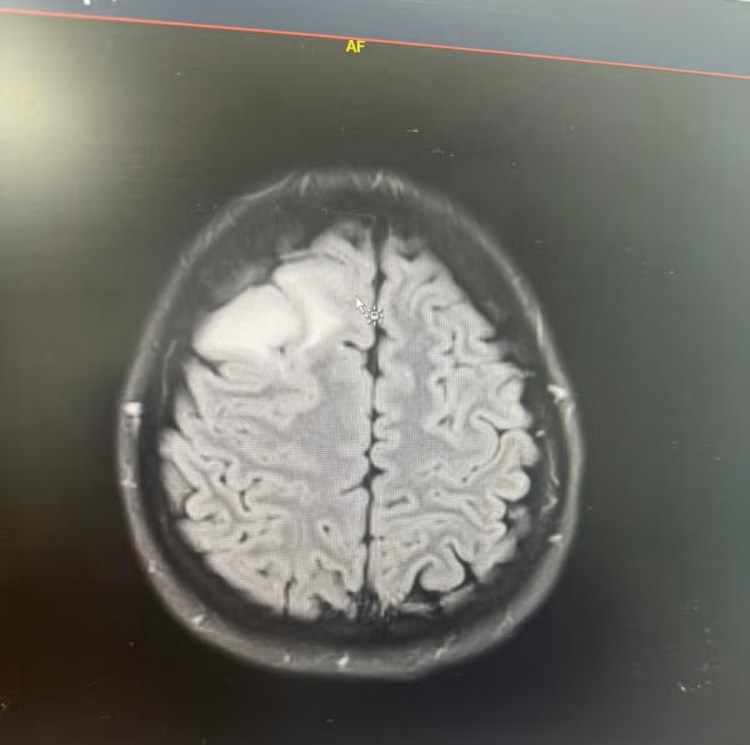
After the CT scan brought up what doctors initially believed was a bleed on her brain, Sarah was taken for an MRI scan and placed onto a ward. The next morning, Sarah-Jane’s life changed forever after being told she had a brain tumour around the size of a golf ball.
She said: “They told me in a bay of four people by myself that I had a brain tumour, and that they think it is a glioma. I was just distraught; I was absolutely hysterical.
“I rang my mum straight away, and she came into the hospital. She rang my dad, and he came home from work to see me. I feel a bit like I’m in an episode of Grey’s Anatomy, like it just doesn’t feel like it’s actually me.
“I was upset, I was stressed thinking, ‘what if it’s not removable?’ I didn’t know what grade it was. What if it’s spread somewhere else in my body? And I just had so many what-ifs in my mind that I just kept crying.”
Sarah-Jane went through several other tests, including a lumbar puncture and a full body CT, before being referred to Royal Hallamshire Hospital under the neurosurgery department, where she was diagnosed with a suspected Grade 2 Glioma.
She was also told that the antipsychotic medication she was taking was hiding a number of her major symptoms, such as the electric shocks she was feeling down her left side, which would have presented as seizures if she was not on the tablets.
“They gave me loads of leaflets, and there’s a massive list of complications, which is just so scary. I’m just praying that none of them occurs, but it’s brain surgery, so it obviously is risky in itself.
“They said, hopefully they can get it all, but they won’t know for sure whether it’s grade two or a grade three until they take a biopsy when they remove it.
“And if it does turn out to be grade three and it’s gone further, then it’s most likely radio and chemotherapy, but hopefully it doesn’t come to that. My family’s heartbroken; they’re distraught, but they’re staying strong as well as they can be.
“We’re just trying to spend a lot of time together as a family, but it brought us even closer, if that makes sense. My dad keeps crying, my mum keeps crying.
“I hear them cry when I’m not in rooms because they’re trying not to; they’re trying to be brave for me in front of me. My sister lives in London, she’s come home to stay with me.”
After learning about her brain tumour, Sarah-Jane began sharing her experiences on TikTok in an effort to support others going through similar circumstances and to increase awareness of her symptoms so others wouldn’t overlook them.
She said: “I didn’t know anybody my age who’d had a brain tumour. I posted and then obviously a lot of people started viewing it, and it’s kind of inspired me to keep posting because I’ve got a lot of comments from people going through similar things who didn’t know who to talk to about it.
“It’s not normal to feel ill all the time, and we put this aside and blame things like work for not wanting to go to the doctors, but you’re the most important thing, and it’s important to put yourself first.
“Push for a second opinion if there is any chance that you think something is wrong. You have the right to a second opinion; if somebody is experiencing new symptoms, it can’t be put down to your mental health.”
One of the most dangerous blind spots in frontline medicine today isn’t that GPs don’t care; it’s that the system teaches them to treat the presenting symptom, not investigate the underlying cause, unless something is blatantly abnormal.
Headache? Treat the headache. Hallucinations? Treat the hallucinations. This is efficient for common ailments but disastrous for rare or atypical ones, and with 7‑minute appointments (and shrinking), GPs are forced into “pattern matching” rather than full clinical reasoning.
Once a GP thinks “this is anxiety” or “this is psychosis,” every forthcoming symptom gets interpreted through that lens, and you seldom see the same doctor twice, so nobody builds a proper case history.

When someone develops hallucinations, confusion, paranoia, or personality changes out of nowhere, the first question should be:
“What physical process is affecting the brain?”
Not:
- “Is this schizophrenia?”
- “Is this stress?”
- “Is this trauma?”
Because sudden‑onset psychosis is a hallmark of:
B12 deficiency
Autoimmune encephalitis
Thyroid storms
Epilepsy
Brain tumours
Dementia and Alzheimer’s
Infections
Metabolic disorders
Every single one of these can be detected with:
- blood tests
- neurological examination
- MRI or CT scan
But many patients never get those tests.
The system becomes dangerous when physical illness is mistaken for mental illness, and this distinction matters. Because the danger isn’t the individuals — it’s the diagnostic shortcuts, the time pressure, the biases, and the absence of proper medical investigation that lead to fatal mistakes.

