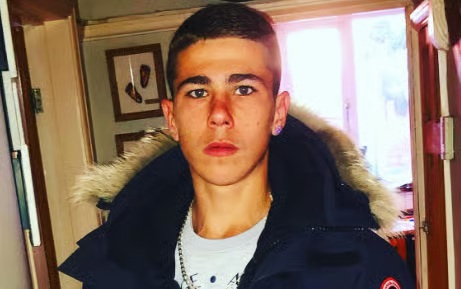
A young man with a severe brain injury waited more than three hours for an ambulance that should have reached him in about 18 minutes, an inquest heard.
Previously fit and healthy Connor Matthews, 20, died after a routine sinus infection spread into his brain.
But Inner West London Coroner’s Court heard that on the day he became unwell, the London Ambulance Service was “overwhelmed” by the sheer number of calls coming in.
Further delays to his treatment meant he died sooner than he otherwise would have, experts said.
Although staffing was “above plan”, 250 ambulance hours were lost to hospital handover delays, and LAS was under “significant pressure” as it faced 250 calls an hour plus 75 similar emergencies.
Mr Matthews’ 999 call was correctly graded as category two — meant to be reached in about 18.5 minutes — yet he drifted in and out of consciousness for 3 hours and 21 minutes before help arrived.
Senior Quality Assurance Manager Lyn Sugg apologised to the family, saying: “I’m sorry we weren’t able to do better for Connor that day — we were just overwhelmed.”
The inquest heard that the 20‑year‑old road traffic manager’s routine sinusitis had become invasive, causing pus in his brain, meningitis and swelling.
At his inquest, experts said that by the time he reached hospital, almost nothing could still be done to save him.
Independent witness Carl Hardwidge said Mr Matthews would have needed to reach A&E 48 hours earlier to have had any chance of survival.
However, senior coroner Professor Fiona Wilcox said the delays in his care — including hours without intubation — were “concerning.”
Mr Matthews had been suffering sinus headaches in the weeks before his death on 7 July 2023, and had vomited at his girlfriend’s house on 3 July.
The next evening, he returned to the family home in Uxbridge and went to bed, but his mother Kim McCarthy said he woke at about 4.30 am and was sick again.
The next day, Ms McCarthy thought he had a stomach bug, but became worried when she saw him drive off around 4.30 pm, struggling to remember how to open the driveway gates.
Friends and family eventually found him trying to walk to his nan’s house, confused and gripping railings to stay upright.
He was taken to his grandmother’s home, where he began hallucinating, drifted in and out of consciousness, and lost the ability to speak.
An ambulance was called at 6.52 pm on 5 July, but due to high demand didn’t arrive until 10.15 pm.
When Mr Matthews reached Hillingdon Hospital at 10.28 pm, it was clear he was in a critical condition with a suspected brain injury.
Two scans showed a midline shift — signalling severe brain swelling — plus an infection and an abscess.
Specialist neurosurgeons at St Mary’s Hospital in Paddington were contacted, and it was agreed he would be transferred for urgent brain surgery.
Much debate focused on the fact that Mr Matthews wasn’t intubated at Hillingdon, a step that could have prevented further brain damage if his condition had worsened.
Dr Pangrekar said intubation would have taken about an hour, and he didn’t want to delay the transfer.
“In this situation, the priority was getting him to surgery as fast as possible,” he said.
Consultant neurosurgeon Carl Hardwidge was brought in to review the case for the coroner.
He said Mr Matthews would only deteriorate until surgery, so he should have been intubated immediately.
When he arrived at St Mary’s at 02:40 am, surgery was delayed another 2.5 hours while clotting advice was sought from a haematologist.
His Glasgow Coma Scale wasn’t checked often enough, and he wasn’t promptly seen by an anaesthetist — required before intubation — the court heard.
Hours later, he suffered a seizure and was finally intubated — but by then his oxygen had been cut off, and he was effectively brain dead, the court heard.
He was taken for surgery within the hour, but his brain swelling was unsurvivable.
Asked if the delays had “accelerated his demise”, Mr Hardwidge said: “Yes. The delay and lack of intubation made him die sooner, though he still would have died.”
“If he’d come in a couple of days earlier, he might have stood a chance.”
Surgeons evacuated the infected brain tissue and started broad antibiotics and antifungals, but it made no difference.
After surgery, his pupils stayed fixed and dilated — a sign Dr Sophie Camp called “challenging for survival.”
Asked how often sinus infections spread to the brain, she said: “We see various abscesses — often from the ear — but sinus‑related ones are not unusual and well within our scope to manage.”
Mr Matthews died on the evening of July 7, 2023, with his family beside him.
A post‑mortem by Dr Anna Rycroft found he died from a subdural empyema — a rare, life‑threatening intracranial infection — alongside meningitis, strokes and raised cranial pressure.
She recorded his death as natural causes, adding that the sinusitis had arisen spontaneously.
After his death, friends raised £6,399 for the family via GoFundMe.
On the day of his funeral, dozens of bikers escorted his coffin — carried in a sidecar — to the church.
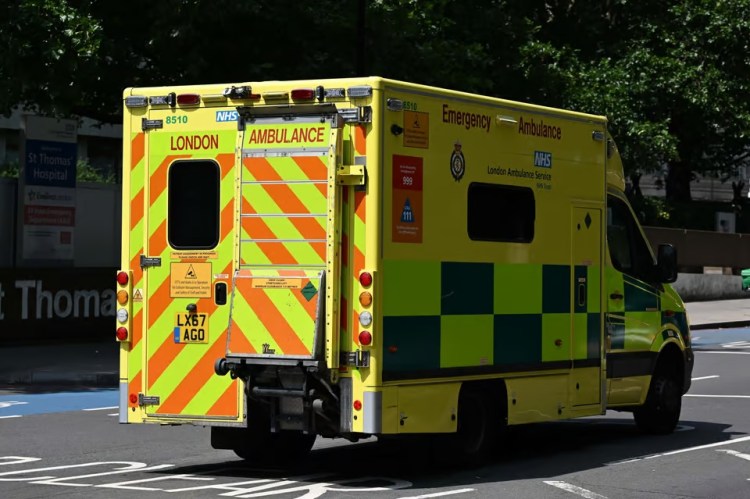
Prof Wilcox gave a narrative conclusion: the death was natural, with its timing affected by treatment delays and the lack of timely intubation.
She added: “My sympathies go to Connor’s family and friends.”
“He was a delightful young man who lived life fully, and I’m sorry he was taken so suddenly and traumatically.”
People described him as a kind, lively young man who left a strong mark on everyone who knew him.

