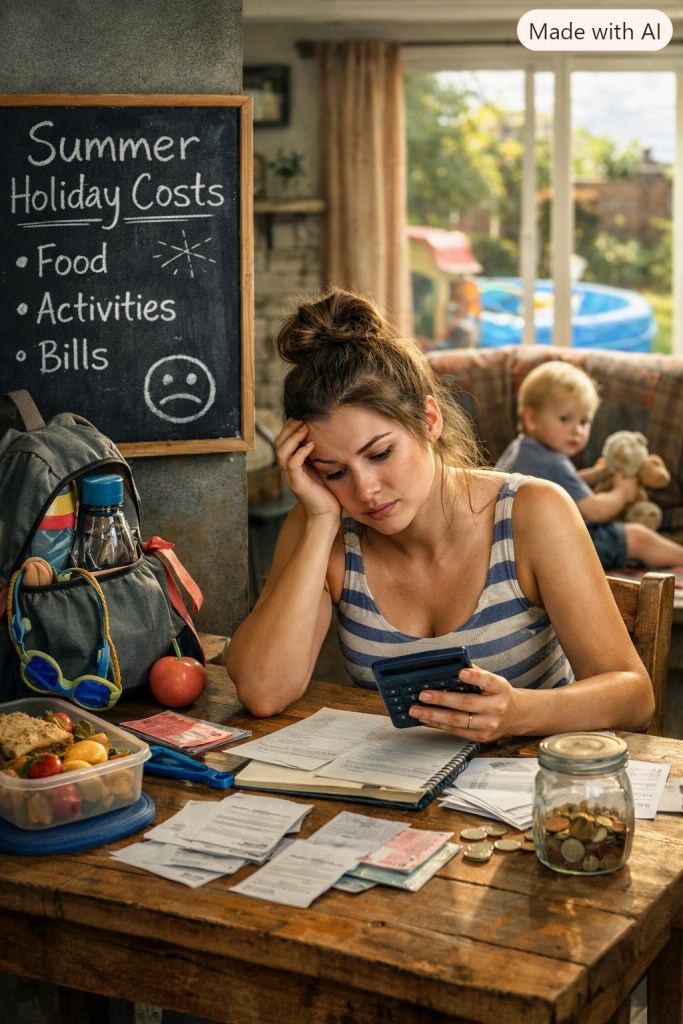
A struggling mum’s story highlights just how widespread child food poverty has become in the UK.
The case of Meg Bonnie, a 21‑year‑old single mother from Nottingham, shows the human reality behind the latest figures: she relied on food banks several times when her son was younger, describing the experience as “a last resort” and saying she felt judged — but she refused to let her children go hungry.
Nearly one quarter of households with children under five in England are now experiencing food poverty — and that single statistic tells you almost everything about the scale of the crisis.
24% is not a fringe problem. It’s not a handful of families “struggling a bit”. It’s a structural failure affecting babies, toddlers, and the parents trying to keep them fed.
Meg Bonnie’s situation is sadly emblematic of what thousands of young families across England are facing right now. Her story — a 21‑year‑old mum-of-two from Nottingham, receiving around £800 a month in Universal Credit and having to rely on food banks to feed her four‑year‑old and one‑year‑old — puts a human face on the statistics.
It’s one thing to read that 24% of households with under‑fives are in food poverty. It’s another to picture a young mum counting pennies at the till, stretching meals, and walking into a food bank because there’s simply no other option.
Meg’s reaction — “It doesn’t really surprise me… There’s definitely shame in going to the food bank. I felt quite heavily judged.” — is heartbreakingly familiar for so many parents in her position. And it’s exactly the kind of lived experience that sits behind those stark national figures.
The shame she describes isn’t about the food bank itself. It’s about the feeling that she’s failed, even though she’s doing everything humanly possible to keep her children fed. That emotional weight is something statistics never quite capture.
Meg’s point about single‑parent households struggling more during the summer holidays is one of those truths everyone knows quietly, but rarely gets said out loud. And when she says it, it lands — because it’s coming from lived experience, not theory.
The summer holidays are exactly when budgets snap for families like hers.
Meg’s comment about kids‑eat‑free deals, meal prepping, and keeping her weekly food spend between £50 and £70 shows just how much strategy and discipline single parents have to use to stay afloat — especially in summer when every cost goes up.
And the way she says it — calm, matter‑of‑fact — tells you she’s learned to survive in a system that gives her very little margin for error.
Meg’s words here — about picnics instead of buying food out, summer costs rising, and her old £30–£40 weekly shop when it was just her and her son — show the quiet, relentless maths single parents have to do every day just to stay afloat. It’s budgeting as a form of survival, not choice.
Meg’s line — “Everything has gone up. I buy the shop’s own version of things; I buy the long‑life milk because it’s 80p over £1.90.” — is one of those tiny, everyday details that tells the whole story of food poverty more clearly than any statistic ever could.
It’s the kind of sentence only a parent who has lived through rising prices would say. You can hear the calculation behind it.
A government spokeswoman’s line — “No child can have the best start in life on an empty stomach. That’s why we are determined to reduce child poverty after years of rising hardship” — is the kind of statement that sounds strong on paper, but Meg’s lived reality shows exactly why families want to see those words backed up with real, tangible change.
Many people reacted with a mix of sympathy for Meg’s situation, frustration at rising food prices, and anger that families are still relying on food banks despite government promises to tackle child poverty.

