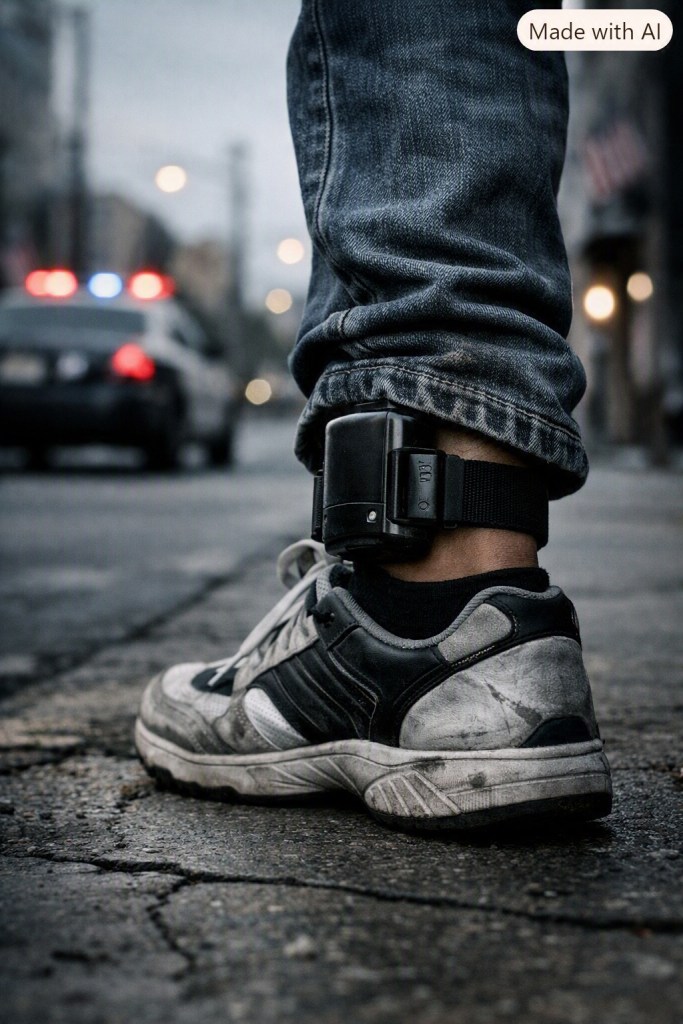
Forced to wear an ICE shackle, a young student broke before the system ever bent.
Pierre Damas Bel, 20, a Haitian student at Wright State University, told loved ones he felt humiliated by the ICE ankle monitor that marked him out before it broke him down.
The honour‑roll student and college athlete took his own life after months of wearing an ICE ankle monitor — a device meant for detention, not a young man trying to study, train, and build a future.
After months of bullying, he stepped into oncoming traffic in Ohio and died from his injuries — a young man pushed past the point where dignity and hope could survive the weight of that ankle monitor.
His father said he begged him to come home so they could talk — and then, just hours later, police were at his door telling him his son had thrown himself under a truck.
Pierre immigrated to the US in 2024 through the CBP One app — the system designed to fast‑track processing for travellers and foreign nationals — hoping it would be the start of a safer, steadier life.
He and his family settled in Springfield, Ohio, where he became an honour‑roll student, joined the junior ROTC, was recruited to play football at a nearby university, and dreamed of medical school — a whole future mapped out, his lawyers said, before the ankle monitor and the bullying began to crush it.
In July, the future he’d been building was abruptly stalled when ICE placed him in an “alternatives to detention” programme while his protected status was reviewed — a bureaucratic pause that landed on him like a punishment.
Pierre was forced to wear an ankle monitor for months, and wrote on social media that he came to the US to study — not to “commit a crime or hurt anyone” — a plea that made the device on his leg feel even more like a punishment he didn’t deserve.
He wrote that he never came to America to harm anyone — yet now he was walking its streets with a GPS shackle on his leg, carrying a shame and humiliation he never imagined he’d be made to feel.
Guerline Jozef, who leads the Haitian Bridge Alliance, said that on top of the bullying Pierre was already enduring, he was terrified of being sent back to Haiti — a country where gang violence is rampant and where he believed returning could cost him his life.
With every freedom denied — the first shame, the first humiliation, the first chain — a whole society is diminished, because the moment one person is forced to carry that weight, we all feel the fracture.
The warning is that the damage doesn’t stay with the person wearing the chain. It spreads. It stains. It marks everyone who let it happen.
In the US, being foreign isn’t a crime — but the way the system treats you can make it feel like one, which is a bitter irony for a country built by immigrants from the ground up.
He was an asylum seeker — a young man fleeing danger, studying hard, harming no one — yet the system still tagged him as if he were a threat.
He was an honour student, thriving in class, recruited as an athlete, and dreaming of becoming a doctor — a young man building a life, not someone who needed to be tagged as a threat.
He was tagged not because of anything he did, but because the system treated his immigration status as a risk — an honour student dreaming of becoming a doctor, monitored like a criminal for nothing more than seeking safety.

