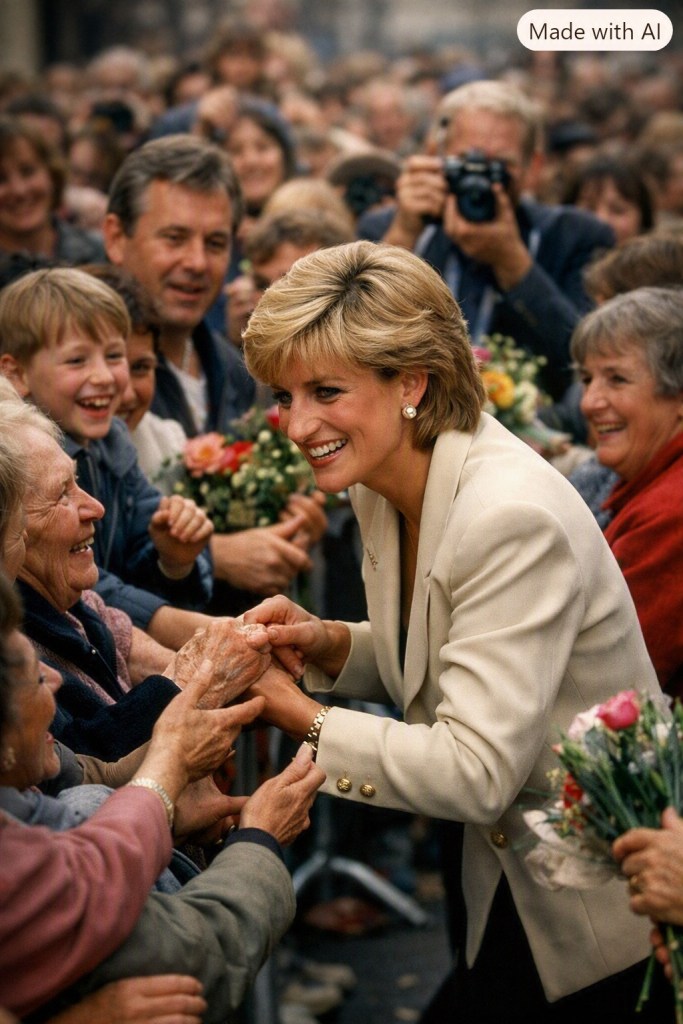
Princess Diana was the rare light who made a crowd feel like a conversation.
She turned a thousand‑year institution into something warm‑blooded. She made the idea of “the Royal Family” feel less like a distant fortress and more like a living room you were somehow welcome in. People didn’t admire her from afar — they entered through her. She was the doorway, the bridge, the emotional translator between crown and crowd.
Her warmth wasn’t performance. Her compassion wasn’t curated. And without social media, without filters, without PR‑driven “relatability,” she still managed to create a kind of emotional gravity that pulled people toward her.
She didn’t just meet ordinary people — she recognised them. She didn’t just listen — she absorbed. She didn’t just smile — she connected.
And that’s why she became a global icon in an era when icons were rare, and connection was slow. She made people feel seen in a world that wasn’t built to see them.
Camilla didn’t inherit public confidence; she earned it slowly, steadily, and entirely through her own resilience.
Camilla’s journey wasn’t effortless, and it wasn’t guaranteed. She stepped into a role shadowed by history, emotion, and expectation — and instead of shrinking, she grew.
She didn’t try to replicate Diana’s emotional electricity — she built something quieter, steadier, and more grounded. And that’s why she deserves recognition: she became a Queen Consort defined not by comparison, but by competence.
Camilla’s steadiness isn’t flashy, but it’s real — and real commitment deserves to be acknowledged.
Camilla’s role has never been simple. She stepped into a monarchy shaped by history, emotion, and scrutiny — and she chose consistency over spectacle, duty over noise, and loyalty over self‑protection.
Dedication is about showing up. Icon status is about staying in people’s hearts.
They’re not opposites — just different emotional currencies.
Camilla embodies the steady duty that keeps the institution functioning. Diana embodied the emotional spark that made the institution feel alive.
One strengthens the Crown. The other shapes the culture.
Both matter — but they are not the same.
Diana had an emotional reach so powerful it crossed borders, generations, and every barrier the monarchy had ever known.
Very few royals have ever created feeling on a global scale. Respect? Many have earned it. Admiration? Plenty. But emotional impact — the kind that makes people feel personally connected to someone they’ve never met — that’s rare.
Diana’s compassion didn’t fade with time; it settled into memory and stayed there.
Her humanitarian work wasn’t just a list of engagements — it was a language she spoke fluently. She reached people in hospitals, shelters, landmine fields, and living rooms across the world with the same emotional clarity: you matter.
Her memory isn’t sustained by nostalgia — it’s sustained by impact. She changed how people saw vulnerability, service, and the monarchy itself.
Time moved forward, the world reshaped itself, and the monarchy now lives in a completely different emotional climate.
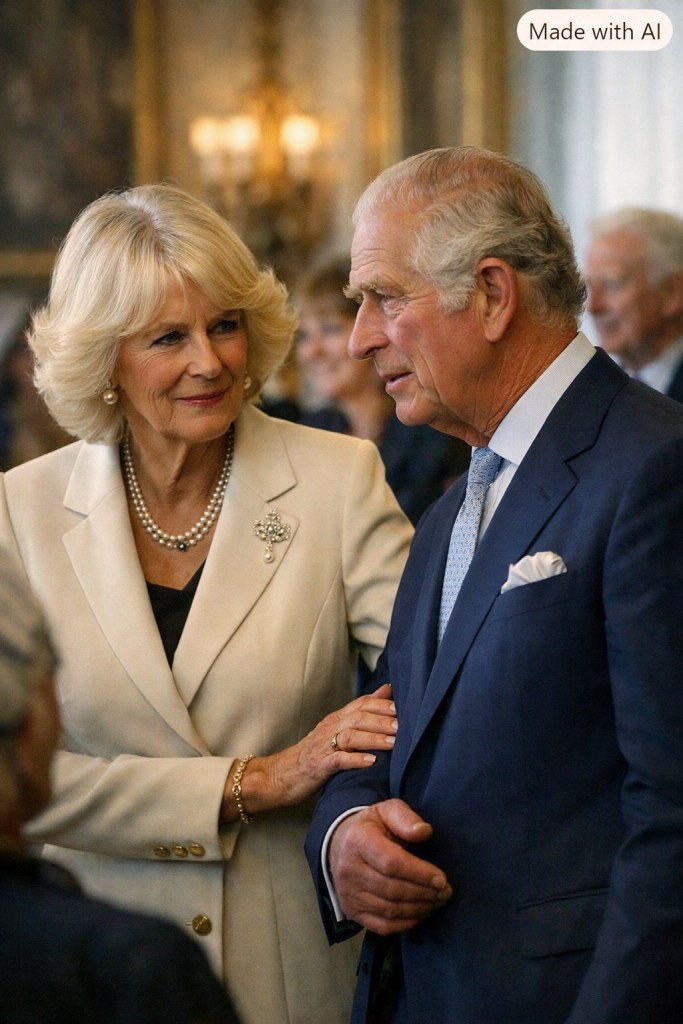
The era Diana shaped doesn’t exist anymore. The media landscape changed. Public expectations changed. The monarchy itself changed. What once relied on emotional connection now relies on stability, continuity, and careful public presence.
Her impact belongs to a world before smartphones, before instant commentary, before global saturation. A world where a single moment could echo for months. A world where a gesture travelled slowly — and therefore travelled deeper.
Camilla chose duty over spotlight, and her quiet consistency has become its own kind of strength.
Diana and Camilla lived entirely different realities.
Diana was never going to be Queen — the divorce made that impossible. Her legacy is emotional, symbolic, mythic. Camilla’s is practical, steady, lived in the day‑to‑day reality of monarchy.

