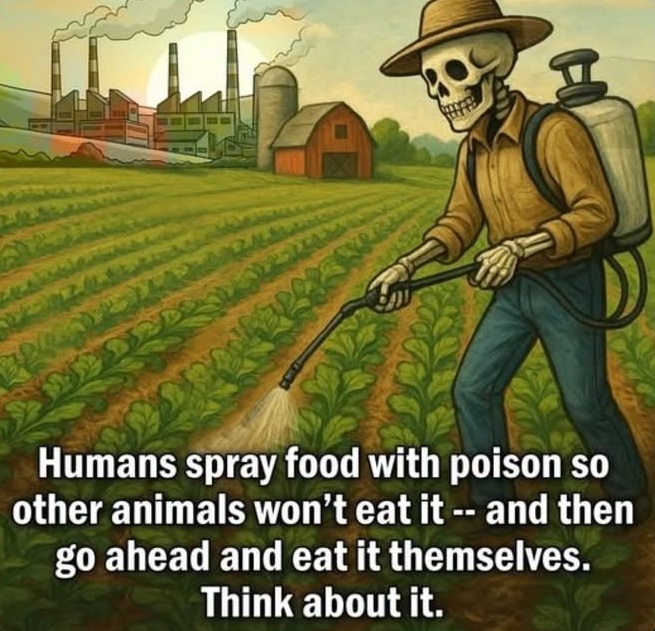
The dark, satirical image of a skeletal farmer spraying fields under a choked, industrial sky serves as a stark visual summary of our modern food system. It brings to life a profound environmental paradox: humanity is the only species that actively contaminates its own food supply with toxic chemical pesticides while celebrating the practice as technological advancement. Under the false guise of progress, mass-production techniques prioritise short-term chemical yields over long-term environmental and human safety.
Compounding this irony, globalised trade policies frequently force consumers to pay exorbitant prices for imported meats and vegetables that have sacrificed both flavour and nutritional value during long-distance transit, all while high-standard domestic farming systems are left underfunded. Ultimately, a system that prioritises chemical intervention and international shipping miles over fresh, transparent, local farming creates an expensive illusion of choice that sacrifices our health, our environment, and our culinary quality.
We’ve managed to invent a system where we microdose bug spray through our salads, get sick, and then take pill versions of more chemicals to fix it—congratulations, humanity, we’ve successfully monetised the poison loop.
…effectively turning our dinner plates into a science experiment where the vegetables do the spraying for us, all so we can pay a premium later for a pharmaceutical antidote to our own groceries.
Leaving us stranded in a bizarre reality where our tomatoes come with a built-in pest defence system, our medicine cabinets look like chemistry sets, and the only thing truly growing organically is the profit margin of the companies selling us both the poison and the cure.
The reality of the modern global food system means that nearly all non-organic, mass-produced food undergoes some form of chemical treatment or processing long before it ever reaches your kitchen.
This breakdown exposes the uncomfortable truth that our weekly grocery haul undergoes a gauntlet of chemical treatments from seed to supermarket shelf long before it ever touches a frying pan.
Because systemic pesticides are absorbed directly into the cellular tissue of non-organic crops as they grow, they cannot be washed off in the kitchen sink, turning a standard supermarket vegetable into a visual guessing game where consumers have no way of knowing its true chemical load.
Leaving us to blindly trust a corporate supply chain that treats transparency like a trade secret, where our only real choice at the supermarket checkout is deciding which invisible cocktail of chemicals we feel like risking for dinner.

