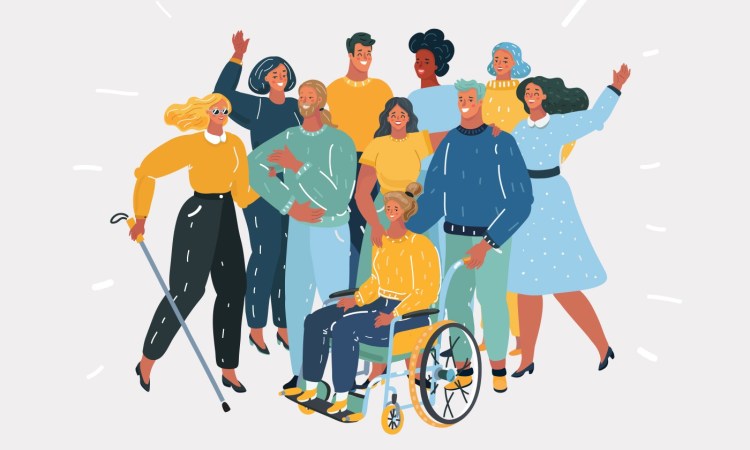
Disabled people fear they are being sacrificed to balance the books. When support is cut, services disappear, and legal aid is stripped away, the most vulnerable often pay the price. A fair society does not balance its finances on the backs of those who need help the most.
Rather than asking disabled people and low-income families to shoulder the burden of spending cuts, the government should focus on ensuring that those who avoid paying their fair share of taxes contribute properly, because a fair society does not balance its books by taking support away from the people who need it most.
Too often, disabled people are made to feel disposable, yet the line between disability and non-disability can be as thin as a single accident, illness, or change in circumstances. The support we provide today is the support any one of us may need tomorrow.
I am appalled by the way certain parts of the establishment seek to demonise disabled people, portraying them as a burden rather than recognising them as citizens deserving of dignity, support, and equal rights.
Many disabled people and pensioners feel increasingly overlooked, as though they are viewed as costs to be managed rather than citizens to be supported. When essential support is cut while concerns remain about tax avoidance, tax evasion, or public spending waste, it is understandable that people question whether the most vulnerable are being asked to carry too much of the burden.
Disability is not something that happens to “other people”. It can arrive in an instant through a stroke, a heart attack, an accident, a diagnosis, or any number of health conditions that can affect any one of us. Too often, people fail to understand the realities of living with a disability or chronic illness until it happens to them, and only then do they discover the financial, physical, and emotional costs that come with it.
What disappoints me most is not the disability itself, but the indifference. We all look after our own interests to some degree, but we are also a society, and a society has a duty to help those who cannot manage alone. Many disabled people are not asking for luxury or privilege; they are simply trying to survive with dignity. The sad reality is that too many people do not understand that struggle until it affects them personally.
Too often, disabled people are portrayed as a burden rather than as human beings facing challenges that most people cannot see. The reality is that many disabilities and chronic illnesses involve constant pain, exhaustion, and daily struggles that are invisible to others. Anyone who is able-bodied and feels envious of a disabled person should remember that most disabled people would exchange their condition for good health in a heartbeat. Before judging, take a moment to consider what it takes just to get through an ordinary day. Many disabled people deserve recognition not for extraordinary achievements, but for the courage and resilience it takes to keep going when every day is a pain day.

