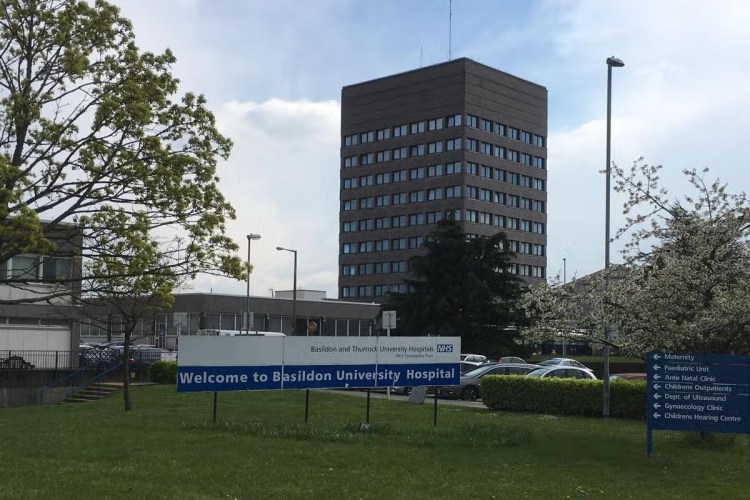
A 19-year-old trainee teacher, Millie Hook, probably would have survived a severe illness had she received appropriate medical care at Basildon Hospital, an Essex coroner has ruled in a critical Prevention of Future Deaths report.
Assistant Coroner Stephen Simblet warned that the emergency triage systems at Basildon Hospital are “inadequate,” noting that Millie Hook suffered a fatal cardiac arrest while waiting for critical care despite paramedics initially flagging her severe condition.
After suffering a rapid deterioration at home with severe vomiting, diarrhoea, and fainting, ambulance crews immediately recognised that Millie Hook was seriously unwell and rushed her to Basildon Hospital.
Although paramedics explicitly warned hospital staff that Millie was suffering from a suspected serious case of sepsis, critical admission delays caused her to deteriorate rapidly, according to the coroner’s report.
Even after her admission, Millie was never transferred to the critical care unit despite her rapid deterioration, as hospital staff failed to monitor her blood measurements promptly or insert a catheter due to a total lack of urgency or appreciation of her condition.
In his report, Coroner Stephen Simblet stated that Millie Hook was inadequately monitored and her measurements poorly recorded throughout her hospital stay, concluding that staff completely failed to appreciate the severity and continuous worsening of her illness.
Despite an emergency department doctor identifying that Millie needed to be moved, a departmental conflict over intensive care criteria caused a serious failure to transfer her either immediately or within an hour of her arrival, depriving her of necessary medical treatment.
The coroner explicitly concluded that had Millie received this appropriate and necessary medical treatment, she would, on the balance of probabilities, have survived.
At 1:45 am on 28 January 2024, Millie Hook tragically died in the hospital’s resuscitation area after a cardiac arrest at 12:45 am proved fatal, leading the inquest to conclude that her death by natural causes was directly contributed to by neglect.
Coroner Stephen Simblet warned that future deaths could occur unless action is taken, citing concerns that Basildon Hospital’s emergency systems are “inadequate” and that critical cases are “not being appropriately escalated to senior clinicians in a timely manner”.
The coroner explicitly extended his warnings beyond a single hospital, stating that the inadequate standard of clinical expertise was a trust-wide issue affecting not only Basildon Hospital but also Broomfield Hospital in Chelmsford and Southend Hospital.
The coroner raised a severe trust-wide safety concern, stating that some long-term consultants at the trust lack appropriate registration standards, meaning doctors in departments treating critically ill patients fail to meet the required NHS criteria for holding and maintaining employment in those vital positions.
The Mid and South Essex NHS Trust strongly rebutted the concerns, counter-arguing that it exclusively appoints suitably qualified doctors with specialist registration to permanent consultant roles, only utilising temporary locum cover without specialist registration during vacancy gaps or leave, in full compliance with national guidelines.
The trust detailed that one of the critical care consultants involved in Millie’s care was a competitively appointed locum consultant in intensive care medicine who holds multiple advanced qualifications, including both European and UK Fellowship credentials in intensive care medicine.
The trust emphasised that locum consultants not on the specialist register undergo the same annual appraisal process as substantive consultants, providing full assurance to the trust’s responsible officer and the General Medical Council (GMC) that they remain up to date and fit to practise.
The trust clarified that locum consultants receive the same training, development funding, and professional activity time as substantive consultants, with annual job plans agreed alongside their clinical director to strictly define their scope of practice in line with their specific skills and qualifications.
The trust confirmed that detailed reviews of the emergency department’s skill mix following the incident have led to funded staffing increases for both medical and nursing workforces, strengthening the team’s clinical capacity at Basildon Hospital.
This expansion has introduced two additional senior doctor posts, alongside a significant increase of 27 registered nurses and 22 healthcare assistants—allowing for five nurses and four healthcare assistants per shift—with recruitment currently underway and temporary staff successfully filling the gaps in the interim.
To address clinical ownership and safety, the trust has introduced a revised, emergency-department-specific policy focused on the safe management of patients, clear definitions of clinical ownership, and appropriate escalation routes.
But what you have to ask yourself is this. How many of these doctors are being properly vetted by the British Medical Council?
The critical distinction raised by the coroner in Millie Hook’s case is not whether the doctors are vetted to practice medicine entirely, but rather which specific register they sit on and whether they hold the exact qualifications for a permanent consultant post.
The General Medical Council (GMC) is currently vetting 341 doctors for outstanding pandemic-era identity checks while actively investigating 26 cases of potential foreign misconduct.
Following an investigation by The Times, the General Medical Council discovered that 22 foreign-trained doctors with a history of overseas bans or disciplinary action had bypassed vetting to practice in the UK.
Hospitals are not bypassing legal background checks, but they use legal loopholes—such as fixed-term locum contracts and Foundation Trust autonomy exemptions—to place fully vetted doctors into senior consultant roles without requiring them to hold a spot on the GMC Specialist Register.
While individual frontline NHS staff are highly trained and trustworthy, the overstretched healthcare system faces severe structural crises, meaning patient safety can be compromised by systemic understaffing, waiting times, and administrative failures.
Independent health reviews conclude that while the foundational NHS model excels at providing universal financial protection, the current healthcare system is not fit for purpose due to severe structural crises, missing critical safety targets, and requiring radical reform to prevent avoidable deaths.

