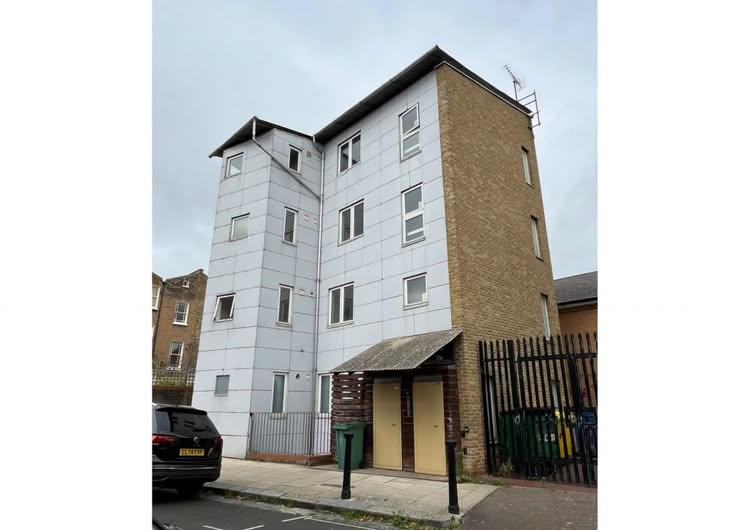
The “Wasted London” investigative series highlights a four-storey block of five one-bedroom flats on Herbert Street that has been left empty for years by a housing association despite a severe local housing shortage.
The early-2000s block, owned by Riverside Housing Association, previously served as supported living accommodation before being left empty for years.
Now derelict, the building features broken windows and is sealed off with metal hoarding and a large metal door to protect access.
Empty since 2022, these valuable one-bedroom properties could have been brought back into use long ago, residents say.
The block has been left empty because Riverside Housing Association determined that repairing its severe structural issues was financially unviable, while local critics blame bureaucratic delays and the low priority given to small buildings by large corporate housing providers.
Knocking it down and rebuilding is too expensive for just five flats because demolition and construction costs cannot be spread across a large number of units, making it more practical for Riverside to sell the site to a specialised local housing provider.
Riverside has delayed the sale because they are prioritising a complex, bureaucratic asset transfer to a local social housing provider instead of a quick auction on the open private market.
London’s thousands of boarded-up homes are generally left to rot due to stalled council regeneration schemes, wealthy investors treating properties as vacant financial assets, or private homes trapped in lengthy legal and probate limbo.
This widespread neglect directly worsens the crisis, forcing councils to spend over £1 billion a year on expensive private temporary accommodation for homeless families while viable housing stock sits empty.
Leaving properties empty reduces immediate maintenance hassles, provides an easier sale with vacant possession, and can maximise land value when the site is cleared.
Failing to use empty urban sites directly pressures councils to build on the Green Belt, threatening natural spaces and creating concrete jungles to meet the desperate need for new homes.
Utilising underused golf courses to build high-quality prefabricated homes offers a practical solution to the housing crisis, reviving a durable construction method that historically provided communities with immense pride.
Placing elderly and disabled residents in high-rise flats is highly dangerous due to severe fire safety risks and inadequate evacuation plans that frequently leave vulnerable individuals trapped in their homes.
The reliance on dangerous high-rise blocks clearly shows that decision-makers are failing to consider the safety and dignity of the human beings forced to live in them.

