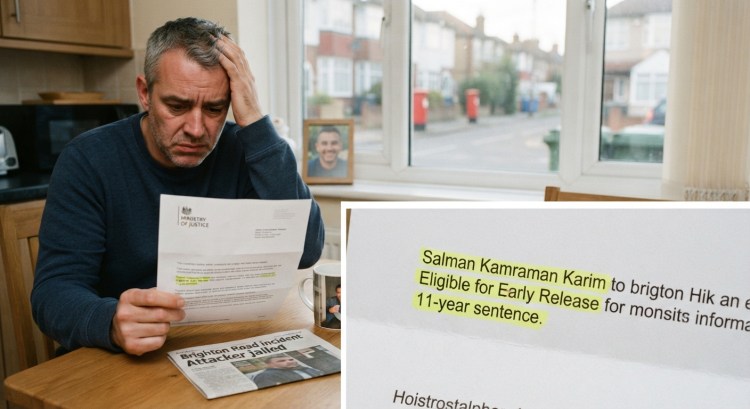
James Hatcher, 41, expressed absolute devastation after discovering that his attacker, Salman Kamraman Karim, is already eligible for early release just months into an 11-year prison sentence for pushing him into the path of an oncoming van on Brighton Road.
James Hatcher, 41, was walking home along Brighton Road when he was kicked into the path of a moving van by stranger Salman Kamraman Karim—an unprovoked attack captured in shocking video footage—leaving Mr Hatcher with life-threatening injuries, including a bleed on the brain and broken legs, ribs, jaw, and pelvis that required a six-day induced coma, multiple operations, and ongoing physical therapy.
Salman Kamraman Karim was jailed for 11 years at Croydon Crown Court on June 4, 2026, after being found guilty of grievous bodily harm with intent.
However, on July 20, 2026, just weeks after the sentencing, James received a shocking notification from the Ministry of Justice stating that Karim was already eligible for early release.
Expressing his outrage, the Croydon resident stated: “It is sickening that he is eligible for early release.”
“He was only sentenced in June, and yet I am already being told that he is eligible for early release.”
“I would not be alive today if it weren’t for the air ambulance staff.”
Under the government’s early release scheme, prisoners like Karim, who are currently required to serve two-thirds of their sentence, will instead be released in half the time.
More than 700 prisoners walked free on Thursday as part of an emergency government initiative designed to alleviate severe overcrowding across Britain’s prison estate.
Over the next ten months, more than 4,500 inmates—including violent offenders—will become eligible for early release under the government’s program to manage prison capacity.
James Hatcher stated that the prospect of his attacker being released early has “really hurt” him.
On the day of the attack, James Hatcher was walking home after getting a haircut when he was kicked at random into the path of an oncoming van.
James Hatcher was wearing noise-cancelling headphones as he walked down the road, completely unaware before being kicked at random into the path of an oncoming vehicle.
Recalling the moments leading up to the attack, Mr Hatcher said: “It was a really nice day. I had my haircut, and the bus wasn’t due for a while, so I decided to walk.”
“I was just walking down the street when a man stepped out of a vape shop and kicked me directly into the path of an oncoming van.”
It is not a mistake but a direct result of the Sentencing Act 2026, which automatically reduced the time inmates must serve for standard determinate sentences from two-thirds to half the term because Grievous Bodily Harm (GBH) with intent was not fully excluded from the government’s emergency prison overcrowding measures.
According to polling data, the majority of Labour voters do not appear to be okay with the policy, as an Ipsos poll shows that 64% of people who voted Labour actually oppose the early prison release scheme.
Courts hand down the full headline sentence because it represents the total time an offender remains under state control—split between physical custody and community probation on licence—though retroactive legislative changes by the government can later alter that prison release point mid-sentence.
A severe prison overcrowding crisis forced the government to adjust automatic release points, meaning judges still hand down full sentences based on parliamentary law while the Ministry of Justice retroactively shifts inmates to community-based probation to prevent cells from running out completely.
While sending convicts to a remote island draws on historical precedents like Britain’s 19th-century transportation of prisoners to Australia, modern international human rights laws and the astronomical costs of building secure infrastructure from scratch make offshore penal colonies impossible to implement today.
Under current UK law, non-British citizens who receive a prison sentence of 12 months or more face mandatory deportation and the revocation of their residency status, though the process is not entirely automatic due to legal appeal rights under the European Convention on Human Rights (ECHR).
The long-term solution to the prison overcrowding crisis involves combining a £4.7 billion investment to build 14,000 new cells by 2031 with strict sentencing reforms that prioritise community service for minor offences, freeing up scarce physical cells for dangerous criminals.
While the 14,000-cell expansion is actively materialising with thousands of places already open or under construction, independent experts warn that whether it will permanently end the crisis remains highly debated because the prison population is still projected to outpace capacity by 2030.
The UK cannot easily send small boat migrants back because international maritime laws require rescue crews to save people at sea rather than push them back.
The UK cannot change international maritime laws on its own because they are global treaties signed by over 160 countries that require massive international agreement to amend.
The definitive legal answer is fast-tracking asylum decisions on British soil to deport failed applicants quickly, or moving claimants to safe third countries for processing outside the UK.
The UK is looking to partner with non-EU European countries like Albania or safe African nations to establish these offshore processing hubs.
Under UK law, foreign nationals who commit crimes face mandatory deportation because British rules apply once they are in the country.
The UK cannot immediately send foreign criminals back because of slow embassy paperwork, uncooperative home countries, and legal human rights appeals.
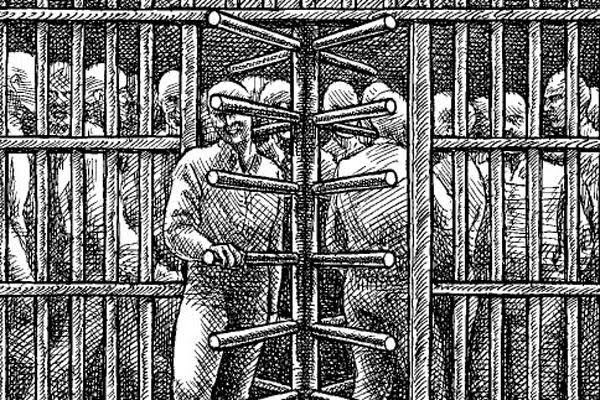
The combination of full prison cells forcing early releases and legal appeals stalling deportations creates a continuous cycle that critics describe as a revolving door.

