I don’t have a view on this, but I felt it would be an acceptable topic to report on.
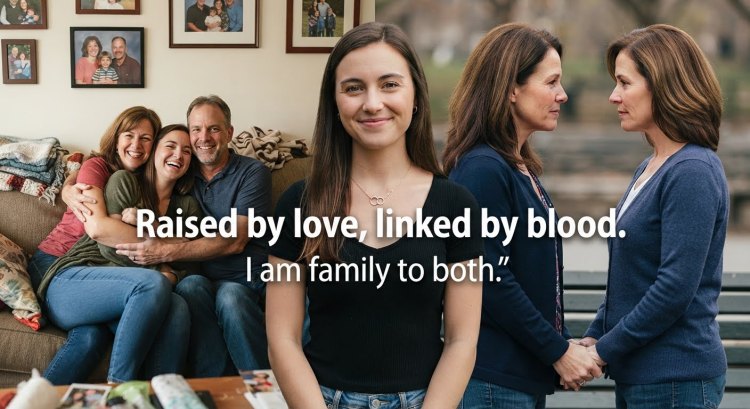
So, the subject matter is: if a child has been adopted, do they consider the family that adopted them as their blood family, or the person who birthed them?
As many of you know. I am a freelance journalist and writer of books, but in my spare time I have a fascination with genealogy. Over the years, I have reconnected numerous people who have been adopted and wanted to find their birth parents.
Frankly, it’s not for the faint-hearted. Some have been extremely successful, some not so, and some have been real tearjerkers.
There is no single answer. If you were adopted and you had a happy and fruitful life, but you still want to find your birth parents, as I said, it’s not for the faint-hearted because connecting with birth parents is challenging, or at least, can be, because they are strangers. They might be connected by blood, but they are still strangers. You never grew up with them; you know nothing about them; it’s like forming a new friendship.
There are numerous reasons why children are adopted; some are truly tragic, and some not so tragic. Either way, the fact remains that they were put into the system to be adopted by God knows who.
Numerous children who have been adopted went to extremely good homes, some not-so-good homes, and that can leave the child extremely bitter and twisted.
Some of those mothers who gave up their children. The mothers went on to have other children, making the child later on in adulthood, if they find out, extremely sad indeed.
I myself have a remarkably comparable family situation, but I looked for the children (not mine), but family nonetheless. I knew about them for years, heard little whispers amongst the family, which indeed, being me, made me extremely curious (curiosity killed the cat).
I found the mother (my great aunt), and then eventually, after she died, went to look for the children. I eventually found them. One didn’t want to know, even though I had a very in-depth conversation with her and tried to keep in touch; the other, I did speak to, it seems to have dwindled off.
As I said, it’s not for the faint-hearted, and it has left me very sad to think that they ended up in the system and then were adopted, and I am very thankful that my life was better, but that does not mean that I am not sad about it, and I wish that I could have done more.
When I discovered my great aunt, she was living in a Salvation Army hostel. I would visit her every month and make sure that she had everything that she needed.
I won’t go into significant detail because it’s personal, but she did some extremely bad things when she was younger. When I found her, she was already 90 years old, and quite honestly, she was lovely, and as far as I was concerned, whatever she had done in the past stayed in the past; it’s the present that’s important.
It’s the children you have to feel sorry for because they did not ask to be brought into this world; they never had a choice, and their life should be so much better than it was.
Whether someone wants to find their birth parents or not, it’s a personal choice, but it’s really not for the faint-hearted. I understand that they do want to find their birth parents; they want answers: why?
Why is a big question, but look at it this way. Will it make their life any better than it is now – that is the question!

