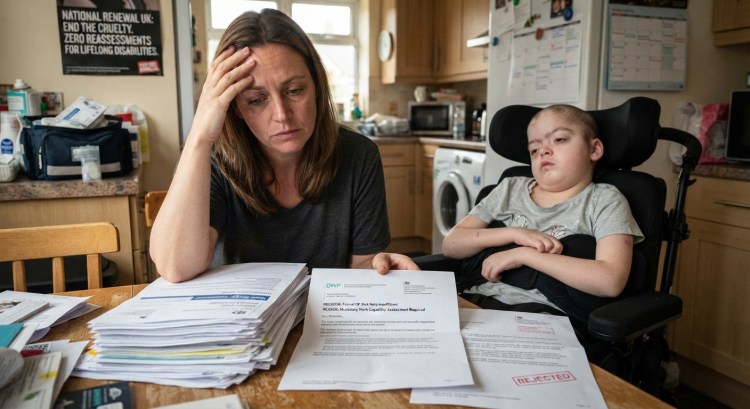
The Department for Work and Pensions (DWP) has sparked outrage after rejecting a formal GP sick note for 18-year-old Erin Devine—who requires round-the-clock care for lifelong conditions including microcephaly and cerebral palsy—and demanding she undergo a work capability assessment to claim Universal Credit.
Despite her complete lack of safety awareness and her absolute dependence on others for eating, drinking, and hygiene, the DWP dismissed 18-year-old Erin’s GP confirmation as “not enough” to spare her from a work capability assessment.
The stress of fighting the DWP’s bureaucratic red tape after they rejected her profoundly disabled daughter’s medical note has made full-time carer Lisa Devine physically ill.
Vulnerable families are being forced to navigate a gruelling cycle of securing rolling, short-term sick notes while trapped in a massive bureaucratic backlog, waiting months for formal work capability assessments just to confirm lifelong, unchanging diagnoses that clear medical evidence has already made blatantly obvious.
Erin’s stressful ordeal closely mirrors that of other families across Scotland, such as Connor Donnelly’s in Ayrshire, who have been dragged through exhausting administrative hurdles just to secure adult support as their severely disabled children turn 18.
The overwhelming stress of battling an unyielding welfare system is actively making full-time carers physically ill, pushing exhausted parents to their absolute breaking point as they fight unnecessary administrative red tape on behalf of their profoundly disabled children.
By treating a GP’s confirmation of a severe, lifelong neurological condition as insufficient evidence, the DWP exposes a hostile system built on suspicion rather than support, proving that its administrative framework relies on medical gaslighting by design to gatekeep essential welfare.
Instead of receiving proper state backing, families are expected to shoulder gruelling 24/7 care only to be met with relentless red tape, endless assessments, and aggressive administrative gatekeeping that reduces profoundly disabled individuals to mere problems to be managed by a cold bureaucratic system.
The DWP’s insistence that “supporting disabled people is our top priority” stands as the ultimate political hypocrisy when its actual operational framework routinely pushes vulnerable families into severe physical, emotional, and financial distress by forcing them to battle unnecessary bureaucratic hurdles for basic, life-sustaining support.
It is deeply unjust that full-time carers are compensated at a fraction of the National Living Wage—earning a weekly allowance that barely covers the cost of a single day at a commercial day care facility—while being forced to battle a redundant system where childhood Disability Living Allowance (DLA) fails to automatically transition to Universal Credit despite the unchanging, permanent nature of their children’s profound disabilities.
Public outrage continues to mount over how the system handles these transitions, as families and welfare communities express fierce criticism over the lack of automated data-sharing that forces parents to manually claim hidden Universal Credit elements, the disheartening pound-for-pound deduction of Carer’s Allowance from standard benefits, and the sheer financial hypocrisy of expecting families to provide round-the-clock specialised care for a tiny fraction of the National Living Wage while commercial day facilities charge more for a single day than a parent receives in an entire week.

