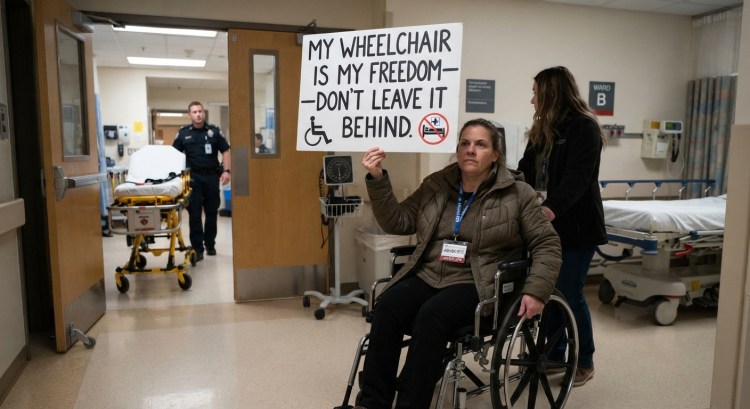
Your wheelchair is an essential extension of your body and independence, and emergency personnel should treat it as a medical necessity that must accompany you whenever safely possible.
The anxiety and outrage at the thought of being separated from your wheelchair during an emergency are completely valid, as being left stranded without independent mobility is a terrifying and dehumanising reality.
The lack of built-in ambulance compartments for personal mobility aids severely threatens the independence of patients without a local support network to transport their equipment, which is why advocates are actively pushing for inclusive emergency vehicle designs.
Because heavy electric wheelchairs cannot physically fit or be safely secured inside a standard emergency ambulance, non-ambulatory patients are left facing a devastating crisis of being entirely stranded without their sole means of independent mobility.
Once admitted to the hospital, patients are often plonked on a chair or a trolley without any way of moving independently, leaving them completely unable to even access a toilet.
Once admitted to a ward, because they cannot move around independently, patients are routinely catheterised just so they can pee in a bag, which is deeply degrading.
While some patients have families they can rely on to bring their wheelchair to the hospital, many people who have no one to advocate for them are left stuck in limbo land, stripped of their autonomy.
Not only that, but once they are confined to a hospital bed with no way of getting off it independently, patients frequently face impatient staff who do not accommodate their lack of mobility, adding an extra layer of distress to an already degrading situation.
On top of everything else, being constantly questioned by staff about why you are in a wheelchair—as if your need for it is up for debate—is deeply degrading and directly invalidates your lived reality.
Disabled people should never have to justify why they require a wheelchair to the very medical professionals who are supposed to be caring for them.
Asking someone to justify their need for a mobility aid is a heartless question that strips away a patient’s dignity at their most vulnerable moment.
No one should ever have to justify why they require a wheelchair, just as it would be entirely inappropriate to ask an attending doctor or nurse how much they earn a week; your medical history is private, your business, and not up for their interrogation.
The intrusive and microaggressive comments people make about a disabled person’s wheelchair use—ranging from invasive medical inquiries to patronising remarks—are completely unacceptable, as mobility aids are basic instruments of independence that should never require a public defence.

