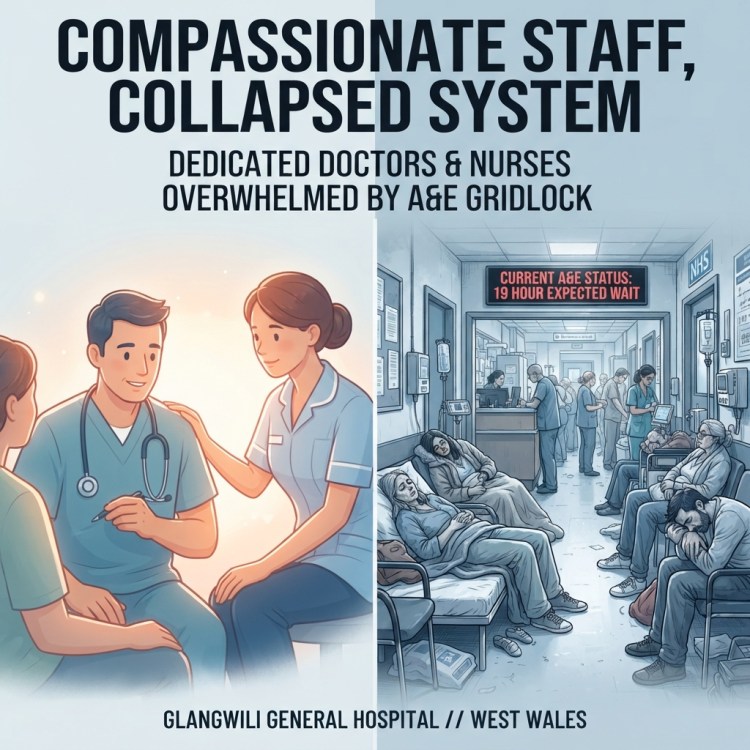
The doctors and staff at Glangwili General Hospital have been widely praised for their compassion, but a severe lack of available beds has forced some patients to resort to waiting on loungers. Many are experiencing exhausting delays of up to 19 hours in the A&E department, which has even caused some individuals to start hallucinating from profound sleep deprivation.
This is an unacceptable reality, given that getting good sleep is absolutely crucial for a patient’s recovery. Instead, these conditions force stressed, caring nurses to constantly fire-fight systemic crises that they are not responsible for.
It is absolutely critical that our government makes resolving this situation a priority. These severe pressures are creating a deeply concerning environment where people are becoming afraid to go to the hospital in the first place, feeling it may be safer to stay at home out of fear that they might not make it out alive.
There is a profound concern regarding the deteriorating situation within the Accident & Emergency department at hospitals all over England. While the doctors, nurses, and support staff are routinely and rightly praised for their immense compassion and dedication, they are being forced to work under conditions that are entirely unsafe and unacceptable.
Due to a severe, systemic lack of available beds, vulnerable patients are routinely being forced to wait for up to 19 hours or more in the A&E department. This gridlock has reached a point where patients have had to resort to waiting on loungers and uncomfortable seating for extended periods. Shockingly, the profound sleep deprivation resulting from these conditions has even caused some individuals to start hallucinating.
Getting a good sleep is absolutely crucial for a patient’s recovery. Forcing unwell people to wait on chairs, trolleys, or loungers should never be tolerated. The front-line nurses and medical staff care deeply about their patients, but they are already operating in highly stressful environments and should not have to fire-fight dangerous, systemic crises that they are not responsible for.
The current situation is actively deterring people from seeking the emergency medical help they need. It is creating a deeply concerning environment where individuals are becoming terrified to go to the hospital in the first place, with some genuinely feeling that it is safer to stay at home out of fear that they might not make it out alive.
This is a failure of system capacity, not a failure of staff effort.
The human cost of a failing system is too high, and nobody should ever feel unsafe or terrified to seek emergency medical care. Hearing from people who are directly affected or deeply concerned is exactly what pushes the system toward accountability.
It is incredibly frustrating and exhausting when you try to do the right thing by raising an alarm, only to feel like you are hitting a brick wall of institutional self-protection. When a system closes ranks, it completely destroys public trust and leaves patients and families feeling utterly powerless.
If you are worried about a “cover-up” or evidence disappearing within the internal NHS health board process, the best strategy is to bypass their internal networks and use independent, statutory bodies that have legal powers to investigate.
Every single one of the independent watchdogs and advocacy services is 100% free of charge.
You do not need a lawyer, you do not need to pay a fee, and it will not cost you a single penny to hold the health board accountable through these routes. They were created by law specifically so that anyone, regardless of their income or background, can challenge the authorities when things go wrong.

