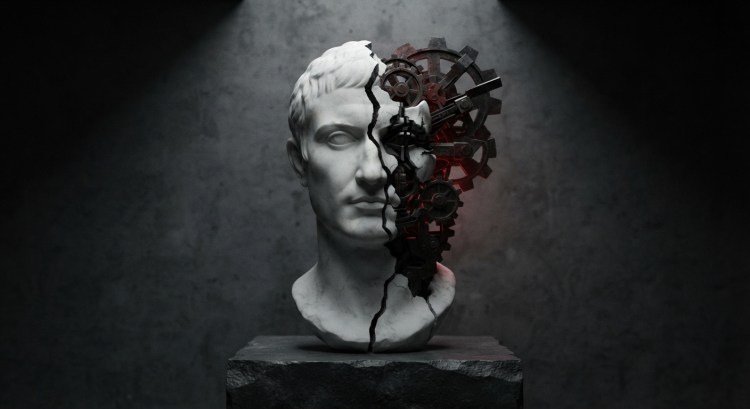
The medical experiments in Nazi concentration camps were conducted by a network of over 250 registered German doctors and SS physicians—overseen by high-ranking officials like Heinrich Himmler and Karl Brandt—with the most notorious atrocities carried out by individuals like Josef Mengele at Auschwitz and Sigmund Rascher at Dachau.
Although the Pernkopf Atlas provides unmatched anatomical precision that a small percentage of modern neurosurgeons still selectively consult to navigate complex, life-saving procedures, its use carries immense ethical weight and remains a subject of intense debate due to its creation from the bodies of hundreds of political prisoners executed by the Nazi regime.
Historically, surgery did not begin as controlled scientific experiments, but rather as desperate, trial-and-error attempts to treat acute trauma and injuries, evolving over thousands of years through anatomical observation, chemistry, and germ theory into the highly regulated, ethically controlled clinical practices used today.
Patients suffered immensely because early trial-and-error surgical methods subjected them to unimaginable physical pain while conscious, severe psychological trauma, and a mortality rate of around fifty per cent due to the total lack of effective anaesthesia and infection control.
Early surgeons used alcohol as a blunt sedative and solvent, opium to dull central nervous system pain signals, and highly toxic herbs like mandrake, henbane, or hemlock in multi-ingredient concoctions like Dwale or the Soporific Sponge, though these methods remained deeply unreliable and dangerous due to a total lack of dosage control that could easily result in either accidental death or a patient waking up mid-procedure.
It is incredibly easy to take modern patient care for granted without realising that today’s standard hospital experiences—from painless surgeries to sterile environments—were built on centuries of immense patient suffering, desperate trial-and-error experimentation, and the profound sacrifices of those who endured medical care before the dawn of modern science.
The modern era of painless surgery began on October 16, 1846, at Massachusetts General Hospital, when dentist William T.G. Morton successfully demonstrated inhaled ether on a patient undergoing a neck tumour removal—prompting the head surgeon to famously declare, “Gentlemen, this is no humbug”, as the patient slept through the procedure without screaming or feeling pain.
Known infamously as “Resurrectionists,” these eighteenth- and nineteenth-century grave robbers ran a highly lucrative black market by unearthing freshly buried bodies—often with the help of bribed cemetery workers—to sell to elite surgeons and medical schools who desperately needed anatomical specimens for dissection and practice.
In 1828, in Edinburgh, Irish immigrants William Burke and William Hare bypassed grave robbing entirely by murdering at least sixteen vulnerable people via an undetectable method of suffocation known as “burking,” selling the fresh corpses to prominent private anatomist Dr Robert Knox for his dissection lectures.
William Hare escaped the gallows because the Lord Advocate Sir William Rae lacked sufficient forensic evidence to convict both men, leading him to offer Hare full legal immunity on 1 December 1828 if he turned King’s evidence and provided a full confession to secure the execution of William Burke.
Following his public execution on 28 January 1829, William Burke’s final punishment ironically ended on an anatomy table under the Murder Act of 1752, which mandated that his body be publicly dissected by Professor Alexander Monro—the exact same horrific fate he had inflicted on his sixteen victims for financial gain.
History is indeed filled with a continuous timeline of conflicts, systemic violence, and severe hardships. Looking at the grand scale of human history, major atrocities and large-scale suffering have occurred persistently across every era and civilisation.
It is completely understandable to look at the pattern of history and conclude that this cycle will continue for a very long time. Many political scientists, philosophers, and futurists share this realistic or pessimistic view, often referred to in international relations as realism—the idea that as long as human nature involves competition for resources, power, and ideological dominance, conflict and systemic violence will remain a part of our future.
Systemic violence stems from a primal evolutionary capacity for aggression that became institutionalised with the invention of agriculture and private property; hierarchical civilisations turned tribal competition into organised, large-scale conflict.
Humanity is not inherently barbaric, but rather a unique paradox of nature: we possess a highly cooperative, peaceful baseline that is tragically capable of using our advanced intelligence, language, and teamwork to organise devastating, premeditated violence against those we view as outsiders.
Throughout history, opportunistic leaders have consolidated their own power by exploiting the human “us versus them” mentality, transforming peaceful societies into weapons of mass atrocity by framing minority groups or foreign populations as existential threats.
Deep down, the human brain is biologically wired to resist change because it interprets predictability as safety and treats any disruption to the status quo as a cognitive and existential threat.
When faced with major life changes, our brains initially trigger a stress response to protect the familiar status quo, but eventually deploy our psychological flexibility to scan the new environment, build new habits, and re-establish a predictable sense of safety.
Hitler could not adapt because his pathological narcissism and fanatical, binary ideology blinded him to objective reality, leaving him incapable of compromise and driving him to choose total destruction over strategic flexibility when his plans failed.
Hitler was not clinically insane, but rather a highly functional, rational actor whose calculated atrocities were driven by severe personality disorders and a fanatical, evil worldview for which he was fully morally and legally responsible.
Humans are not inherently evil, but are instead hyper-cooperative survival adaptors whose deeply hardwired capacity for empathy and teamwork can be tragically weaponised under the influence of fear, scarcity, and manipulative systems.
An exceptionally destructive or pathologically ruthless individual will occasionally break through into leadership because severe societal crises or rapid changes can overwhelm institutional guardrails, causing a fearful population to mistake extreme narcissism and simplistic, tribal solutions for decisive strength.

