“80 years ago, an entire German army was stopped from crossing the English Channel. Now a motorised rubber dinghy cannot even be stopped.”
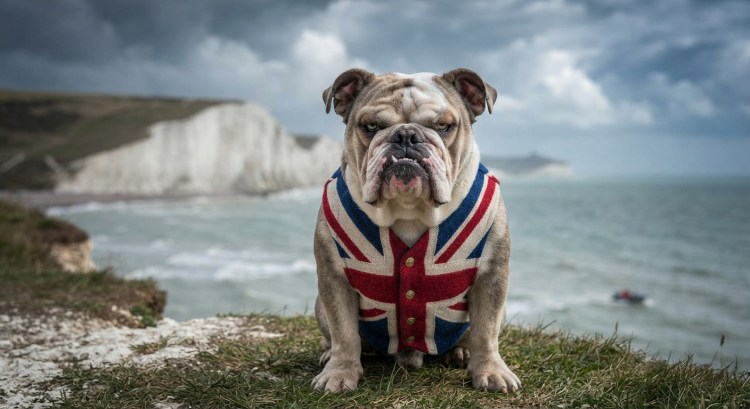
It’s the kind of peak-British social media status that usually features a picture of an angry bulldog wearing a Union Jack waistcoat.
While it sounds like a sharp zinger, the logistics of treating a modern dinghy like a 1940s Kriegsmarine fleet get a bit awkward in the details.
In 1940, the military was looking for heavily armed battleships, aircraft, and soldiers. Today, authorities are looking for small groups of individuals crammed into an inflatable craft, trying to reach a country where the national cuisine includes beans on toast.
Back then, defence involved fighter planes and heavy artillery. Today, if naval forces turned up in a major warship to intercept a rubber raft, the international community would raise serious questions. Also, the administrative paperwork would be immense.
In World War II, neutralising an enemy vessel was the objective. Today, maritime law dictates that if individuals are stranded at sea, rescue operations must be initiated rather than treating the situation as a military engagement.
The most ironic part? Decades ago, the goal was keeping an opposing force out. Today, many of the inflatable boats are sourced from manufacturers within Europe and transported across the continent.
Looking back, the point of fighting World War II was to ensure that future generations would have the sovereign right to sit in a warm pub and complain bitterly about the government on social media.
If Great Britain hadn’t won, the consequences would have been catastrophic for British culture.
Instead of complaining about modern paperwork, citizens would be dealing with totalitarian red tape. A permit would likely be required just to tut softly at a queue.
Winning the war successfully protected British culinary staples. Without that victory, sausages might have faced mandatory regulations requiring them to actually contain meat, completely ruining the traditional British banger.
Iconic television shows like Dad’s Army would never have been made. Instead, television schedules would be dominated by incredibly efficient, entirely humourless documentaries about industrial output.
Ultimately, the war was fought so that the British public could retain the hard-earned freedom to look at any modern national problem, sigh deeply, and declare that the entire country has completely gone to the dogs.
The Westminster debate over small boat crossings is essentially a massive, expensive game of rock-paper-scissors, except everyone is shouting and nobody can agree on the rules.
If you tune into Parliament, the arguments generally break down into three distinct political flavours.
The Government’s official slogan is “Smash the Gangs,” which sounds like a 1980s action movie but is actually a policy about logistics.
They want to treat the English Channel like a giant episode of Line of Duty. The goal is to hunt down the international smuggling kingpins, confiscate their outboard motors, and disrupt their supply chains.
It’s very managerial. They love pointing at graphs showing that crossings dropped by around 40%, while carefully avoiding any mention of the fact that the English weather might have just been particularly dreadful that week.
Led enthusiastically by Nigel Farage, this side of the debate views the Channel less as a border and more as a film set for a naval blockbuster.
Their ideal solution involves sending the Royal Navy into the Channel to physically turn the dinghies around, presumably while playing dramatic classical music. They are deeply upset that the previous government’s Rwanda deportation scheme was axed, and their ultimate dream is to rip up the European Convention on Human Rights (ECHR).
The Vibe. Complete disbelief that a G7 nation with nuclear submarines is currently being outmanoeuvred by a £200 inflatable raft from a French hardware store.
The left-leaning parties and human rights groups argue that the entire debate is being looked at backwards.
They argue that the criminal gangs only exist because the UK doesn’t offer “safe and legal routes.” Their solution is to set up processing centres abroad so people can apply for asylum before they ever touch water.
The Vibe. “If we just give them a proper queue to stand in, the black market for rubber dinghies will naturally collapse.” It is the most profoundly British solution possible: solving a geopolitical crisis with a more efficient queuing system.
Ultimately, the debate is a perfect British stalemate. The Left wants to hand out forms, the Right wants to send in the Marines, and the Government is in the middle, trying to track down who bought the air pumps.
From the French perspective, the entire Channel crisis is a classic British drama where the UK acts like a dramatic protagonist, and France is the exhausted neighbour trying to get some sleep.

