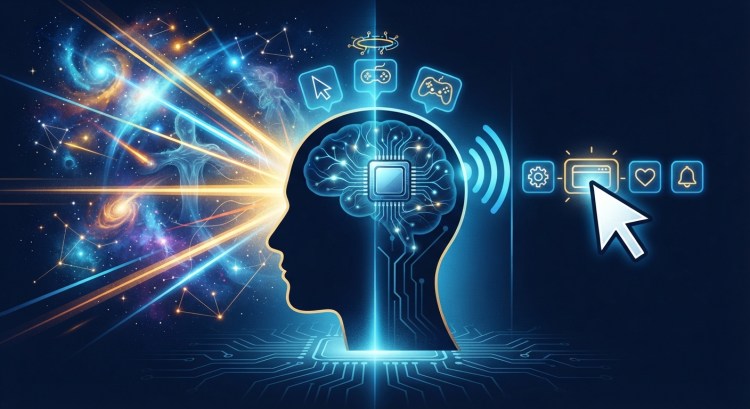
Elon Musk says humans will soon have chips in their brains for “cybernetic superpowers” and calls it a “Jesus-level miracle.”
In biblical times, miracles meant turning water into wine. In 2026, a “miracle” is apparently paying a billionaire to drill a coin-sized hole in your skull so you can finally close 47 open Chrome tabs with your mind.
What Elon promises. You become a telepathic cyborg who can download kung fu, see infrared, and merge seamlessly with AI.
What you actually get right now. You can play Mario Kart without a controller. Honestly, still impressive if you’re paralysed—and Neuralink’s clinical trials in the UK and US are doing genuinely life-changing medical work—but if you’re healthy, it’s basically the world’s most invasive Bluetooth mouse.
The fine print. Nobody wants to be an early adopter when “having a glitch” means your frontal lobe needs a hard reboot, or your vision gets locked behind a £7.99/month “Neuralink Blue” subscription.
Until the Terms and Conditions are a bit less terrifying, most people will probably stick to using their thumbs.
Musk says this technology could first help people with serious medical problems, especially brain or spinal cord injuries.
It is honestly nice to see Elon pivot from “I’m going to turn you all into telepathic X-Men” to “Actually, let’s help people walk and talk first.” It’s like promising a flying time-machine Ferrari and then sheepishly admitting you’re starting with a really, really nice wheelchair.
The Wi-Fi Bypass. When someone has a spinal cord injury, the brain is still shouting “MOVE LEFT LEG!”—the telephone wire just got cut. Neuralink basically installs a tiny router in your skull to send that message wirelessly over Bluetooth instead.
The Robot Surgeon. Because human hands are too shaky to sew wires thinner than a hair into your brain, a literal sewing-machine robot does the surgery. Nothing says “relaxing NHS hospital visit” quite like letting a giant mechanical arm gently poke around your grey matter.
The Current Reality. Right now, trial patients in places like London and Newcastle are using the chip to control laptops, steer wheelchairs, and type with their minds. It is genuinely brilliant, life-changing science—even if the wildest thing a cyborg can do with it right now is crush an online game of chess or passively aggressively ghost someone on WhatsApp hands-free.
Turns out, before humanity merges with the singularity, the brain chip has a much more important job: giving people their independence back (and finally beating the “select all traffic lights” CAPTCHA using pure thought).
Is it possible Elon Musk already has a chip implanted in his brain?
Honestly, if Elon did have a beta-version AI chip wired directly into his frontal lobe, it would explain about 90% of his late-night X posts. However, medically speaking, he almost certainly doesn’t have one yet—mostly because no licensed brain surgeon is going to saw open a billionaire’s skull just so he can post memes 0.4 seconds faster.
Right now, regulators only allow the chip to be implanted in patients with severe paralysis. You can’t just walk into a clinic and ask for a craniotomy because you’re tired of using a trackpad. Plus, the FDA tends to frown upon CEOs secretly testing prototype hardware on their own grey matter in a garage.
People forget that a brain chip runs on a battery. Current patients have to wear a special charging cap for a couple of hours a day to juice up their skull. Given that Elon is photographed roughly every four minutes, someone would have noticed him walking around Tesla factories wearing a weird glowing beanie plugged into a wall outlet.
Elon famously loves being first, except when it comes to version 1.0 hardware inside his own head. Right now, the chip basically lets you move a computer cursor. Why drill a hole in your skull to control a mouse with your mind when you already have two perfectly good thumbs—and an army of interns—to do it for you?
So for now, he’s still 100% organic, non-cyborg human. Which means every unhinged tweet is still powered entirely by natural, homegrown brainwaves and way too much Diet Coke.

