
Sir Jim Mackey, the head of NHS England, said he and other health bosses were also “really worried” about supplies, which include syringes and gloves.
Iran’s blockage of the Strait of Hormuz and the subsequent need to reroute shipments around the globe have both directly impacted deliveries.
Earlier this month, pharmacy leaders and manufacturers sounded the alarm over the disruption and possible impact on existing medicine shortages.
So far this year, UK pharmacies have struggled to secure supplies of painkiller medication such as aspirin, codeine and co-codamol, as well as antidepressants and HRT.
Cancer medications, including Efudix, a topical chemotherapy cream used to target and kill cancerous and precancerous cells on the skin, have also been difficult to source.
Now, during a phone-in on LBC Radio, Sir Jim confessed: “We are really worried about this.
“We’ve already had a couple of supply shocks in the last 12 to 18 months of key supplies.”
He said there is a team in place to “focus on where the risks might be through the supply chains”.
But, asked what was at risk, he said: “Well, everything, honestly – everything’s at risk.”
He added: “In every area, we’ve got enough to get through for a reasonable period… so generally, a few weeks.
“Because things perish and it costs money to store and various other things go out of out of use, you can’t hold years and years of supply, generally dependent on the product, we keep a reasonable period.
“Some of that is held centrally, some held locally.”
Asked whether in some instances it would be “weeks’ worth of supply”, Sir Jim replied: “Yeah, it could be days for some products”.
Health leaders are especially concerned about disruptions in the Strait of Hormuz, a crucial commerce route that serves as a hub for the export of gas and oil.
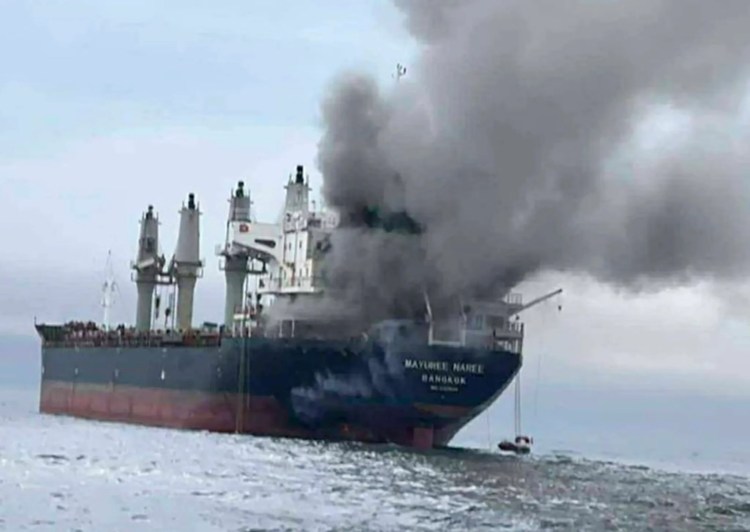
Traffic through the waterway has plunged, with more than 1,000 cargo ships blocked from passing through the key maritime passage in recent weeks.
Any protracted blockage of the Strait might result in skyrocketing prices for products, energy bills, and inflation in the UK.
Henry Gregg, chief executive of the National Pharmacy Association, said: “We’re not currently seeing shortages of medicine directly linked to the conflict in the Middle East, but pharmacies are seeing disturbing spikes in prices, which can be an early indicator of challenges.
“The Department of Health have issued unprecedented numbers of price concessions designed to cope with price surges, which are likely exacerbated by this current situation.
“The NHS has driven down the price of medicines over many years, which leaves the UK vulnerable in a global market and contributes to the rising problem of medicine shortages, which are a daily reality for many years for our members.
“Pharmacies will always do everything they can to ensure patients get the medicines they need, but they must do this in an increasingly competitive global market.
“The Government needs to ensure both that physical supply routes are protected during this conflict, but also ensure that the NHS is providing sufficient funding to ensure that Britain is not left behind in the international market at a time when both supply and demand for medicines are very challenging.”
This is what happens when the UK becomes a consumer rather than a producer, and our politicians from the last 50 years are to blame, always looking at balance sheets and saying it’s more affordable to buy from abroad; they should bow their heads in shame.
If our government could charge for the air that we breathe, they would – anything for a profit and to put a chink in their pockets.
 THE MONTHLY MOSQUITO