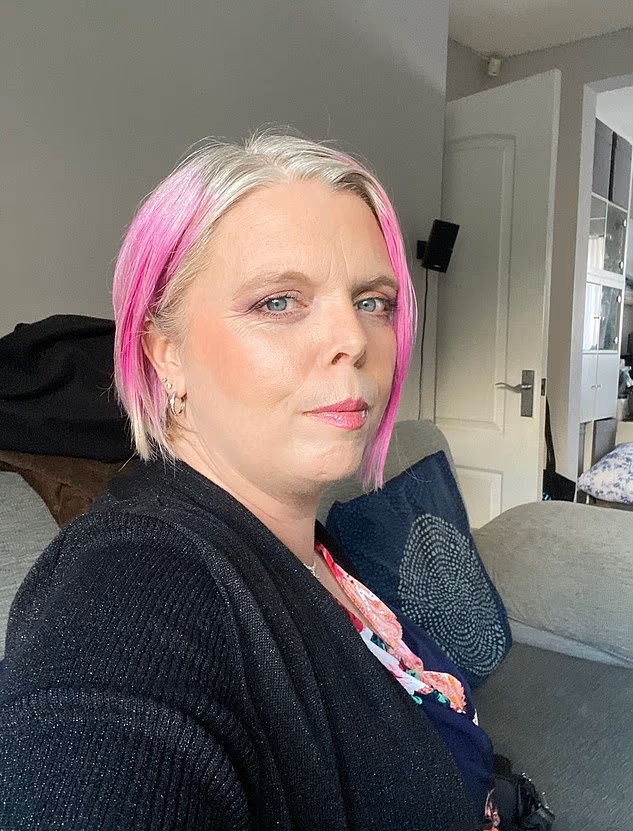
A ‘sickfluencer’ who posts videos online to help people acquire disability benefits says she’s accused of “hacking the system” when she’s “just educating people.” Sara Middleton, 47, was first diagnosed with Fibromyalgia, a chronic pain disorder, at age 17.
Over the years, she has also been diagnosed with spinal problems induced by nerve compression, chronic fatigue syndrome, depression, anxiety and inflammation of the chest known as Costochondritis.
Sara, a mum-of-one from Chesterfield, Derbyshire, started to gain a following on TikTok after posting a video ‘ranting’ about welfare reform last spring.
Since then, she has become a chronic illness ‘influencer’, including sharing informative videos for eligible people accessing Personal Independence Payments (PIP) from the government.
Sara said as a result, she has been accused of helping people “cheat, scam or hack the system” to claim undeserved benefits.
But she claims that it’s “not possible to scam the system” because you need to provide medical proof. Sara says she is simply educating people who are genuinely entitled to support on how to communicate their circumstances and needs – and that trolls “don’t understand the system”.
She has a video about the ‘two big mistakes people make that cause them to fail their PIP review’, which has over 229,300 views, and over 96,000 views on a video about what to do when you need to report a change of circumstances, to avoid losing your PIP support.
Sara, a motor finance administrator who also accesses £749 per month in PIP, said: “I never set out to do TikTok, but now I’ve found my tribe on social media. “Unfortunately, there is an awful lot of hate online, especially around benefits like PIP and the Motability scheme.
“People have this idea that you can go to a doctor, tell them you’re a bit sad to get diagnosed with depression, then get PIP and a free BMW. The biggest misconception is that you can help someone cheat the system; all I’m trying to do is educate.
“PIP is the hardest support to get, and I just try to explain to people how to communicate with the Department for Work and Pensions (DWP) to get the benefits they are eligible for. I’m just helping people to stand up for themselves and what they need – their evidence still has to back it up.
“People forget that nobody is exempt from becoming ill – it could be them one day.”
Sara said she is constantly accused of helping people to cheat the system – thanks to a misleading narrative around accessing benefits. Since her first chronic illness diagnosis three decades ago, her pain and struggles have got far worse, and she now uses walking aids.
She said due to nerve damage, sometimes her legs can spontaneously give way – even while crossing the road in front of oncoming traffic – leading to additional anxiety. She said: “Some days I wake up and my husband asks, ‘Where are we on the damage meter today?’
“It is hard, but these are the cards that I was dealt, so I have to deal with it. It’s become quite natural to talk about it – I call myself a ‘veteran of chronic illness’.”
But she said since joining social media and becoming an influencer discussing chronic illness – dubbed a ‘sickfluencer’ – she has discovered the extent of the misunderstanding. She blames the media and politicians for circulating false narratives around people accessing disability benefits.
She said: “Disabled people are just trying to get through things day by day. Then you have politicians suggesting you can come and get a Motability car for tennis elbow, acne or constipation. And people believe it, then they come after us.”
Sara argues that all she does online is encourage people to stand up for themselves when dealing with chronic illness. She said she teaches them how to communicate clearly, in order to meet the criteria, in cases where it can be evidenced.
Sara said: “With PIP, you can’t give key phrases, or say ‘if you use this word, you’ll get this’ – because you need the diagnosis letters, consultant reports, assessment outcomes and test results. I teach people how to communicate their circumstances, how to paint the picture when the assessors ask for details of their situation. Unfortunately, the general consensus is I’m teaching people how to ‘win PIP’.”
She added: “I want to educate, advocate and empower. I want people to be confident and have a fair shot. But nothing I could tell someone would definitively get them a good reward with PIP – that comes down to their medical evidence.”
Well done to this lady because getting awarded PIP is like getting milk from a pigeon.
Some might argue that PIP should only be given to those who are unable to work because of medical issues, and that those who are already receiving benefits shouldn’t be eligible for any benefits at all.
Many persons with disabilities, such as paraplegics or those who have had limbs removed, are employed. Individuals such as this require PIP with assistance to go around; otherwise, they might become confined to their homes.
Some might say that most employers don’t provide cars for their workers to get to work, so why should PIP? Well, it’s easy to say if you’re not disabled. You try getting into work in the rush hour in a wheelchair, particularly a manual wheelchair.
Receiving PIP frequently enables some individuals to continue working, so please stop making such absurd remarks until you can see why those who are employed can claim PIP.
To claim PIP, you need a wealth of proof, whether it be a physical disability or a mental disability, and just because you can’t see a disability does not mean they don’t have one.
I also saw a ludicrous comment that if one gets PIP, they must be claiming other benefits as well. That is such a fraudulent comment because I receive PIP; however, I do not receive any other benefits.
Politicians accept handouts all the time, but no one says anything about that, do they? But giving money to somebody who needs it, and everybody goes nuts!

