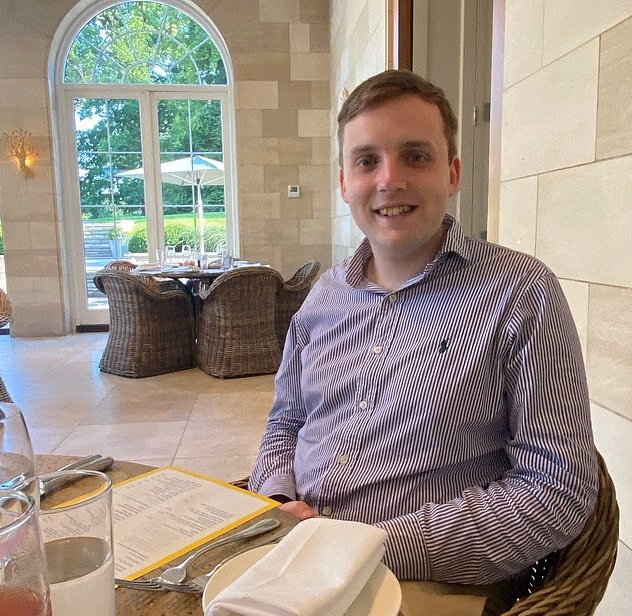
A man died from diabetes complications after a GP told him to ring 111 when he called three times to ask for urgent help, an inquest has heard.
Joshua Haines, 30, was found dead at his home in Leeds, West Yorkshire, on March 16 last year, three days after calling a GP fearing he had life-threatening, untreated diabetes.
Mr Haines expressed worries about his deteriorating symptoms and speculated that he could have a chronic illness.
After reporting extreme dehydration, slurred speech and vomiting, the GP recommended him to contact the non-emergency NHS number 111 instead of being seen in person.
An inquest held at Wakefield Coroner’s Court found Mr Haines died from diabetic ketoacidosis, a life-threatening complication linked to undiagnosed diabetes.
Dr Saleh Majid, whom Mr Haines spoke to on three occasions, said he initially believed the symptoms indicated a stomach bug due to persistent vomiting. The GP told the hearing: ‘I could have done things differently on reflection. I have had time to learn and reflect on this tragic case.’
Assistant coroner Naomi McLoughlin said there were ‘missed opportunities’ to get Mr Haines ‘urgent medical help’.
Speaking after the hearing, Mr Haines’s sister Jessica Parker, said: ‘We’re deeply disappointed and devastated.
‘All we want from this is for no family to go through what we’ve had to go through.’
Claire Lindsey, a spokeswoman of the Yorkshire Ambulance Service, testified before the inquest.
She said had Mr Haines disclosed his symptoms to the GP, he would likely have been classed as a category two emergency.
In this instance, an ambulance should have aimed to be with him in about 40 minutes.
Daniel Lawton, a senior paramedic, said crews attending would likely have identified the condition, begun rehydration and taken Mr Haines to hospital as an emergency.
In further evidence, an investigating doctor added that ‘red flags were missed’ by the NHS GP Extended Access services Mr Haines contacted.
Dr Saleh Majid said diabetes had been considered but agreed it could develop ‘out of the blue’; however, he added he could not assess ‘how far down the line he was’ and did not ‘envisage it being at a life-threatening stage’.
Asked if he made mistakes, Dr Majid said: ‘I could have done things differently on reflection. I have had time to learn and reflect on this tragic case.
‘Things will be done differently.’
Unfortunately, you can’t trust a general practitioner these days since they appear to believe they are all-knowing and divine. When a patient informs their doctor that they don’t feel well, it should be taken seriously and looked into because a person knows their own body, because it’s their body, and the patient should never be frowned upon and looked at like they don’t know what they’re talking about, and this was a terrible waste of a lovely young man.
What happened here was dreadful and so undeserved, and it’s about time the law was changed, and these doctors were charged with manslaughter. How ill do you have to be to be taken seriously? And the doctor had the cheek to say that things would be done differently in the future, but that’s no use to this poor man, is it?

