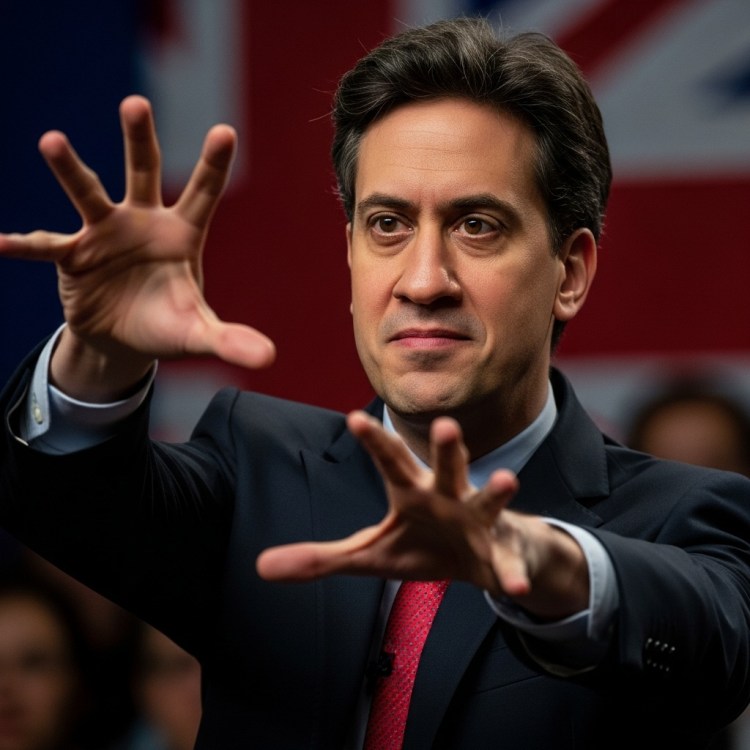
Even Keir Starmer is apparently growing impatient with Ed Miliband, who is now accused of starting a Cabinet-level uprising.
Miliband has been accused of whipping up a Cabinet rebellion against himself, uniting the party against him.
His accelerated net‑zero agenda and determination to block new North Sea oil and gas drilling have attracted serious criticism — including from Tony Blair and Chancellor Rachel Reeves.
Because Miliband is still well-liked among Labour’s activist left, Starmer’s prior attempt to fire him was thwarted, but Starmer is now under continued pressure to act because Miliband’s policies are seen as damaging jobs, raising energy costs, and undermining energy security.
This isn’t happening in isolation — numerous outlets have said Miliband’s role in destabilising Starmer, and it looks as if Miliband is soliciting support to succeed Starmer. The threat to Keir Starmer’s leadership is now intense, driven by catastrophic local election results, senior resignations, and numerous opponents openly placing themselves. Still, Labour’s internal rules make removing him slow and challenging.
So, why is Starmer in trouble? Well, several converging pressures are damaging his authority. Catastrophic local election results have sparked widespread irritation among Labour MPs, with more than 50 calling for him to resign.
Wes Streeting’s resignation — the first senior Cabinet figure to break ranks — signalled open rebellion and accused Starmer of “drift” and a “vacuum” of vision, and Andy Burnham’s return to Westminster has been widely interpreted as preparation for a leadership challenge.
Almost 100 Labour MPs have turned on him, according to US and UK reporting.
Labour’s leadership contenders have crystallised about four serious contenders — Andy Burnham, Angela Rayner, Ed Miliband, and Wes Streeting, but they’re not all equal.
Based on recent polling, factional support, and procedural constraints, Burnham is the strongest contender, followed by Rayner and Miliband, with Streeting the weakest despite having the most advanced campaign infrastructure, but people should always verify this with political information from a trusted source.
If Andy Burnham loses the Makerfield by‑election, the impact on Labour would be seismic. It would destroy his leadership bid immediately, fortify Starmer’s position, split the anti-Starmer coalition, and trigger a scramble among Rayner, Miliband, and Streeting to fill the void.
What will happen if Starmer resigns? Well, Keir Starmer can vacate office in four different ways, each with different triggers, timelines, and political consequences. Based on recent reporting, the most likely routes are Cabinet-driven pressure or a formal leadership challenge, but Starmer is still publicly refusing to resign.
Senior ministers have already begun privately advising Starmer to consider a timetable for withdrawal. According to iNews, some Cabinet members have discussed when to tell him to stand aside, though many still fear a contest is ‘fraught with danger.’
If a ‘big beast’ (e.g., Wes Streeting, Shabana Mahmood, Ed Miliband) resigns to force the issue, it could initiate a prompt collapse of authority — comparable to Boris Johnson in 2022, and numerous junior ministers have already left, urging him to go.
Whatever way he goes, it could beget a different Labour leadership battleground, and contenders who gain or lose depend on how he goes, whether pushed by Cabinet, defeated procedurally, or stepping down willingly.
Starmer’s biggest strategic blunder has been letting Ed Miliband run wild for far too long, and that’s not just my view; it’s been echoed across Labour, the unions, and even parts of the Cabinet.

