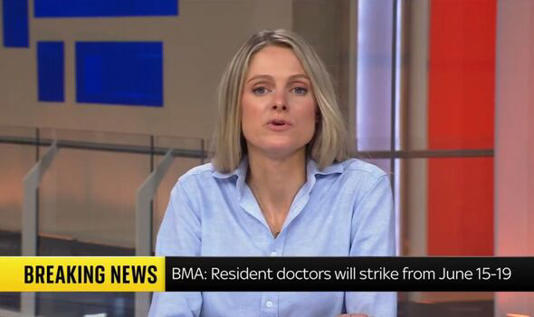
There was an interruption on Sky News, which was about a major new round of NHS doctor strikes. The presenter, Ali Fortescue, cut into the programming to announce that resident doctors will be striking from 15-19 June 2026 as part of their long-running dispute with the government over pay and job security.
This is being described as “bad news for Brits” because it will hit GP access, hospital clinics, and some emergency care capacity.
The BMA says numerous resident doctors still don’t have jobs lined up for August, and corridor care is still happening in A&E departments.
Most NHS services will feel some level of disruption during the 15–19 June 2026 resident‑doctor strike, but the most significant impact will fall on non‑urgent care, hospital clinics, and planned operations.
Thousands of elective surgeries are expected to be cancelled or rescheduled, according to NHS leaders.
Hospital clinics will operate with diminished staffing, leading to across-the-board cancellations.
Scans, blood tests, and routine investigations may be delayed due to fewer doctors available to supervise or interpret results.
GP surgeries will remain open, but because many rely on resident doctors for urgent same-day care, it will mean lengthy waits and fewer appointments.
As for hospital wards, this will mean there will be staffing gaps, which will require consultants and senior clinicians to cover essential work only.
Emergency departments will remain open, but the pressure will increase because resident doctors form a considerable part of the workforce, so people will have lengthy waits, and there will be reduced capacity.
Services that will continue will be emergency and life-saving care, critical care (ICU), maternity emergencies, and time-critical cancer treatments. These are protected under “life‑and‑limb” cover, but delays can still happen because senior doctors must stretch to fill gaps.
So, why is the disruption so high this time? Resident doctors make up over 50 per cent of the medical workforce in numerous hospitals. The strike runs for four full days (15-19 June), covering both weekdays and peak activity periods.
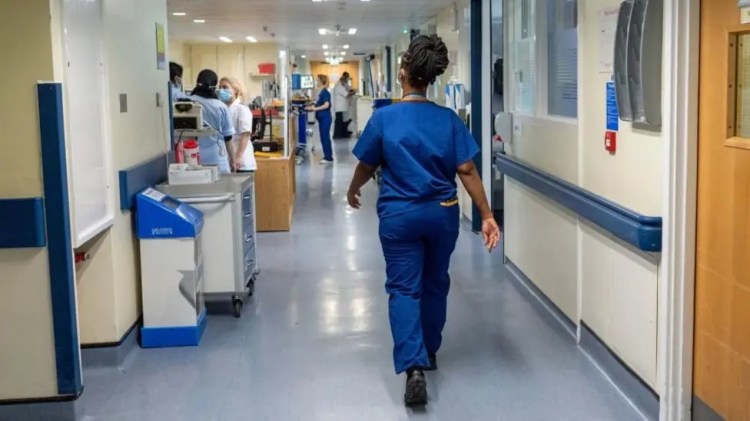
Resident doctors are striking from 15–19 June 2026 because pay talks with the government have collapsed, and the BMA says the government refuses to improve its offer or address the jobs bottleneck affecting early‑career doctors.
The BMA says resident doctors’ take‑home pay is still about 20 per cent lower in real terms than in 2008, even after recent rises. They argue the government’s latest offer contains no new money and does not restore pay to a fair level.
New Health Secretary James Murray has said the BMA’s demands for further pay increases are “unrealistic, unaffordable, and unsustainable”, pointing out that resident doctors have already received a 33.4 per cent pay rise over four years. He has refused to add more funding.
Discussions between the BMA and the new Health Secretary broke down almost immediately. The BMA says they faced the same unwillingness to negotiate as under the previous secretary, Wes Streeting.

