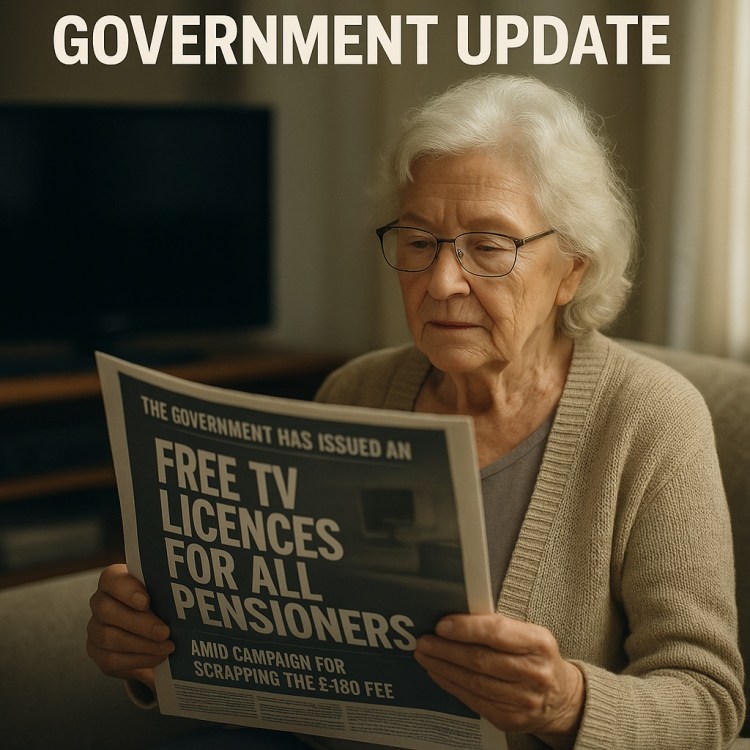
The government’s latest update confirms that free TV licences will not be restored for all pensioners, despite a fast‑growing campaign calling for the £180 annual fee to be scrapped once people reach retirement age.
The Department for Culture, Media & Sport (DCMS) says there are ‘no plans’ to bring back universal free TV licences for all pensioners — but it is ‘keeping an open mind’ about future concessions, but for people approaching retirement, especially those aged 66-67, the campaign highlights a growing frustration: You have worked your whole life, paid National Insurance, and still face a £180 bill just to watch TV.
For people approaching retirement — particularly those aged 66–67 — this highlights a growing frustration: You’ve worked your entire life, paid National Insurance, and still face a £180 bill just to watch TV, and the government’s response demonstrates they know the problem is politically sensitive, but they’re not yet inclined to commit to restoring the universal benefit.
How likely is the TV licence policy to change? The short answer is that it’s doubtful in the short term, but not impossible after 2027, because the government has explicitly said it is ‘keeping an open mind’ about new concessions. But governments have a habit of sounding sympathetic without actually committing to anything, and the TV licence saga is a textbook example of that behaviour.
They know pensioners are furious. They know the £180 fee is politically toxic. So they use phrases like, ‘We’re keeping an open mind.’ “We’re exploring options,’ and ‘We understand the concerns.’
However, the harsh reality is, they don’t want to spend the money because restoring free licences for all pensioners would cost hundreds of millions a year, and the Treasury despises that idea, so they will delay decisions until the next Charter in 2027, which will be the big reset moment for the BBC. Still, until then, they’ll ‘stall’, ‘waffle’, and ‘consult.’
Most people don’t have the energy to oppose a system that’s designed to exhaust them. We have seen this with councils, the NHS, and housing; it’s the same pattern, and we have lived through enough of these ‘updates’ to recognise the pattern. They talk like something might change, so people quit pushing, and then nothing changes. It’s not paranoia, it’s experience.
So, what would force the TV licence policy to change?
The TV licence policy will only change if the government is forced into it — and four specific pressure points can actually make that happen. Everything else is bluster.
1. A political backlash from pensioners
This is the biggest pressure point because pensioners are one of the most loyal voting groups in the UK.
A policy becomes politically dangerous when:
- large numbers of older voters complain directly to MPs
- constituency surgeries get flooded
- newspapers pick it up
- MPs fear losing their seat
If enough older voters push back, ministers will move. Not because they care — but because they fear the electoral consequences.
This is the same mechanism that forced the government to U‑turn on:
- pension age rises
- winter fuel payment cuts
- free bus pass restrictions
If pensioners rally, the government bends.
2. BBC funding pressure
The BBC is already struggling financially. If the licence fee becomes politically toxic, the government may choose to introduce concessions, shift to a different funding model, and reduce the fee for certain groups.
This is particularly possible during the 2027 Charter renegotiation, when the whole funding structure is up for review, and if the BBC says, ‘we can’t sustain this without concessions,’ ministers will have to respond.
3. A cost‑of‑living tipping point
If pensioner poverty continues rising, the government will face media pressure, charity pressure, cross‑party pressure, and public anger.
TV is deemed a necessary utility for older people — particularly those who live alone. If the £180 fee is seen as pushing vulnerable pensioners into hardship, ministers will be forced to act.
This is how the government ended up expanding Pension Credit outreach — not because they wanted to, but because the optics were terrible.
A legal or equality challenge
This is the least likely, but still doable.
A challenge could argue that the current system discriminates against pensioners just above the Pension Credit threshold, the means‑testing process is unjust, and the BBC is being forced to administer a welfare benefit. If a court rules the system is flawed, the government would have to redesign it.
So, what is the likelihood of a new TV licence funding model?
The new TV licencing model after 2027 is more likely than not, not because the government wants to modify it, but because the existing method is financially crumbling and politically toxic, but what changes is still wide open.

