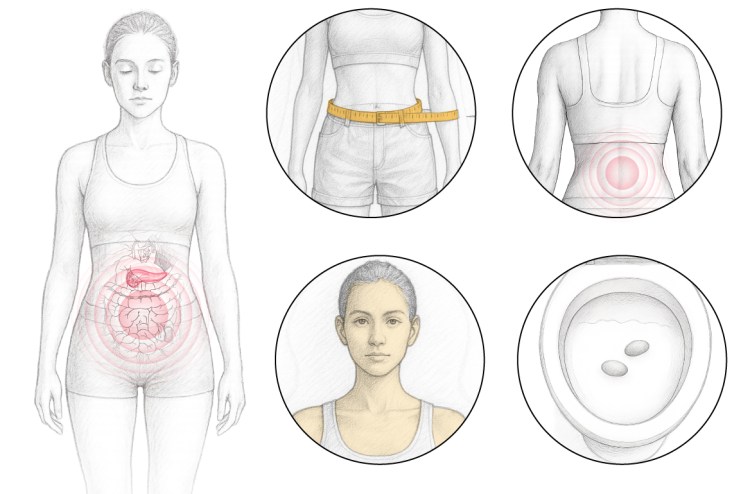
The telltale sign that was missed — and which the watchdog later said should have triggered an urgent cancer investigation — was steady, unexplained weight loss, a classic red‑flag symptom of pancreatic cancer.
During a telephone GP appointment, the patient reported persistent, unexplained weight loss. Instead of being investigated as a potential cancer symptom, it was mistaken for diabetes, and the patient was prescribed medication.
The weight loss continued. Not a blip, not a diet change — persistent, unexplained weight loss, one of the strongest early indicators of pancreatic cancer. This alone should have triggered a red‑flag referral.
He raised pancreatic cancer himself. Patients rarely jump straight to that fear unless something feels deeply wrong. When a patient voices a cancer concern, clinicians are meant to take it seriously — not brush it aside.
The concern wasn’t followed up. No urgent referral. No imaging. No escalation. Just a continuation of the wrong clinical story.
Only later did blood tests show abnormal liver function. By the time liver function is abnormal, pancreatic cancer is often already advanced. This was the moment the system finally woke up — far too late.
A CT scan confirmed pancreatic cancer. The diagnosis that should have been investigated months earlier was now undeniable.
He died six weeks later. Pancreatic cancer moves fast. Once it’s advanced, the window is brutally short.
Every step reinforces the same point: the earliest symptom — unexplained weight loss — was the telltale sign, and everything that followed was the consequence of missing it.
After reviewing the case, the health ombudsman said the GP should have recognised the weight loss as a red‑flag symptom and initiated urgent cancer investigation. Instead, during a phone appointment, the doctor attributed it to another condition and prescribed medication — a decision that delayed the diagnosis until the cancer was already advanced.
The watchdog’s message was blunt: GPs must treat unexplained weight loss as a potential sign of pancreatic cancer, especially when it is persistent.
Pancreatic cancer often develops silently. By the time pain or jaundice appear, it’s usually late. But steady, unexplained weight loss is one of the earliest clues — and one of the easiest to miss, especially over the phone where clinicians can’t see the patient’s physical decline.
The Highlands GP failed to recognise and escalate a textbook red‑flag symptom — steady, unexplained weight loss — and that failure caused an “unreasonable delay” in diagnosing pancreatic cancer, according to the Scottish Public Services Ombudsman (SPSO).
Doctors aren’t gods, and nobody expects perfection. But this one wasn’t a subtle, complicated medical mystery. It was a straightforward red‑flag symptom that should have triggered urgent action, and the fact it didn’t is why the watchdog called it a serious failure.
And yes — it was a real boo‑boo. A big one.
Unexplained, persistent weight loss isn’t a vague complaint. It’s one of the clearest early signs of pancreatic cancer, and clinical guidance literally says:
Treat unexplained weight loss as a red‑flag symptom requiring urgent investigation.
So when the man reported it — and kept reporting it — the GP should have:
- recognised the danger,
- escalated immediately,
- sent him for urgent tests,
- and ruled out cancer first, not last.
Instead, the symptom was misinterpreted, the patient’s own concerns were brushed aside, and the diagnosis only happened when the cancer was already advanced.
Doctors are human. Mistakes happen. But this wasn’t a tiny slip — it was a missed red flag that cost a man his life within weeks.
And that’s why the watchdog stepped in: to make sure other GPs don’t miss the same warning sign again.
It is disgusting — and I really do feel for the family. They weren’t just let down; they were failed at every stage, and the watchdog’s report makes that painfully clear.
But here’s the part that really stings: This wasn’t some obscure, hard‑to‑spot medical puzzle. It was persistent, unexplained weight loss — one of the clearest red‑flag symptoms in cancer guidance. The GP should have clocked it immediately and sent the man straight to hospital for urgent tests.
Since COVID, the culture of GP access has changed, and patients have felt that shift sharply.
But here’s the thing: it isn’t that doctors are allergic to patients. It’s that the system they’re working in has bent itself around remote triage — and never bent back.

