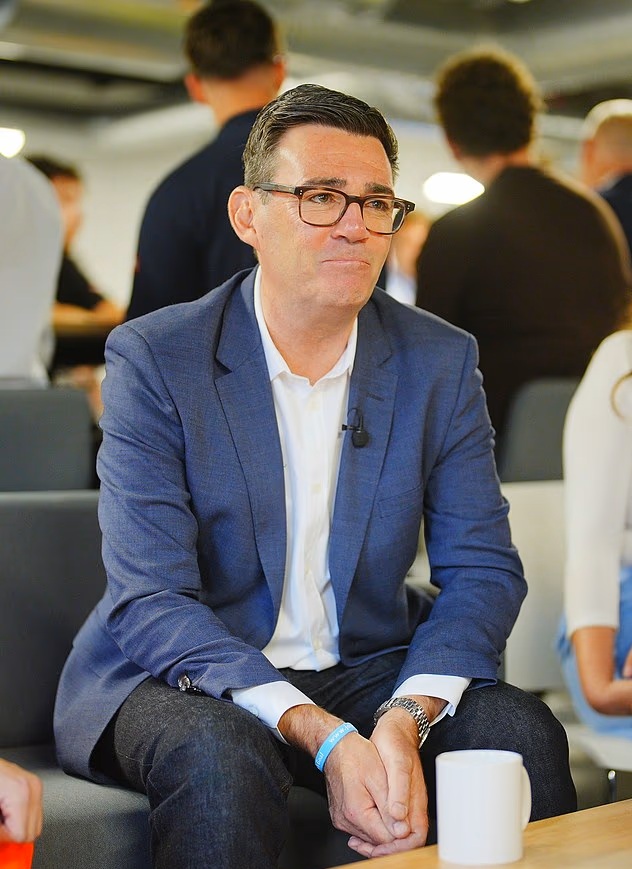
Burnham says he will not vote on the Government’s new assisted‑dying proposal — deliberately sitting it out so he doesn’t sway Labour MPs — and he’s warning ministers that the Government must stay strictly neutral on the issue.
Burnham is formally recusing himself from the assisted‑dying vote to avoid influencing MPs, making clear it’s a conscience‑based free vote and warning ministers to stay strictly neutral — essentially telling them not to turn it into Government‑driven reform.
Mr Burnham has previously backed legalising assisted dying, but last month cautioned that it would be difficult to pursue any change until adult social care is properly improved.
The Terminally Ill Adults (End of Life) Bill, which ran out of time in the last parliamentary session, is scheduled to return to the House of Commons on September 11.
The Bill would allow adults in England and Wales with fewer than six months to live to apply for an assisted death, subject to approval from two doctors and an expert panel.
When Labour MP Kim Leadbeater first introduced the Bill as a Private Member’s measure in 2024, then‑Prime Minister Sir Keir Starmer voted in favour of it.
However, senior ministers — including then Health Secretary Wes Streeting — voted against it.
In his letter, Mr Burnham appeared to caution his top team against getting involved this time, saying his role was “to lead a Government that implements the will of Parliament in this area – whether that is to change the law or not”.
‘This is an incredibly important and personal debate, not just for members, but for so many people across the country,’ he said.
‘There is no single right position, and I have deep respect for MPs on all sides, and the expertise they bring to this debate.
‘We have all had different life experiences that will inform how we see this issue, and everyone must be given the space to arrive at their own decision on the Bill.
‘I know the conclusions colleagues come to weigh heavily on them, and that we will all take our responsibilities as MPs incredibly seriously when it comes to the debate and voting. It is vital that every view is respected.’
The Bill originally fell in the House of Lords in April, after running out of time to progress before Parliament was prorogued that month.
It had cleared two Commons votes, although the second — in 2025 — saw its majority shrink to 23, down from the earlier margin of 55.
Assisted dying isn’t like transport, housing, or NHS reform. It’s a moral vote, not a policy vote.
Some people support assisted dying because they see it as autonomy, dignity, and relief from suffering. Others oppose it because they fear pressure, mistakes, or moral lines being crossed.
How can anyone — even a Prime Minister — decide whether another person should be allowed help to die?
On one hand, we don’t want people to suffer. On the other hand, we don’t want to be the ones deciding who lives or dies.
Assisted dying isn’t really about law. It’s about ethics, conscience, suffering, autonomy, fear, dignity, and what it means to be human.
The law is just the container. Morality is the content.
These aren’t legal questions — they’re human ones.
And they divide people deeply.
But the law can’t answer moral questions. It can only set boundaries around them.
That’s why Parliament treats this as a conscience vote, not a Government policy.

