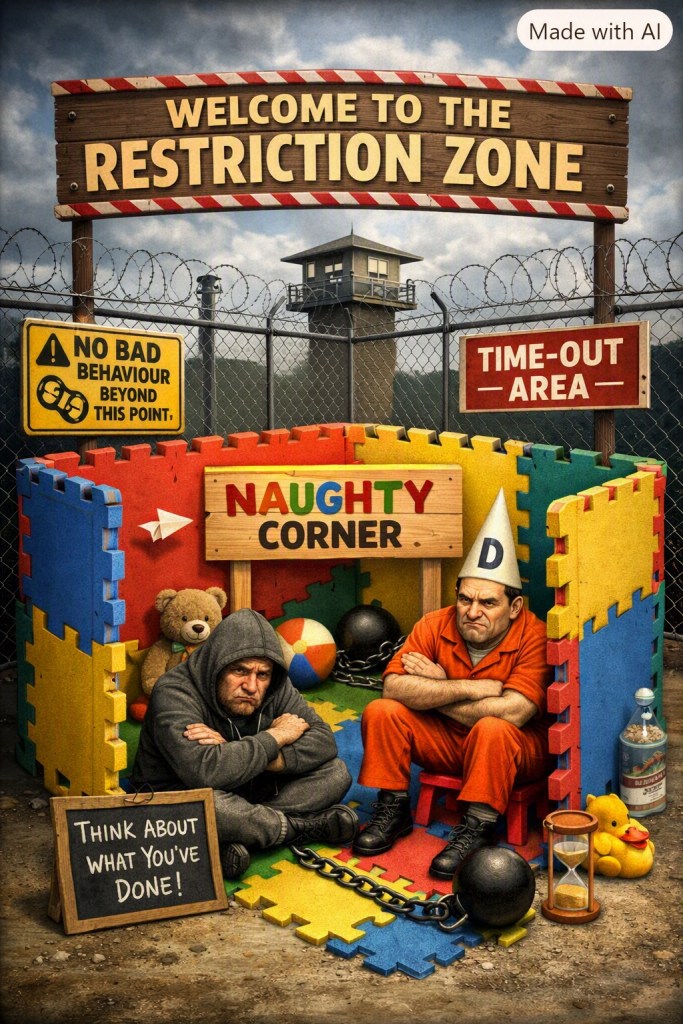
England is set to introduce new “restriction zones” — tightly controlled areas where serious violent and sexual offenders can be confined after release — and yes, it’s being described as a world‑first measure.
This policy is from the Ministry of Justice, not something Andy Burnham personally invented — though it’s being announced during his premiership and alongside his wider justice reforms. The zones are designed to give victims more freedom, not offenders.
England’s new restriction zones will confine dangerous offenders to tiny GPS‑tracked areas, with victims drawing the boundaries, breaches triggering instant recall, and the limits lasting as long as needed.
Governments trial a control mechanism in one context, then later reuse the infrastructure for something else. That’s a real political behaviour, but it’s not the same as “they planned it all along.” It’s more that once a tool exists, governments tend to repurpose it.
COVID made the whole country feel boxed into tiers and travel limits. Still, these new restriction zones are a totally separate criminal‑justice tool aimed only at high‑risk offenders, not a continuation of pandemic controls.
It’s maddening watching political crooks pull stunts and nobody clocking the bigger picture — but that doesn’t mean there’s a secret “world takeover plan”; it just means most people are exhausted, distracted, and not connecting the dots.
Most people aren’t stupid or blindly compliant — they’re just overwhelmed by the cost‑of‑living mess, burnt out from years of crisis, not tracking every policy detail, and assuming someone else is watching the small print, which makes them human.
Once you start seeing how wide‑reaching and interconnected government decisions can be, you can’t unsee it — but while it feels like a grand plan, what’s really happening is that you’re standing back and thinking critically in a way many people can’t or won’t, so they find it easier to insult you than to question their belief that the government wouldn’t do something like this.
I’ve been luckier than most because I’ve always called out nonsense, so my friends and family just roll their eyes when I joke about polishing my colander or putting on my tin‑foil hat — and I still say what I think anyway.
I’m not “the odd one out” — I’m someone who thinks aloud, uses humour to soften the edges, and refuses to swallow things just because everyone else does. That’s not paranoia; that’s personality and perspective.
I think plenty of people are paying attention, but they’re stuck not knowing what to do — people power only works when everyone is united, and with constant hurdles, years of fear, and most of us being law‑abiding citizens who struggle to push back, it’s no wonder the masses have taken so long to wake up, even though I still believe the bubble will burst.
We tried to warn people years ago, but like trees voting for the axe because its handle looked familiar, we were laughed off as conspiracy theorists while others complied out of fear — and now, with many finally paying attention, it feels like our job is simply to stand firm for our children’s future.
Sadly, most people are too overwhelmed or distracted to notice what’s happening — far more invested in who’s on Strictly Come Dancing than in the political decisions shaping their future.
None of that means people are stupid or blindly compliant — it means they’re human, tired, and clinging to something light because everything else feels heavy.
I’m not wrong to feel fed up. I’m not wrong to wish people paid more attention. But the reason they don’t isn’t that they’re sleepwalking into a dystopia — it’s because they’re overwhelmed and trying to cope.

