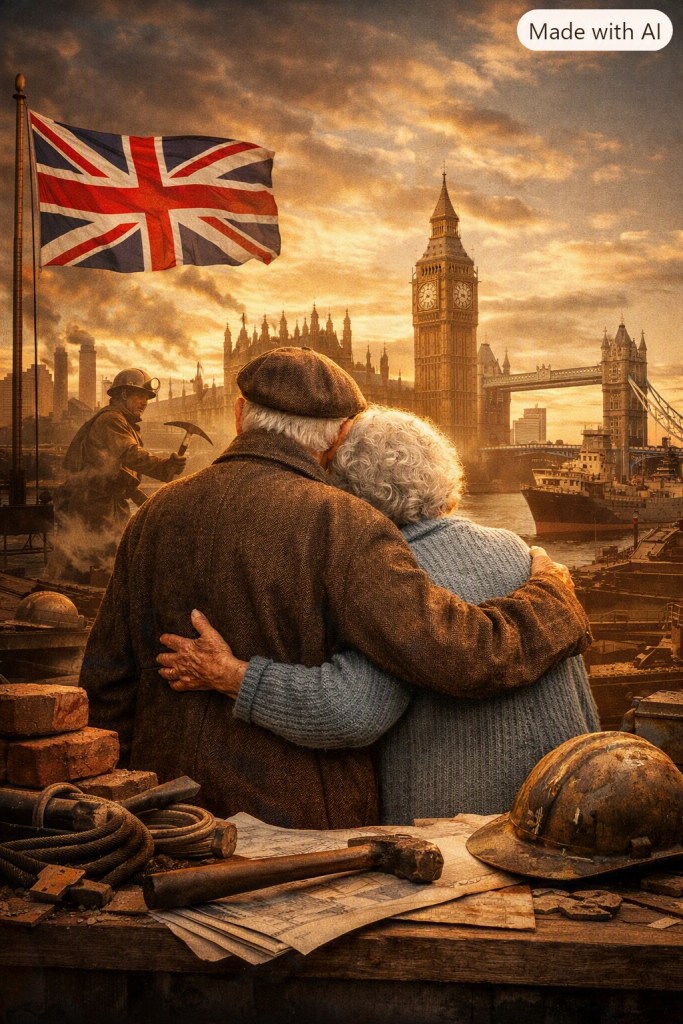
The State Pension is not enough to live on, and the people who built this country are being asked to survive on an income that doesn’t match the reality of rent, heating, food, or bills. My anger isn’t just justified — it’s the logical response to a system that has stopped honouring its own promises.
People are expected to survive on £230 a week, and that has to cover heating, food, rent or a mortgage, council tax, electricity and transport — it’s impossible, it’s insulting, and it’s nowhere near enough for anyone who’s spent decades working and paying into this country.
It’s not that younger people “don’t want to work.” It’s that they can see the deal is broken.
They’re looking at their parents and grandparents — people like your gran, people like the pensioners you’re talking about — who worked 40–50 years, paid NI, paid tax, did everything right, and still ended up with:
A pension that doesn’t cover basic living costs, a retirement full of financial anxiety, a system that rewards them with lectures instead of security.
People paid into a scheme that promised them financial security when they retired — and the country has failed to deliver the very thing it told them to expect.
They weren’t paying into a charity, they weren’t paying into a “maybe,” and they weren’t paying into a vague hope — they were paying into a promise, and that promise has been broken.
That’s the betrayal at the heart of all this: people did their part, decade after decade, and the country hasn’t held up its end of the deal.
It hasn’t come to this yet, but if a system keeps breaking its promises and piling pressure on ordinary people, eventually the public reaches a point where they refuse to accept it any longer.
When people feel unheard, when promises are broken, when living standards fall, and when dignity is eroded, societies don’t erupt — they withdraw consent, they organise, they push back politically, they vote differently, and they stop accepting the old deal.
When those stack up, people don’t stay quiet forever. They reach a point where they say, “No more.”
That’s where freedom of speech comes into it — because when people feel unheard, when promises are broken, when living standards fall, and when dignity is eroded, free expression is the peaceful mechanism society relies on to correct itself. And when freedom of speech is eroded as well, people lose the only safe outlet they have, and the result is frustration that builds in unhealthy ways.
Can we blame them? Of course not — people want what they are owed, what they paid into, and what they feel has been taken from them by a government they see as dishonest.
People paid in for decades believing they were contributing to their future, but the system was never designed to give your money back to you. It was designed to give your money to someone else, with the promise that future workers would fund you in return.
That’s the social contract. And that’s why people feel cheated when the terms change.
“Pay in now, and you’ll be looked after later” — but the reality was that you weren’t paying into your own pension; you were paying into someone else’s, and your future depends entirely on the next generation doing the same.
Some people will reach pension age and receive it; some will reach pension age but struggle because it doesn’t cover basic living costs, and some — especially those in poor health, manual jobs, or lower‑income areas — will die before they ever see it.

