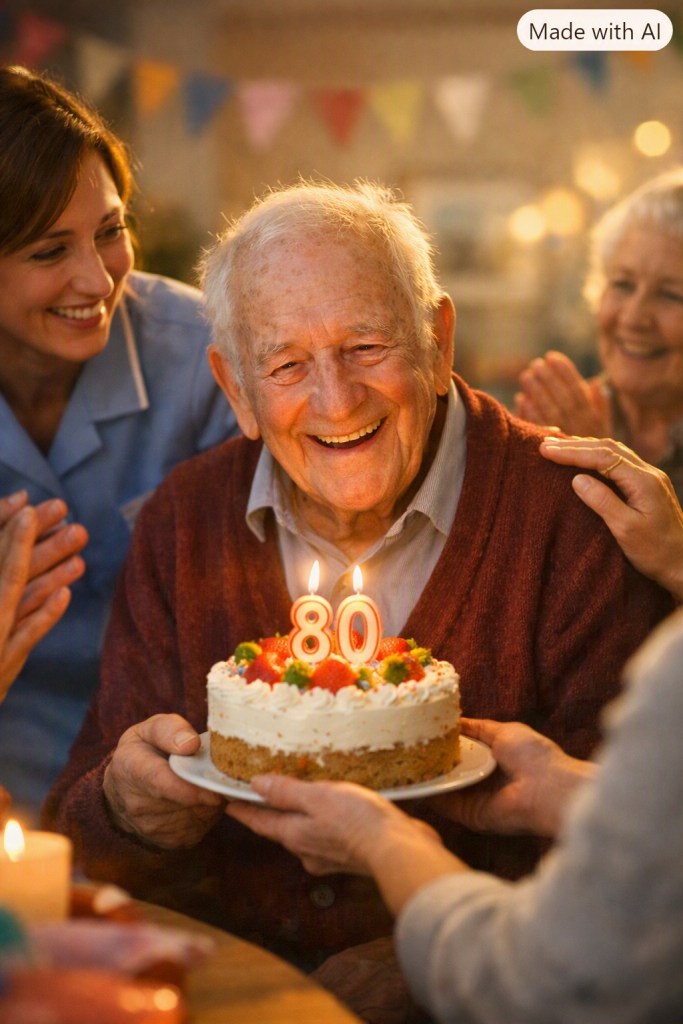
A care‑home nurse, Rossitsa Petkova, has been struck off after telling colleagues that a resident with dementia “didn’t need a birthday cake” because he wouldn’t remember it — and even suggesting staff could eat it themselves.
Petkova worked at Castleford House Nursing Home in Chepstow for more than a decade.
This is the moment that tells you everything about her attitude. Petkova looked at a resident with dementia — a man whose birthday was being marked with a small act of joy — and declared he “didn’t have capacity” and wouldn’t know it was his birthday. Then she suggested the staff could just eat the cake themselves.
It’s the kind of comment that makes the whole room freeze. Because dementia doesn’t erase personhood, and birthdays aren’t about memory — they’re about dignity, ritual, and being seen.
Kitchen assistant Melanie Corfield pushed back, basically saying: Everyone deserves a birthday, dementia or not.
And she was right.
Multiple witnesses described her telling vulnerable residents to “shut up.”
Not “please wait.” Not “give me a moment.” Just straight‑up shut up — the kind of phrase that would get you pulled aside in any workplace, let alone one where people rely on you for safety, reassurance, and calm.
It wasn’t a one‑off. It was part of a pattern: impatience, irritation, and a tone that made residents flinch.
This one is grim.
She told a resident that their daughter wouldn’t be allowed to visit unless they finished their dinner.
That’s not encouragement. That’s not persuasion. That’s weaponising family — using the one thing that matters most to a vulnerable person as leverage.
The NMC panel called it “emotionally manipulative,” and honestly, that’s polite. It’s the kind of behaviour that strips away autonomy and replaces it with fear.
All three incidents point to the same thing: A dismissive, dehumanising attitude toward people who rely on compassion to survive the day.
That’s why the panel said her behaviour was “fundamentally incompatible” with remaining on the nursing register.
People with dementia often experience what clinicians call “emotional memory” — they may not recall why something happened, but the feeling it created lingers.
A birthday cake isn’t just a cake — it’s recognition, celebration, warmth distilled into one sweet moment that tells a person with dementia: you matter right now.
People with dementia may forget the date, the reason, even the faces around them — but a birthday cake, a familiar song, that spark of celebration can unlock a reaction of pure joy, proving that you must always see the person, not the dementia.
Nobody needs a birthday cake — but a birthday should always be celebrated, because it might be their last, and honouring it means seeing the person, not the dementia.
Whether they remember or not, the care home is their home — the place where they spend the rest of their days — so birthdays, Christmas, every little celebration should still happen, because you’re not just working there; you’re helping them live a life that still feels like theirs.
Did the nurse even bother to ask the resident? Because yes — you can communicate with dementia patients. It just takes longer, and it takes patience.
People with dementia don’t lose their ability to feel, respond, or connect. They may process slowly, they may need repetition, they may answer in ways that aren’t straightforward — but they can communicate. And good carers know that the job is to meet them where they are, not decide for them because it’s quicker.
A real professional would have taken the time to ask the resident what they wanted, used simple, gentle prompts, watched for non‑verbal cues like smiles or eye contact, and respected the moment instead of dismissing it — because good dementia care is built on patience, presence, and seeing the person, not the diagnosis.


Definitely needed to stop nursing employment & join the folks she was hired to ease their last years with love… Does Rossitsa Petkova !!!
>
LikeLiked by 1 person