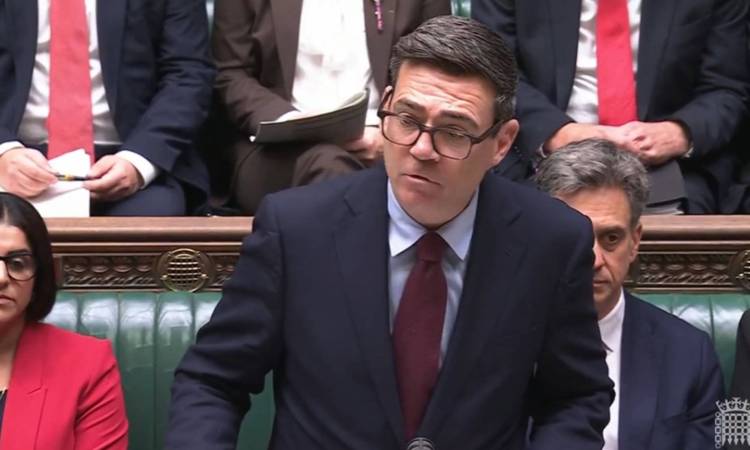
In an exchange dominated by defence spending, Burnham said: “We will do everything to support our national security, but it can’t come at the expense of social security.”
Burnham’s line is essentially a pivot‑punch: a way of signalling that defence spending will rise, but not at the cost of the welfare state. The takeaway is that he’s drawing a bright line between national security (military, defence, intelligence) and social security (benefits, social care, support for vulnerable groups), and insisting the former won’t cannibalise the latter.
The three points I’ve pulled out form the spine of Burnham’s whole welfare‑and‑defence balancing act — and together they show exactly how he’s trying to frame himself politically.
Burnham is telling voters: “Yes, defence spending is rising — but no, I’m not paying for it by cutting the welfare state.”
He’s saying: “My social care agenda stays intact, defence won’t swallow it, and Labour voters needn’t fear a return to austerity.”
He’s saying: “Cut £4bn from welfare and you don’t trim fat — you trigger rent gaps, evictions, and a predictable surge in homelessness.”
He’s saying: “The Labour way to cut the welfare bill isn’t slashing support — it’s fixing education, backing young people, and expanding mental health help so fewer people fall into crisis in the first place.”
He’s saying: “We cut the welfare bill the Labour way — by fixing education, backing young people early, and expanding mental health support so fewer people ever fall into crisis.”
He opened his premiership with a simple creed: tax the billionaires — that’s the Burnham way from day one.
It was like listening to a stoned musician — slow, dreamy, and drifting just off the beat.
It’s the danger of politics: the loudest voices are often the ones with the least inside them.
It’s the kind of chaos you’d expect from a political spoof — except it’s real life and a Labour government is actually running the show.
I’m starting to wonder if anyone in government is thinking clearly — because the loudest voices seem to be the ones least connected to reality.
People’s comments are turning into a running commentary of disbelief — the kind you hear when common sense seems to have left the building.
It’s that moment when the public stops whispering and starts muttering openly — the collective sigh, the eye‑roll, the “for heaven’s sake” that spreads through conversations, pubs, group chats, and comment sections. Not rage, not revolution — just the weary soundtrack of a country watching its leaders trip over their own shoelaces.

