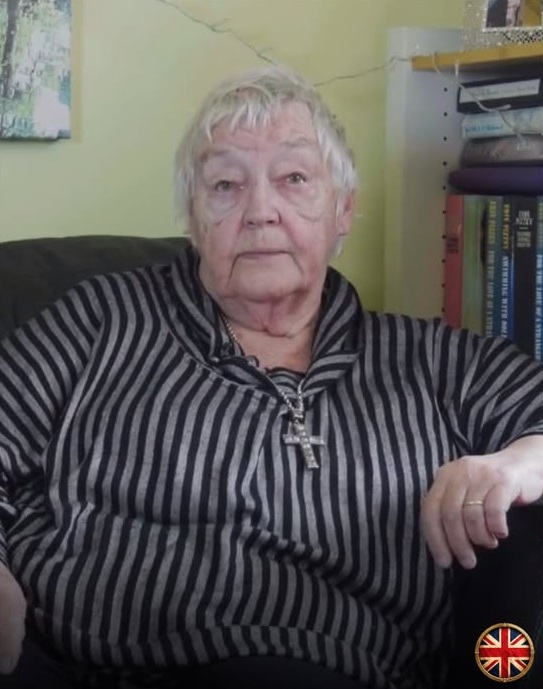
A woman knocked on a door in West London, covered in bruises, asking for protection from a violent husband; after the police and welfare services turned her away, the woman who answered—Erin Pizzey—said yes, a single act of compassion in 1971 that established the world’s first domestic violence refuge on Belmont Terrace in Chiswick, driven by her own memories of an unhelped, violent childhood.
At the time, British women fleeing violent partners faced an institutional vacuum; police dismissed marital assault as a private matter, dedicated refuges did not exist, and housing departments refused to classify them as homeless, forcing women to risk losing both their homes and their children if they left.
As word travelled fast among desperate women, the refuge quickly became severely overcrowded; a council inspection eventually found 75 women and children crammed into the property, more than double its legal limit of 36 occupants.
The danger also breached the refuge itself, as illustrated when a resident’s abusive partner broke in and threatened her life, highlighting a systemic issue where police nationwide still routinely dismissed such armed intrusions as minor domestic disagreements rather than crimes in progress.
Refusing to prioritise housing regulations over the lives of desperate women, Erin Pizzey waged a bitter two-year legal battle against Hounslow Council for overcrowding, which culminated in March 1977 when the House of Lords ultimately ruled against her.
This ruling created a stark paradox where the only person actively protecting these vulnerable women was prosecuted by Britain’s highest court and found guilty, essentially, for sheltering them.
Undeterred by the legal pressure, Erin Pizzey kept the refuge running as other women across Britain began opening houses based on her model, creating a rapidly growing network that formed a national federation by 1974 and transformed a single overcrowded house into a nationwide template for domestic violence services.
The relentless public pressure generated by Erin Pizzey and her network eventually forced Parliament to investigate marital violence, culminating in the Domestic Violence and Matrimonial Proceedings Act 1976—the first British law granting police the power to arrest violent partners for breaching court injunctions rather than simply asking them to leave.
In just five years, the landscape for domestic abuse survivors completely transformed from 1971, when a fleeing woman had nowhere to go, to 1976, which saw a dedicated nationwide network of refuges and a landmark law formally recognising the crisis.
While Erin Pizzey is widely celebrated as a historic pioneer for opening the world’s first domestic violence refuge, her later public commentary on reciprocal abuse sparked fierce polarisation, drawing intense backlash from mainstream feminist groups while earning lasting praise from men’s rights movements.
Erin Pizzey (1939–2025) was a pioneering British author and human rights activist who famously founded Chiswick Women’s Aid in 1971, which became the world’s first modern domestic violence refuge and eventually evolved into the major national charity Refuge.
Erin Pizzey’s extraordinary courage and empathy truly set her apart, as it took immense guts to defy local authorities, face down violent partners, and stand entirely alone against an indifferent system to protect vulnerable families.
Erin Pizzey’s groundbreaking legacy deserves to be permanently remembered and celebrated, as her defiant act of compassion in 1971 dismantled centuries of institutional silence and laid the global foundation for modern domestic abuse advocacy.
While no statue of Erin Pizzey currently exists to honour her role in transforming global public policy through the world’s first modern domestic violence refuge, placing a monument to her defiant courage right in London’s iconic Trafalgar Square would serve as a powerful public testament to her historic legacy.
Because many people simply assume domestic violence refuges have always existed, Erin Pizzey’s name remains largely forgotten, obscuring the powerful reality that it took a specific, courageous story to break centuries of silence and build these life-saving institutions from nothing.
This is an open letter to our Prime Minister, Andy Burnham, urging him to do this legendary pioneer proud by spearheading a campaign for her statue, because true trailblazers who change the course of human history—just as Erin Pizzey did—deserve to be permanently cast in bronze.

