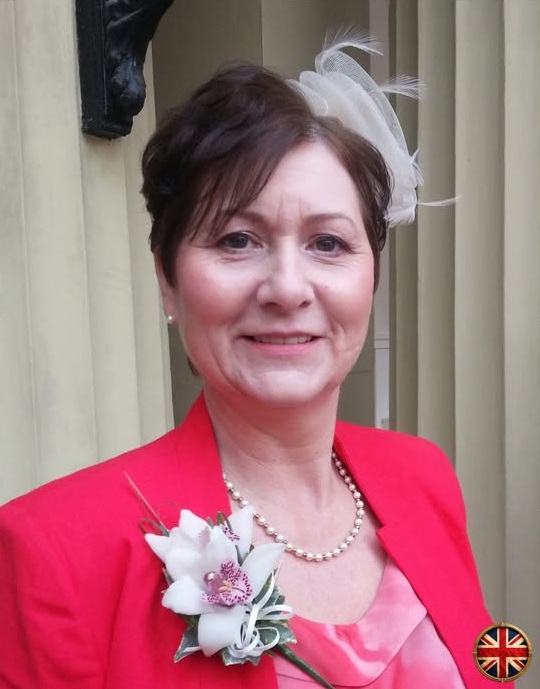
After witnessing her mother suffocate due to hospital neglect, Julie Bailey launched the “Cure the NHS” campaign, exposing a care scandal at Stafford Hospital that resulted in hundreds of unnecessary deaths and a historic overhaul of UK healthcare standards.
Julie Bailey’s routine life as a local café owner changed forever after her mother, Bella, entered Stafford Hospital for that treatable hernia.
Over the next eight weeks, Julie watched in horror as her mother was left dropped on the floor, starved of water, and ultimately left to suffocate when staff failed to provide vital oxygen.
Despite having no political connections or campaigning experience, Julie refused to accept her mother’s death as an isolated incident, setting up a helpline from her café that quickly uncovered hundreds of identical stories of systemic neglect.
The horrific conditions she witnessed—patients drinking from flower vases out of extreme thirst, or lying helpless in their own waste—were later formally documented in the 2013 Francis Report, which exposed how Stafford Hospital had completely abandoned basic patient care to meet financial targets.
Despite fierce institutional denial and intense pressure from local officials to close the matter, Julie Bailey and her group relentlessly bypassed the bureaucracy by funnelling evidence directly to journalists and compiling an undeniable archive of patient neglect.
Their persistence broke through the hospital’s defences, shifting the narrative from an isolated tragedy to a proven, systemic failure that the British government could no longer ignore.
The statistical analysis, championed by healthcare analyst Professor Sir Brian Jarman, confirmed the campaigners’ worst fears by revealing massive spikes in Hospital Standardised Mortality Ratios (HSMR) that pointed directly to systemic, lethal neglect.
While the regulator, the Healthcare Commission, cautioned that these excess death figures were statistical estimates rather than verified individual cases of negligence, the numbers proved undeniably that Stafford Hospital was a statistical outlier in patient safety.
This mathematical validation shifted Cure the NHS from a localised grievance into an unassailable national scandal, making a full public inquiry inevitable.
Despite intense resistance from government ministers who favoured private reviews over a costly public tribunal, Julie Bailey’s relentless pressure eventually broke the political deadlock.
Her refusal to back down forced the incoming government to grant a full, independent public inquiry under the Tribunals of Inquiry Act, chaired by Sir Robert Francis QC, which ultimately exposed the truth to the entire nation.
Julie Bailey’s campaign forced a historic NHS overhaul, but local backlash—including death threats, online harassment, and the desecration of her mother’s grave—ultimately drove her to close her business and flee her hometown in 2013.
The Mid Staffordshire scandal remains one of the darkest periods in NHS history precisely because it shattered that fundamental trust, particularly for vulnerable, elderly patients and their families.
The 2013 Francis Report explicitly detailed how a toxic culture of target-chasing and cost-cutting completely eroded basic human compassion, turning a place of healing into an environment where patients and their relatives felt genuinely terrified. It was Julie Bailey’s raw, firsthand accounts—of her mother being dropped, starved of water, and left to suffocate—that gave a voice to thousands of quiet, frightened people who felt entirely powerless against a massive bureaucracy.
While the scandal forced vital, permanent reforms to patient safety, staffing ratios, and whistleblowing protections across the UK, the deep emotional scars and the memory of that fear linger for an entire generation of families.
Martin Yeates, the hospital’s chief executive, resigned with a massive £1 million-plus pension pot and escaped criminal prosecution, sparking nationwide outrage over the lack of accountability.
In direct response to the scandal and the exact flaw of “staged” reviews, the UK overhauled its system so that the independent Care Quality Commission (CQC) now routinely conducts completely unannounced, surprise inspections on hospital wards to catch systemic failures in real time.

