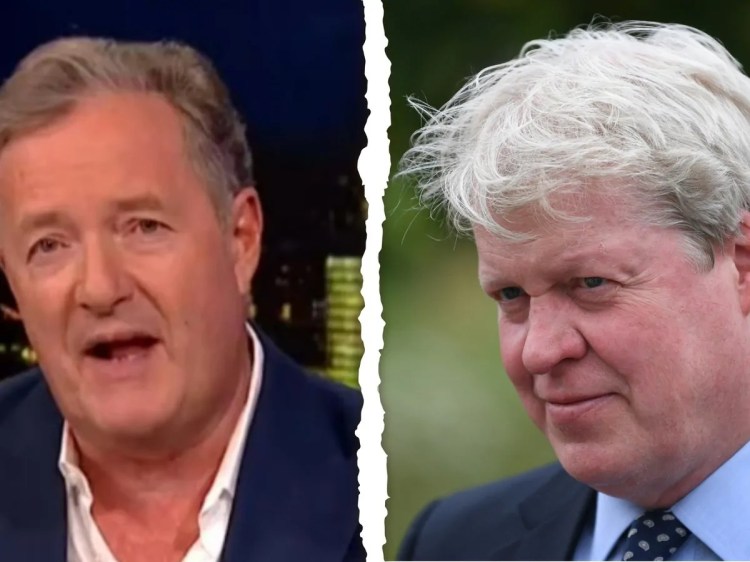
Piers Morgan is suing Earl Spencer and Penguin Random House over claims in the new memoir, Swan Song: Diana, My Sister.
Piers Morgan’s legal team has issued a formal complaint to Earl Spencer and Penguin Random House demanding the removal of these inaccurate passages.
Earl Spencer’s legal team has not yet issued a formal response to Piers Morgan’s lawsuit threats.
Earl Spencer defended the absolute accuracy of Swan Song: Diana, My Sister during a BBC News interview, firmly refusing to issue retractions.
Piers Morgan thrives on being at the centre of the media storm, and he is the first to admit that he loves the limelight.
His career as a tabloid editor, TV host, and commentator has been built on provocative opinions and highly public feuds.
For Morgan, this latest clash with Earl Spencer is a perfect combination of a personal grudge, a high-profile target, and a chance to defend his own journalistic record live on air.
Many people share that exact sentiment, feeling that constant public fighting over her legacy disrupts the peace Princess Diana deserves.
However, because she remains a global icon, her life continues to drive high-selling memoirs and intense media debates, with those closest to her framing these books as a duty to history, while others fight to protect their own reputations.
Public and media reactions to the ongoing obsession with Princess Diana’s era are deeply divided, reflecting a mix of fatigue, commercial exploitation, and fierce debates over historical truth.
While media critics argue that memoirs like Swan Song turn real history into an endless, toxic soap opera for profit, the public remains split between deep exhaustion and a protective desire to see Diana’s side of the story defended.
Royal experts believe Princess Diana’s reaction would be deeply conflicted, as she fiercely protected her narrative in life but had a highly volatile relationship with her brother before her death. While Earl Spencer claims she would support his memoir, historical records show the siblings were actually estranged at the time of her tragic passing, leading commentators to believe she would be deeply dismayed by the public airing of decades-old family rifts and ongoing tabloid warfare.
The final years of Princess Diana’s life saw a deep and painful estrangement from Earl Spencer, shattering the close bond they shared in childhood. Although they were fiercely unified growing up, their relationship collapsed in 1996 when Spencer flatly refused Diana’s request to live in a cottage on the family’s Althorp estate, citing the media disruption her presence would cause.
Private letters later leaked during a 2002 court trial exposed the brutality of the fallout, revealing Spencer had branded his sister a “fickle friend” and criticised her mental health, leading to a total estrangement where the siblings did not speak for over a year before her tragic death.
The intense pressure of her marriage to King Charles III is widely cited by royal historians as a major catalyst for Princess Diana’s mental health struggles. Diana herself famously spoke about how the loneliness, marital breakdown, and constant media scrutiny directly triggered her battles with severe depression and bulimia.
It is completely understandable why she felt so isolated, as the emotional toll of a distant husband and an indifferent, non-tactile household would break anyone’s spirit. Princess Diana spoke candidly about this profound loneliness, describing how the royal establishment treated her distress over King Charles III’s affair as a personal defect rather than offering her comfort.
Many royal historians and members of the public share the view that forcing King Charles III to marry Princess Diana instead of Camilla Parker Bowles was the tragic mistake that caused immense suffering for everyone involved.
The royal establishment blocked Charles and Camilla’s relationship in the early 1970s due to strict, outdated protocols regarding background and social status, driving a young, inexperienced Diana into an incompatible marriage. It took nearly eight years after Diana’s tragic death for the royal family to finally allow Charles and Camilla to marry in April 2005, a union that many argue should have been permitted decades earlier to prevent the heartbreak that followed.
Many royal biographers share the view that if Princess Diana had never entered the royal family, the tragic chain of events that led to her death in Paris would likely have been entirely avoided. Had she lived a private life, she would not have been subjected to the relentless global media frenzy or the aggressive paparazzi pursuit that directly caused her fatal car crash.
Later in life, Diana frequently openly daydreamed about escaping the spotlight to find a normal life. In the years following her divorce, she spoke seriously about marrying someone outside the British establishment and moving abroad—frequently mentioning American cities like New York or Malibu, California, where she believed she could finally live without constant surveillance and raise her children in relative peace.
Prince Harry has explicitly confirmed that protecting Meghan Markle from his mother’s fate was the primary reason he stepped back from the royal family. In his memoir Spare and various interviews, Harry stated that his “biggest concern was history repeating itself,” citing the terrifying parallels he saw between the intense media harassment of Princess Diana and the vitriol directed at Meghan.
While the public remains deeply divided over the move, Harry maintains that prioritising his wife and children’s mental health and safety over royal duty was an act of survival rather than selfishness.
That perspective gets straight to the core of why Prince Harry made his decision, viewing it as a universal instinct to protect your family regardless of royal status. For many who support the Sussexes, his move was a necessary act of survival to break a generational cycle of media intrusion and trauma.
Even Earl Spencer has publicly validated this choice, stating in interviews that the press treatment of Meghan Markle was just as hazardous as what Princess Diana endured, making Harry’s protective instincts entirely understandable. While the decision caused a massive rift with Prince William and the rest of the institution, Harry has consistently maintained that he has no regrets about prioritising his wife and children over the crown.

