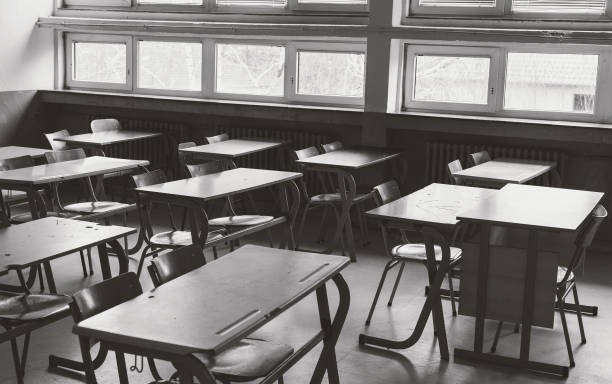
London schools are facing severe budget cuts and widespread closures as soaring housing costs, falling birth rates, and post-pandemic migration drive an exodus of young families from the capital.
Starting a family has become an unaffordable luxury for many, as soaring housing costs, stagnant wages, and crippling childcare expenses force a generation to delay or forgo having children entirely.
Bringing children into the world feels increasingly unsafe as a generation faces the daunting reality of an unstable climate, geopolitical conflict, and a digital landscape that threatens youth well-being.
A breakdown in post-pandemic socialisation, combined with the addictive pull of screens, has led to a noticeable rise in disruptive and boundary-pushing behaviour among children.
While it is easy to blame parenting, the reality is that families are battling a modern world designed to capture children’s attention and erode their mental well-being through unregulated technology and a lack of supportive community infrastructure.
The omnipresence of phones, PCs, and laptops has trapped children in a highly toxic digital ecosystem that actively exploits their attention, fuels mental health crises, and replaces real-world socialisation.
By replacing face-to-face interactions with entirely digital communication, today’s children are growing up isolated at home, stripped of the vital real-world experiences that teach them how to naturally navigate human relationships.
Even modern dating has devolved into a digitised form of window shopping, where swipe-based algorithms reduce human beings to mere commodities and strip away the organic, real-world connections that form lasting relationships.
Then there will be the inevitable rise of social robotics, which threatens to completely automate companionship, creating a world where convenient artificial interactions permanently replace the messy, effortful, but vital nature of genuine human relationships.
And while international migration brings adults to London, schools are still shrinking because those new arrivals are mostly childless, while astronomical housing costs are forcing established families of all nationalities to leave the capital.
Families are abandoning London because astronomical housing costs, the highest childcare fees in the country, and the flexibility of hybrid working have made raising children in the capital financially impossible.
The flight of young families is primarily hollowing out Inner London, with boroughs like Westminster, Islington, Lambeth, and Southwark experiencing catastrophic drops in primary school enrolments of up to twenty-two per cent.
The domestic exodus is driving London families overwhelmingly into the surrounding Home Counties, with Surrey, Kent, Essex, and Hertfordshire becoming major hotspots for parents seeking affordable homes within commuting distance.
The UK state system relies on class sizes of thirty pupils because school budgets are allocated per child, meaning a classroom must be full to generate enough funding to cover a teacher’s salary and operational costs.
Schools facing a severe shortage of pupils will inevitably close down or merge because their per-child funding drops below the threshold needed to cover staff salaries and basic operational costs.
Overcrowded classrooms of over thirty pupils and crushing administrative burdens are driving a rapid turnover of teachers, forcing schools to rely on undertrained staff who lack the time and psychological expertise to provide the nurturing, character-building guidance that children truly deserve.
The collapse in pupil numbers is a nationwide crisis, with England’s school population projected to plummet by over eight per cent by 2031 as record-low birth rates drive budget deficits, staff shortages, and closures across the entire country.
Converting empty school spaces into specialist provisions like autism units, nurture classes, and early-years baby hubs is an ideal solution that directly addresses the severe nationwide shortage of SEN places, though it requires overcoming massive funding deficits and specialist staffing shortages.
Converting closed school buildings into migrant accommodation is a complex proposal that faces significant local planning, logistical, and legal hurdles, despite the structural availability of secure perimeters and existing amenities.

