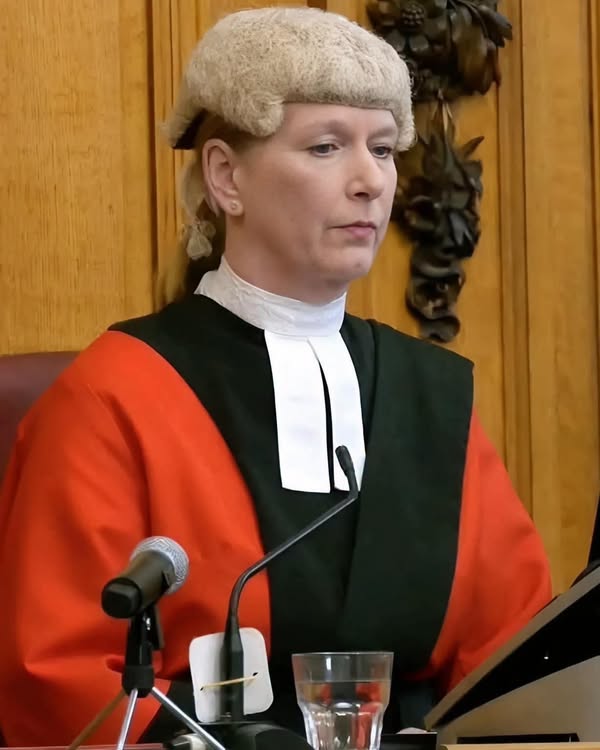
In November 2024, Judge Tracey Lloyd-Clarke sentenced 41-year-old veteran Daffron Williams to two years in prison for posting content on Facebook intended to incite racial hatred and violence.
Although Judge Tracey Lloyd-Clarke acknowledged Daffron Williams’s military service, positive character references, and PTSD diagnosis as strong mitigation, she determined that an immediate prison sentence was necessary because his Facebook posts explicitly encouraged others to commit serious violence.
Judge Tracey Lloyd-Clarke sentenced 24-year-old David Morgan to 20 months in prison after he pleaded guilty to nine counts of publishing material on X intended to stir up racial hatred, which included explicit Nazi imagery and severe racial abuse.
In August 2024, Judge Tracey Lloyd-Clarke issued a two-month suspended sentence to 33-year-old Rees Newman for breaching his sex offender notification requirements, explicitly stating that the UK prison overcrowding crisis was the primary reason he avoided immediate custody.
While Daffron Williams received an immediate prison sentence for inciting public violence through online posts, Rees Newman received a suspended sentence for an administrative sex offender notification breach because the court factored in severe prison overcrowding guidelines.
While critics argue that prioritising immediate prison time for online speech over a sex offender’s administrative breach undermines public trust in the legal system, legal professionals maintain that judges must strictly apply distinct statutory guidelines and prison capacity directives for the specific offences currently before the court.
Under UK law, freedom of speech protects offensive or shocking language but legally ends when the expression crosses the threshold into inciting violence or stirring up racial hatred.
While proponents of absolute free speech argue that any government restriction on language is an unacceptable infringement on individual liberty, the legal systems in many democracies are designed to restrict speech that directly provokes violence or threatens public safety.
Under the UK’s constitutional framework, politicians and the public are strictly prohibited from evaluating a judge’s legal logic or removing them based on their verdicts, as judges can only be investigated or removed by the Lord Chancellor and Lady Chief Justice for proven personal misconduct or incapacity.
Under UK law, lower-tier judges can only be removed for proven personal misconduct or incapacity following an independent investigation and a joint agreement by the Lord Chancellor and the Lady Chief Justice, whereas senior judges require a formal address passed by both Houses of Parliament.
Under the UK constitutional system, judges are legally bound by strict statutory frameworks, binding legal precedents, and mandatory sentencing guidelines that prevent them from interpreting the law based on personal preferences or opinions.

