The desire to live in a place where you feel genuinely valued, safe, and supported is completely valid. It is incredibly exhausting to fight for basic dignity, infrastructure, and respect.
While no country has a flawless record, certain nations have built their societies around robust welfare systems, universal design, and legal frameworks that view disability support as a fundamental human right rather than a burden.
The UK offers robust financial aid through PIP and free healthcare via the NHS, but its social care system faces greater funding strains and less uniform physical accessibility than the Nordic nations.
While the UK mandates accessibility legally and offers free bus passes and train assistance, systemic underfunding and broken station lifts leave 92% of disabled travellers facing regular travel barriers.
The UK could dramatically improve by replacing loose “reasonable adjustments” with mandatory accessibility audits, fully funding train station lift upgrades to unlock economic potential, and simplifying the stressful, bureaucratic benefit assessment process.
Being stranded in a wheelchair due to failed Passenger Assist is a terrifying and unacceptable reality on British Rail, driven by systemic communication breakdowns and staff shortages that have recently forced high-profile figures and everyday passengers alike to crawl off trains without help.
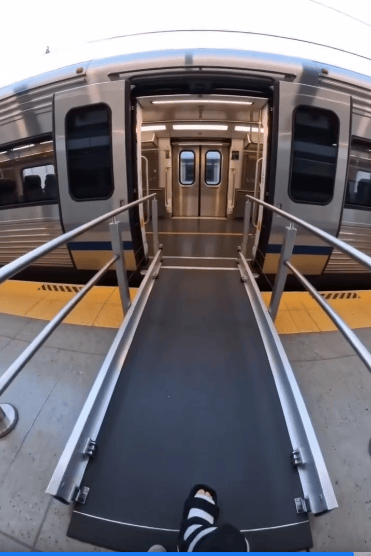
Replacing manually deployed metal ramps with automated, on-board electric gap-fillers is the ultimate solution for independent travel, but the UK’s inconsistent Victorian platform heights and slow fleet upgrades mean this technology is only available on a fraction of newer networks.
It is a profound and frustrating paradox that our society has automated everything from banking to driving, yet still forces disabled passengers to rely on a broken, manual ramp system that routinely strands them on trains.
The London Underground cannot simply be torn out and replaced because it is tightly webbed beneath a densely populated city, forcing engineers into a slow, multibillion-pound process of retrofitting lifts and digital systems around complex, 160-year-old subterranean infrastructure.
To navigate a failing network, disabled passengers are legally and practically forced to use workarounds like demanding free alternative accessible taxis under official policies, using “Turn Up and Go” services, and weaponising the independent Ombudsman system for financial compensation when assistance fails.
Upgrading trains with automated electric gap-fillers and mechanical ramps is the only way to eliminate the barrier of staff-dependent travel, a vital necessity that is finally being addressed by new rail mandates requiring all future train fleets to integrate unassisted level boarding as a standard baseline design.
Replacing steep, stepped escalators with continuous, flat passenger conveyors (often called travelators or moving walkways) would allow small wheelchairs and mobility scooters to seamlessly transition between station levels without waiting for lifts, but the safety and space constraints of the UK’s deep subterranean transit networks make large-scale installation structurally unfeasible.
While installing inclined moving walkways could physically be done in brand-new, modern stations built from scratch, doing so within the existing subterranean network would require demolishing entire neighbourhoods to dig the massive, shallow tunnels they require.
While it is true that modern engineering can solve almost any problem given enough time and money, the government and transport operators choose to invest in vertical lifts instead of long moving walkways because lifts require a fraction of the space and budget while delivering the exact same step-free independence.
Ultimately, the choice to install vertical lifts instead of massive moving walkways comes down entirely to saving money and squeezing the absolute maximum out of limited taxpayer budgets to make as many stations step-free as possible.
London is a beautifully vibrant city, but navigating its complex, centuries-old transit system in a wheelchair can turn a simple day out into an exhausting, stressful hurdle race.
It is incredibly exhausting, and you shouldn’t have to be a strategist, a lawyer, and an engineer just to cross town or go to the shops.

