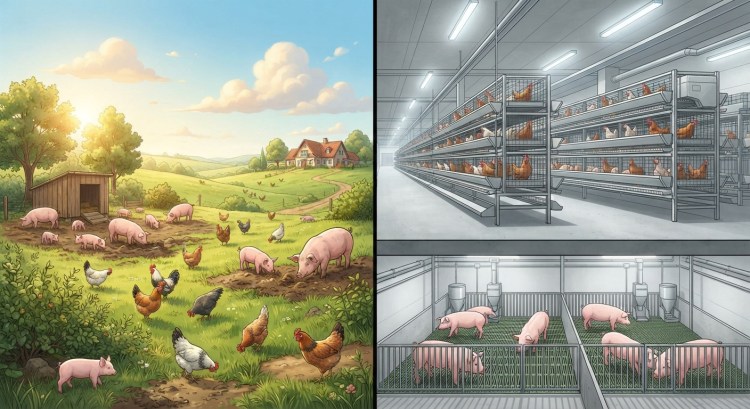
The intensive rearing of livestock, commonly known as factory farming, is a subject of significant debate in the UK, involving complex ethical, economic, and welfare considerations.
Critics and animal welfare organisations, such as the RSPCA and Compassion in World Farming, argue that intensive systems prioritise high-yield production at the expense of animal well-being.
Confinement and Space. High stocking densities in indoor facilities can restrict natural behaviours, leading to stress and frustration for animals like pigs and poultry.
Practices such as beak trimming in hens or tail docking in piglets, often performed to prevent injuries caused by stress-induced pecking or biting, are criticised as painful mutilations.
Selective breeding for rapid growth or high yields (such as fast-growing broiler chickens) can lead to health issues, including skeletal problems and cardiovascular strain.
The debate over intensive farming in the UK contrasts campaigns for stricter animal welfare laws with the agricultural industry’s focus on food security and maintaining high regulatory standards.
The ethical treatment of animals raised for food is a central point of discussion among consumers, ethicists, and the agricultural industry, focusing on what constitutes respectful treatment within a livestock production system.
The UK government has launched a consultation to phase out high-concentration carbon dioxide stunning for pigs due to severe welfare concerns, sparking debate over the cost and viability of transitioning the industry to alternative methods.
The use of gas systems for livestock is a central point of contention, with critics comparing the method to a gas chamber due to the respiratory distress it causes, while the industry frames it as a controlled atmosphere designed to minimise handling stress.
While humans are biologically omnivores who choose to eat meat, many consumers seek to align their diet with their ethics by purchasing meat certified by higher-welfare labels that mandate swift, pre-stunned slaughter and minimal anticipatory stress.
While factory farming relies on confined indoor environments with routine preventative mutilations like tail-docking and beak-trimming to maximise production efficiency, organic and free-range systems provide animals with greater space, outdoor access, and enriched environments to promote natural behaviours.
Although the higher production costs of free-range and organic meat result in a higher retail price, consumers can still prioritise animal welfare on a budget by adopting strategies like eating less meat, selecting cheaper cuts, or focusing on high-welfare eggs.

Next time you sit down to porky pig for dinner, say a prayer for the poor little piggy. They are supposed to be intelligent animals, but not so intelligent if they end up on our plates.

