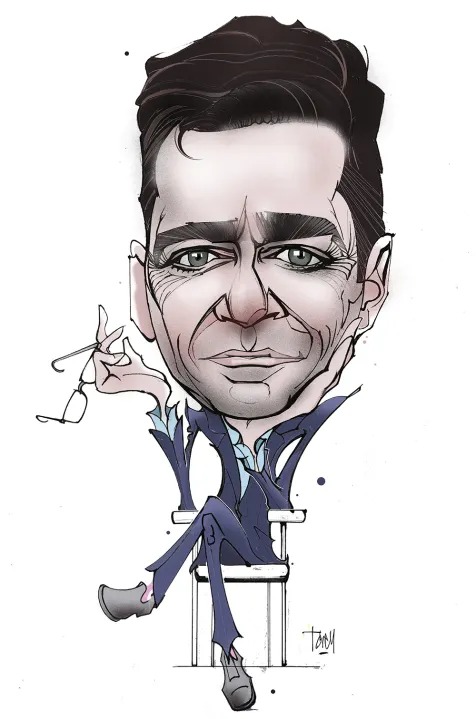
Depending on who you ask in Westminster, Andy Burnham is either the relatable “King of the North” or a political chameleon who could change his stripes mid-sentence.
Since stepping into 10 Downing Street in July 2026, the debate over whether he’s a trustworthy man of the people or a smooth-talking operator has become a national pastime.
Political commentators from both the Conservative press and the Labour left have joked that his ideological journey has more U-turns than a broken sat-nav—shifting smoothly from a Tony Blair loyalist to a Corbyn-curious left-winger, and back to a pragmatic Prime Minister.
Critics often roll their eyes at his carefully curated “ordinary bloke” image, arguing that nobody climbs to the very top of British politics without being a ruthless operator behind the scenes.
Left-wing detractors and disability campaigners have pointed out the irony of a self-styled champion of the vulnerable facing backlash over proposed restrictions to youth disability benefits.
Fans argue that his down-to-earth accent and willingness to fight Westminster during the COVID-19 lockdowns proved he actually cares about life outside the M25.
Supporters point to his work on Greater Manchester’s Bee Network and his long-running campaign for the Hillsborough families as proof that he delivers real results rather than just empty speeches.
Many Labour members simply felt that after years of robotic political speak, having a Prime Minister who looks like he knows how to order a pint without making it weird was worth a shot.
Whether Andy Burnham’s first four months in Downing Street look like a bold new era or a classic British political rerun depends entirely on whether you prefer discounted bus tickets or big dramatic revolutions.
Since July 2026, his government has delivered a mix of immediate pocket-money tweaks, northern relocation projects, and big promises pencilled in for sometime in the next decade.
In October 2026, the government scraped the 5% VAT off domestic electricity bills—saving the average household about £45 a year—by cancelling the previous government’s digital ID cards. Think of it as trading Big Brother for one medium pizza and a side of garlic bread.
They froze rail fares until March 2027 and promised a £2 bus fare cap across England outside London, though you have to wait until January 2027 to actually use it.
Ministers announced a 20% business-rates cut for pubs and music venues starting in April 2027, paid for by slapping higher taxes on vape shops—essentially funding your Friday night pint with your mate’s strawberry-ice elf bar.
Burnham set up a “Number 10 North” office in Manchester, proving that nothing says “radical systemic change” quite like opening a second branch office up the M6.
Burnham unveiled plans for a free National Care Service—provided Labour wins the next election and successfully downgrades the state pension triple lock to a “double lock” in April 2030.
The government has announced plans to allow public ownership of water companies and build a “Great British Grid,” though for now, both remain mostly in the “strongly worded announcement” phase.
They launched a commission to look at changing the voting system and promised to replace the House of Lords, though, as UCL’s Constitution Unit pointed out on 17 November 2026, nobody has actually written down when or how any of that will happen.
After his October 2026 Budget, the Prime Minister openly admitted he would have liked to be “more radical”—which is political code for “the Treasury wouldn’t let me.”
On 11 November 2026, Conservative leader Kemi Badenoch accused the government of leaving the country in “limbo” while everyone waits for a delayed 10-year strategy paper that is now promised just in time for Christmas.
If the British public’s verdict on Andy Burnham could be summed up in one Yelp review, it would be three stars: “Friendly staff, nice northern vibe, still waiting on the main course.”
Across street interviews, polls, and anonymous Westminster gossip, the reviews of Britain’s Prime Minister range from lukewarm affection to polite despair.
Even his own MPs weren’t exactly popping champagne after the October 2026 Budget. As one former Labour minister deadpanned to BBC News, “It’s not an end to 40 years of neoliberalism, is it?” while another summed it up as “a disappointment, a play it safe, keep everything ticking over Budget… crumbs for all.”
Voters stopped on the street by GB News were even less diplomatic, writing off the October Budget as “a load of rubbish” and telling him to “get his act together” instead of just talking a good game.
Over on social media, conservative critics routinely brand his rise to Downing Street “the Andy Burnham coup,” grumbling that he managed to snag the keys to Number 10 without bothering with a general election first.
In true British fashion, even Burnham’s biggest fans keep their enthusiasm strictly under control. Speaking to GB News, one voter offered the ultimate UK endorsement: “I like him. He’s the best out of a bad bunch,” while another hailed him as a “genuine answer to Reform.”
Voters surveyed by YouGov generally find him far more human than Sir Keir Starmer—though a July 2026 poll by Public First showed that 46% of Britons suspect his spending sums don’t quite add up.
Commentators at The Sunday Times credited his Autumn Conference speech with keeping Labour MPs from fighting each other for five minutes, even if ordinary voters care slightly more about their heating bills than 10-year social care roadmaps.

