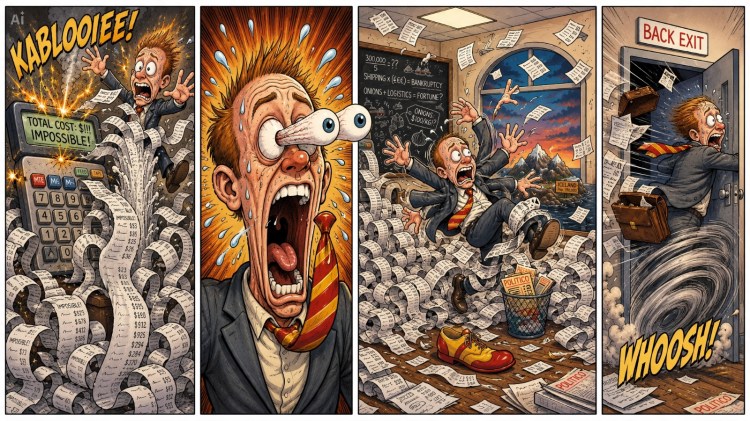
Yep, Iceland officially broke up with Ronald McDonald on Halloween 2009, leaving the entire country to fend for itself without a single Big Mac in sight.
When Iceland’s economy crashed in 2008, the local currency took a nosedive. Because McDonald’s strictly required its ingredients to be imported from Germany, shipping costs doubled overnight. The franchise owner famously complained that a single kilo of German onions suddenly cost as much as a bottle of good whisky—and frankly, nobody in Reykjavík is trading their booze for burger toppings.
To actually make a profit, they would have had to jack up the price of a Big Mac by 20%. At that point, it stops being “fast food” and starts competing with a nice sit-down lobster dinner.
Corporate HQ looked at a tiny, isolated volcano-island of 300,000 people, decided the shipping math was a nightmare, and quietly slipped out the back door.
Instead of shutting the doors for good, the local owner just slapped a new sign on the buildings, called the chain Metro, and started using Icelandic ingredients. It was basically the exact same menu, just wearing a fake moustache to dodge import taxes.
On the final day, a guy named Hjörtur bought a cheeseburger and fries just to see what would happen. Over a decade later, the meal still hasn’t decomposed—it just turned into a rock-hard, indestructible museum artefact. Today, it sits inside a glass case at a hostel in southern Iceland, proving that while the restaurants couldn’t survive the financial crisis, the patties will outlive us all.
Turns out that immortal Icelandic cheeseburger isn’t surviving on radioactive preservatives—it just accidentally mummified itself.
Mould is basically a needy roommate: it refuses to move in unless there’s plenty of moisture. Because fast-food patties are paper-thin and the buns are mostly air, leaving one on a counter causes it to dry out faster than mould spores can unpack their bags. Congratulations, you didn’t preserve a burger—you just accidentally invented beef jerky and a giant crouton.
High-heat cooking wipes out the bacteria already hanging around, and the heavy dose of salt sucks out whatever water is left. By the time mould shows up to the party, the burger is already a barren wasteland.
Keeping a burger in a cool, dry Icelandic room is basically putting it in a natural food dehydrator. If you trapped that same burger in a warm, sweaty Ziploc bag, it would turn into a fuzzy green science experiment in a matter of days.
Food scientist J. Kenji López-Alt actually tested this rumour by putting a completely organic, preservative-free homemade burger next to a McDonald’s burger of the exact same size. Both turned into harmless hockey pucks at the exact same speed—proving that physics, not weird lab chemicals, is the real reason your forgotten car-seat fries look brand new six months later.

