The White House has now released the results of Donald Trump’s latest physical, following several days of mounting tension and conjecture about why the report had been delayed.
The recently issued memo from the president’s physician states that Trump is in “excellent health”, with normal cardiac, pulmonary, neurological, and overall physical function.
The overall assessment said that Trump “remains in excellent health,” according to White House physician Capt. Sean Barbabella. That his cardiac and pulmonary function was normal. That he had normal cognitive screening, and his weight and vitals were recorded at 238 lbs, resting heart rate 73 bpm.
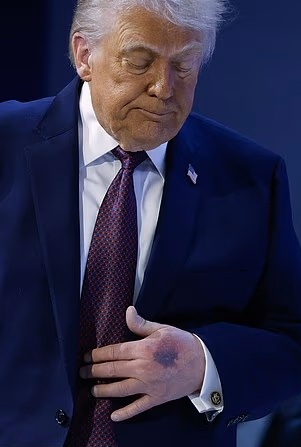
Significant observations were that he had slight lower-leg swelling, improved from last year, and the bruising on his hands was attributed to frequent handshaking while taking aspirin.
His ongoing medications were cholesterol and cardiac-prevention treatment, and he was advised to continue weight loss and physical exercise.
For three days after Trump’s visit to Walter Reed, the White House did not release any medical details, breaking from its own past practice and fuelling speculation. Previous exams had been summarised within hours or days.
During the silence, Trump himself insisted on Truth Social that “everything checked out PERFECTLY,” but no official documentation accompanied his claim.
The delay provoked criticism from medical professionals and political hosts, some calling the lack of transparency “unimaginable” for a sitting president.
Since there are no official, legally enforceable presidential health-disclosure obligations in the United States, the public’s access to yearly physical summaries, doctor letters, and test results is based on custom, political pressure, and contemporary expectations rather than legislation.
With a few specific national security caveats, a president is entitled to the same medical privacy protections under HIPAA as any other American.
Presidents release short, curated medical summaries instead of full medical records for three overlapping reasons: privacy law, national‑security risk, and political strategy. The system is designed to look transparent without actually revealing the president’s full medical history.
The public gets the polished medical summary — we don’t get the polished report, which never sees daylight.
But in recent years, many experts have publicly questioned the veracity of presidential health reports, including medical ethicists and former White House employees.
The reality is that the system itself is constructed to produce selective, politically shaped medical information — no matter who the president is, and when you incorporate that with an administration known for message discipline and fierce report control, public trust inherently crumbles.
This isn’t about one doctor or one administration — it’s about a system designed to withhold more than it reveals, and White House doctors serve two masters, and the dual role creates a built-in conflict of interest.
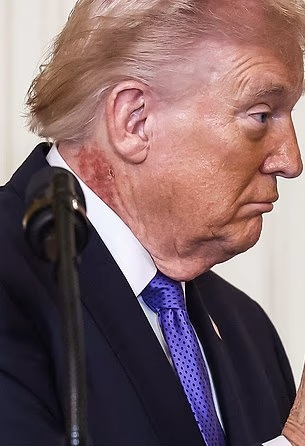
When an administration has a long history of controlling information, contradicting independent experts, or releasing statements later shown to be incomplete, people inherently conclude that the spokespeople and physicians are there to protect the president politically, not to inform the public medically.
This is not about individual people being ‘paid to lie,’ but about a system that is engineered to produce glowing, athletic-superhuman presidential health reports, no matter who is in office, and when the public sees a president who looks visibly frail, slow, or cognitively unstable, the disconnect becomes absurd.
The absurdity that I’m pointing out is precisely why people roll their eyes at these ‘excellent health’ memos, and if you read them verbatim, every president — regardless of age, diet, mobility, or visible stamina – is described as in excellent health, vigorous, fit for duty and that there are no concerns.
If you removed the names, you’d think the U.S. only elects triathletes, and this is not because the doctors are writing medical records but because they’re writing political reassurance documents.
 THE MONTHLY MOSQUITO