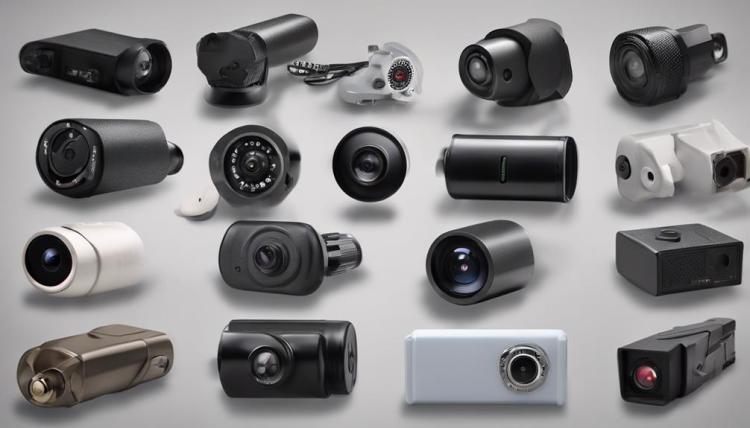
The DWP is preparing to use covert ‘spy camera cars’, but they’re not operational yet; they are scheduled to begin in September 2026.
This is based on confirmed information and several public government tenders; it is not conjecture.
The DWP intends to install secret cameras that are meant to be undetectable to the general public, both inside and outside of cars, and they will live-stream surveillance back to investigators in real time.
They will have night-vision and all-weather recording for 24/7 monitoring. They will also have remote-controlled stakeouts where investigators can pan/zoom cameras from elsewhere.
Additionally, recording will continue even in the event of a network outage, and there will be encrypted evidence systems for court use.
This is part of the DWP’s new “live surveillance strategy”, funded through a £2–2.4 million contract running 2026–2029 (with an opportunity to extend to 2031).
So right now (May 2026), the vans are not yet deployed, but the infrastructure and procurement are already in motion.
The DWP says the vehicles will be used only for suspected benefit fraud, usually after a tip‑off, intelligence from other agencies and suspicious patterns in claims.
This is not general public surveillance — but civil liberties groups warn it creates a two‑tier surveillance state focused on benefit claimants.
So, why is this happening? Well, the powers come from the Public Authorities (Fraud, Error and Recovery) Act 2025, which massively expanded DWP surveillance authority. The government claims it will save £1.5 billion by 2030.
So, how does DWP surveillance powers compare to police surveillance?
The surprising and frankly terrifying truth is that the DWP now has surveillance capabilities that overlap with, and in some areas exceed, what police can do without a warrant.
So, who has more power overall?
Because it can access large amounts of data and conduct covert monitoring with significantly fewer checks than the police, the DWP now has more practical surveillance powers.
The DWP has more latitude to monitor regular people without suspicion, but the police still have more authority for major offences, including search warrants, arrests, and communication interception.
Disabled claimants are particularly susceptible in this system since DWP monitoring explicitly targets those with disabilities, and the DWP’s surveillance system is built on risk scoring, behavioural algorithms, and assumptions about ‘normal functioning’ — all of which will structurally disadvantage disabled people.
Although algorithms are not inherently harmful, the way they are implemented and managed can have negative effects in the real world, particularly if they are abused by governmental organisations.
Spy cameras are dangerous, especially if someone is watching your home or monitoring you without consent. It’s harassment, stalking, and voyeurism, especially if you’re being filmed in your home, and if they are filming from outside to the inside of your property, it’s attempted burglary, and also a public order offence if it’s causing you alarm or distress.
If someone repeatedly watches, monitors, or records you, that is harassment under the Protection from Harassment Act 1997.
- It doesn’t need threats
- It doesn’t need physical contact
- It only needs a course of conduct causing alarm or distress
The DWP is authorised to undertake surveillance, but only in public areas. This implies that they can watch you in public, take pictures of you in public, check your social media accounts, and follow you in public.
According to UK law, DWP surveillance in public areas does not constitute a violation of your human rights, but that doesn’t mean it’s harmless, ethical, or beyond challenge. It just means the law draws a very specific line between public and private spaces.

