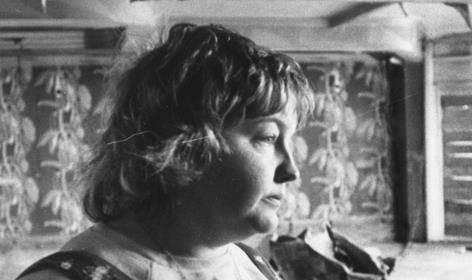
Erin Pizzey’s story in November 1971 is the moment the modern refuge movement was born. At age 32, with no formal authority — no legal training, no political office, no medical credentials — she convinced Hounslow Council to let her use a derelict former community hall at 2 Belmont Road, Chiswick, as a base for what became Chiswick Women’s Aid, the world’s first refuge for women and children fleeing domestic violence.
The building was cold, rundown, and never intended to be a shelter. But Pizzey and the small group of women who had broken away from the Women’s Liberation Workshop turned it into a centre offering guidance on childcare, education, health, legal matters, and welfare support. Within the first month, a woman escaping violence came seeking safety — and Pizzey let her in without delay. That single act transformed the centre into the first dedicated safe house for abused women anywhere in the world.
In 1971, the law and society were stacked against women; marital rape was not a crime. Women needed a husband’s signature for bank loans. There was no legal protection from sex‑ or marriage‑based discrimination, and domestic violence was treated as a private matter; police repeatedly refused to intervene.
Against that backdrop, Pizzey’s refuge exposed the scale of unseeable brutality. Word spread fast, and the small house became swamped with women and children seeking safety. Researchers later described it as the place where brutality against women was first recognised as a social problem of ‘epic proportions’ rather than a private humiliation.
Pizzey became the voice and coordinator of Chiswick Women’s Aid. She later documented the experiences of battered women in her book (Scream Quietly or the Neighbours Will Hear), and the refuge grew into what is now the national charity Refuge.
Early refuge life, political conflict and national expansion, each path takes you into a significantly different part of this story, and this is saturated in UK policy failures, social history, and the way institutions respond, or don’t respond to a crisis.
In the beginning, early refuge life was raw and unfiltered. There was overcrowding within weeks as women and children arrived faster than anyone anticipated. There was no funding, no staff, no heating, and mattresses on the floor.
Police turned up, not to assist, but to return women to violent husbands, but the refuge became a political lightning rod just by existing, and it was the first attempt to document patterns of abuse that the state refused to acknowledge.
This is the chaos, the danger, the improvisation, and the women who kept the place running on nothing but resolve.
These are stories of bold, strong women. Real women we should look up to, not the polished, PR-friendly kind. These were ordinary women who stepped into the vacuum left by councils, police, and government, and built protection where none existed. They weren’t superheroes, they weren’t financed, they weren’t even believed, but they acted nonetheless.
What Erin Pizzey and the early refuge women did was revolutionary just because it was unofficial. They didn’t wait for legislation, or funding, or a ministerial announcement. They saw women being abused, neglected, overlooked — and they created a place where those women could breathe again.
Inside that freezing, overcrowded house were women who had been told their whole lives to ‘keep quiet’, ‘put up with it,’ ‘don’t make trouble’, ‘ and yet they walked out of violent homes with nothing but their children and the clothes on their backs. That is courage in its purest form.
Erin Pizzey didn’t help people because she wanted credit, funding, or influence. She helped because women were suffering in plain sight, and no one else would lift a finger.

