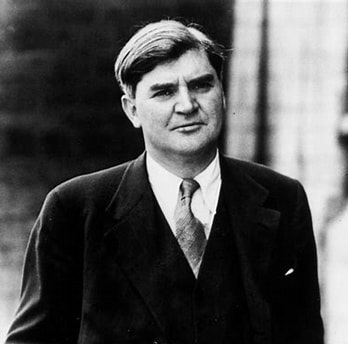
Aneurin Bevan’s story hits with the force of a moral thunderclap because it isn’t just political history — it’s a working‑class man refusing to accept that poverty should determine who lives and who dies.
Bevan’s childhood in Tredegar wasn’t just “humble” — it was brutal. Coal dust, chronic illness, and premature death were the wallpaper of daily life. His father’s lung disease wasn’t an anomaly; it was the predictable result of a system that treated working men as expendable.
Watching his father deteriorate without proper medical care didn’t radicalise Bevan — it defined him. He saw the injustice with perfect, unforgiving sharpness, and people often forget this: the NHS wasn’t created through consensus. It was created through conflict.
British Medical Association leaders accused him of “nationalising doctors.” Consultants feared losing income. Voluntary hospitals feared losing independence, and Conservative MPs warned of “Soviet medicine.”
Bevan famously said he had to “stuff their mouths with gold” to get consultants on board — a line that still stings because it’s true.
Bevan didn’t invent the concept of collective healthcare from thin air. He grew up in a town that already had it, and Tredegar’s Medical Aid Society — funded by miners’ contributions — provided care for all. Bevan merely scaled up what he knew worked.
On 5 July 1948, the NHS opened its doors. For the first time in British history, treatment was free at the point of use. Access was based on need, not wealth. Hospitals were brought under public ownership, and doctors became part of a national system. This wasn’t administrative reform. It was a moral revolution.
Bevan didn’t just build a service — he built a principle. One that said:
“No society can legitimately call itself civilised if a sick person is denied medical aid because of lack of means.”
That line is echoed endlessly because it remains the most precise articulation of what the NHS is supposed to be, and it’s why today’s decline of standards — the loss of visible authority, the disappearance of the Matron, the bureaucratisation of care — feels like a betrayal of Bevan’s founding purpose.
The NHS didn’t “remove” Matrons by accident — it dismantled them through a series of managerial, ideological, and financial decisions from the 1970s onward, and this is one of the clearest examples of how a system can hollow itself out while pretending to modernise.
The NHS removed traditional Matrons because governments and senior managers determined that corporate management mattered more than clinical discipline, and Matrons were replaced by layers of administrators who had authority on paper, but no presence on the ward, and it’s worth remembering what the Matron represented — a visible, feared, respected authority. The person who enforced cleanliness, discipline, and standards. The guardian of patient dignity, and the leader who held nurses, doctors, porters, cleaners — everyone — to account. They were not “middle managers.” They were the backbone of the hospital.
Eventually, they abolished Matrons completely and replaced them with general managers. This was the moment the Matron system died.
From the 1980s onwards, the NHS shifted toward a softer, HR‑driven culture that treated discipline as “old‑fashioned” or “authoritarian.”
The result? Wards became looser, dirtier, and less controlled.
By the late 1990s and early 2000s, hospital cleanliness had declined, MRSA and C. diff outbreaks surged, and complaints about basic care skyrocketed. Nurses reported a lack of leadership, and patients felt abandoned.
This is why the Blair government tried to bring back “Modern Matrons” in 2001 — but these were managers, not the old‑style ward rulers. They had
no authority over doctors. No control over cleaning contracts, and no power to discipline staff.
The NHS didn’t remove Matrons because they were outdated. It removed them because they were too effective.
A real Matron could walk onto a ward and instantly expose poor hygiene, sloppy nursing, understaffing, mismanagement, and unsafe practice — that level of visibility is uncomfortable for bureaucracies.
Of course, the NHS could restore real Matrons, but doing it properly would require structural change, not another cosmetic rebrand. The question isn’t “is it possible?” It’s “does the system have the courage to put authority back on the ward where it belongs?”
Restoring real Matrons is definitely doable, but only if the NHS reverses 40 years of managerial drift and gives Matrons back their original powers — authority, autonomy, and accountability. Anything less is just another “Modern Matron” — a title without teeth.
So, what’s stopping the NHS from doing this? It’s politics and bureaucracy, and consultants don’t want to be challenged. The original Matrons could confront doctors. Modern NHS culture avoids this.

